

TL;DR:
- Real estate crowdfunding allows passive investment in properties through online platforms with lower capital barriers.
- It offers diversification and access to high-growth markets beyond Southern California but involves illiquidity and limited control.
- Starting requires choosing suitable platforms, understanding deal details, and managing long-term commitments carefully.
The global crowdfunding market is projected to explode from $1.57 billion in 2022 to $30.65 billion in the coming years, and Southern California investors are paying attention. Real estate crowdfunding lets you pool money with other investors to buy or finance properties, without needing to own a single building outright. But despite the buzz, plenty of people still confuse it with REITs, peer-to-peer lending, or even basic online property auctions. This guide cuts through that confusion. You'll learn exactly how crowdfunding works, which platforms lead the pack, what the real advantages and risks look like for SoCal investors, and how to take your first practical steps toward getting started.
Table of Contents
- What is real estate crowdfunding?
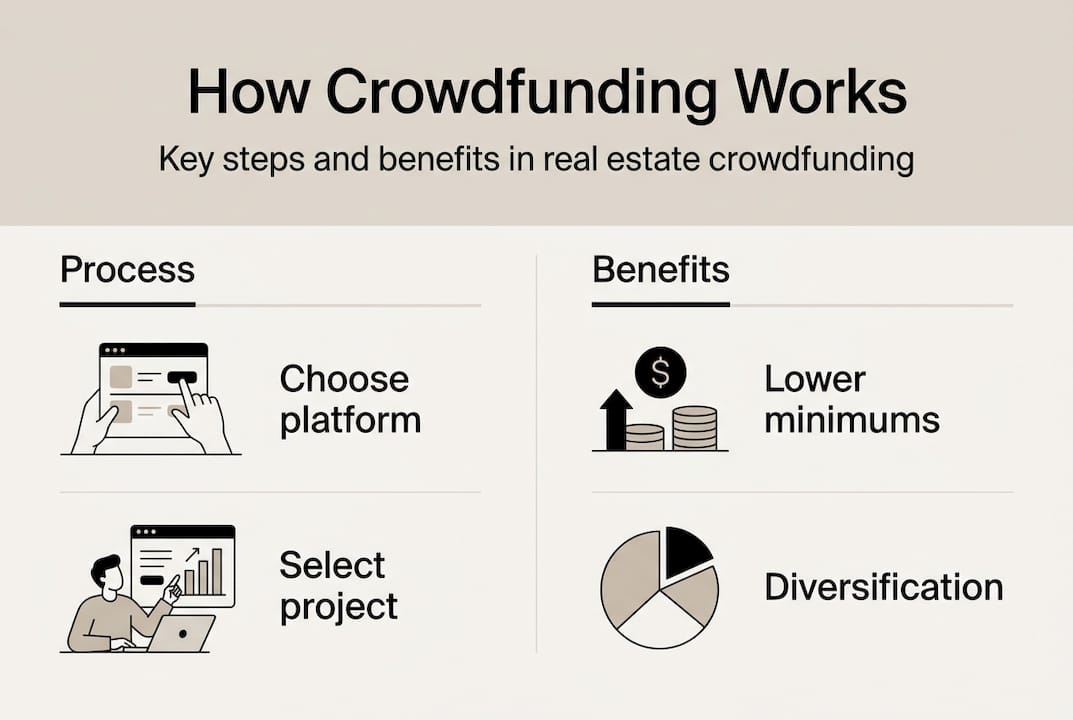
- How does the real estate crowdfunding process work?
- Comparing platforms: Features, returns, and risks
- Advantages and potential drawbacks for Southern California investors
- How to start: Practical steps and next moves
- Real talk: What most guides miss about real estate crowdfunding
- Connect with opportunities in Southern California
- Frequently asked questions
Key Takeaways
| Point | Details |
|---|---|
| Accessible investing | Crowdfunding lets individuals invest in real estate with much lower minimums than traditional ownership. |
| Diversification benefits | Real estate crowdfunding adds another asset class to your portfolio for risk mitigation. |
| Returns and risks | While returns can outpace traditional options, liquidity and project quality vary widely so due diligence is essential. |
| Platform selection matters | Choosing the right platform and vetting deals can make a significant difference in your investment outcome. |
| Local expertise advantage | Southern California investors gain more by combining online access with local real estate knowledge. |
What is real estate crowdfunding?
Real estate crowdfunding is a method of investing where many individuals contribute smaller amounts of capital to fund a real estate project or purchase together. Think of it like a group of neighbors pooling money to renovate a building on their street, except the platform manages everything digitally and the investors may never meet. The result is that you get exposure to real estate returns without the headaches of being a landlord.
Crowdfunding platforms act as the middlemen. They source deals, vet developers, structure the investment, and handle the legal paperwork. As an investor, you browse available projects, review the details, and commit your funds online. The platform then distributes returns, whether from rental income, interest payments, or property sales, back to investors on a scheduled basis.
Here's how real estate crowdfunding differs from two common alternatives:
- Direct ownership: You buy and control the property yourself. You handle tenants, maintenance, and financing. Full control, but full responsibility.
- REITs (Real Estate Investment Trusts): These are publicly traded funds that hold many properties. You buy shares like a stock. Highly liquid, but you have zero say in what properties are bought or sold.
- Crowdfunding: You invest in specific deals with a defined structure. More transparency than a REIT, less responsibility than direct ownership. Typically illiquid until the deal closes.
One of the biggest shifts crowdfunding brought to real estate is transparency. Traditional real estate investing was largely a network game. You needed connections, capital, and local knowledge. Platforms changed that by publishing deal documents, projected returns, borrower backgrounds, and property details for anyone to review before investing.
"Real estate crowdfunding has democratized access to institutional-quality deals that were once reserved for high-net-worth investors and private equity firms."
That shift matters a lot for individual investors in Los Angeles and Orange County. The projected market growth to $30.65B signals that this is not a fringe trend. It reflects a structural change in how people access real estate as an asset class.
For SoCal investors specifically, crowdfunding opens doors beyond the local market. You can invest in a multifamily project in Austin, a commercial development in Nashville, or a fix-and-flip loan in Phoenix, all while living in Irvine or Pasadena. That geographic flexibility is something neither direct ownership nor REITs offer in the same targeted way.

If you want to sharpen your overall investment strategy while exploring crowdfunding, reviewing LA and OC investment tips can help you frame crowdfunding within a broader portfolio approach.
How does the real estate crowdfunding process work?
With the basics defined, let's break down exactly how the real estate crowdfunding process works from sign-up to potential returns.
The process is more straightforward than most people expect. Here's the typical journey:
- Register on a platform. You create an account on a site like Fundrise, CrowdStreet, or EquityMultiple. Some platforms are open to all investors, while others require you to be an accredited investor, meaning you earn over $200,000 annually or have a net worth above $1 million.
- Browse available deals. Once registered, you can view active investment opportunities. Each listing includes property details, the business plan, projected returns, risk disclosures, and the minimum investment required.
- Commit your funds. You select a deal and transfer your investment amount. Minimums typically range from $500 to $25,000 depending on the platform and project type.
- Track your investment. After funding closes, the platform provides updates on construction progress, occupancy rates, or loan repayment status. You can usually monitor everything through a dashboard.
- Receive returns. Depending on the deal structure, you may receive quarterly distributions from rental income or interest, or a lump sum when the property sells or the loan matures.
- Exit the investment. Most crowdfunded deals have a defined hold period, often two to seven years. Some platforms offer secondary markets where you can sell your position early, but liquidity is not guaranteed.
Leading platforms like CrowdStreet, Fundrise, and EquityMultiple have posted strong historical returns, which is part of why investor interest has grown so quickly. But returns vary significantly by deal type, platform quality, and market conditions.
Pro Tip: Before committing to any platform, spend time reading through their past deals, including the ones that underperformed or failed. A platform's track record during downturns tells you far more than their best-case success stories.
For a closer look at how different platforms compare in terms of structure and investor fit, the best crowdfunding platforms breakdown is worth reviewing. And if you're curious about which property markets within Southern California are generating the most activity, exploring SoCal real estate hotspots can help you identify where crowdfunded deals might align with local momentum.
The key thing to understand is that you are a passive investor in this model. You are not making decisions about the property. That's a feature for busy professionals, but it's also a limitation if you prefer hands-on control over your investments.
Comparing platforms: Features, returns, and risks
Understanding the process isn't enough. Choosing the right platform is critical. Let's compare how the leading sites stack up for different investors.
| Platform | Minimum investment | Investor type | Avg. return | Fee structure |
|---|---|---|---|---|
| Fundrise | $10 | Non-accredited | 8.7% (2023) | 1% annual |
| CrowdStreet | $25,000 | Accredited only | 18.2% IRR | Varies by deal |
| EquityMultiple | $5,000 | Accredited only | 16.5% IRR | 0.5-1.5% |
CrowdStreet delivered 18.2% IRR, Fundrise averaged 8.7% net returns in 2023, and EquityMultiple posted a 16.5% IRR, which shows that the range across platforms is wide. That spread reflects differences in deal type, risk level, and investor eligibility.
Here's what to watch for when comparing platforms:
- Accreditation requirements: CrowdStreet and EquityMultiple are limited to accredited investors. Fundrise is accessible to everyone, making it the most beginner-friendly option.
- Deal types: Some platforms focus on equity deals, where you share in ownership and profits. Others focus on debt deals, where you act more like a lender and receive fixed interest payments.
- Fee transparency: Always read the fine print. Management fees, acquisition fees, and performance fees can quietly reduce your net returns.
- Liquidity options: Fundrise offers a redemption program with some restrictions. CrowdStreet and EquityMultiple deals are generally locked until the project closes.
- Platform stability: Newer platforms carry more risk. Look for platforms with at least five years of operating history and a clear track record of completed deals.
For investors who want to compare how crowdfunding platforms sit alongside other property-finding tools, this LAhomes.com alternatives comparison offers useful context. And if you're still learning what different property structures look like in the SoCal market, reviewing types of listings in SoCal can sharpen how you evaluate crowdfunded deals involving local assets.
The bottom line is that higher returns almost always come with higher risk or longer lock-up periods. A 18% IRR sounds exciting, but those deals often involve development-stage projects where delays or cost overruns can erode returns significantly.
Advantages and potential drawbacks for Southern California investors
Now that we've compared platforms, let's focus on what makes real estate crowdfunding especially relevant and potentially challenging for Southern California investors.
Key advantages:
- Portfolio diversification. If most of your wealth is tied up in a single LA property or stock portfolio, crowdfunding lets you add exposure to different property types and geographies without a massive capital commitment.
- Lower barriers to entry. Buying even a modest condo in Orange County can require $100,000 or more in down payment and closing costs. Crowdfunding lets you start with a fraction of that.
- Access to new markets. SoCal investors can use crowdfunding to participate in high-growth markets like Phoenix, Dallas, or Miami without relocating their capital or management attention.
- Passive income. Debt-based crowdfunding typically offers 8 to 10% returns in fixed interest payments, which can supplement rental income or dividends from other holdings.
Potential drawbacks:
- Limited control. You have no say in property management, tenant selection, or sale timing. If the operator makes poor decisions, you absorb the consequences.
- Illiquidity. Most deals lock your capital for two to seven years. If you need cash unexpectedly, you may have no easy exit.
- Platform dependency. If a platform shuts down or faces legal issues, your investment could be at risk even if the underlying property is performing well.
- Geographic focus risk. Some SoCal investors are tempted to pile into local crowdfunded deals because they feel familiar. But local market concentration can amplify risk rather than reduce it.
Pro Tip: If you're evaluating a crowdfunded project in Southern California specifically, treat it with more scrutiny than an out-of-state deal. Local familiarity can create false confidence. Review the sponsor's track record, not just the neighborhood's reputation.
Understanding the benefits of owning in LA can help you decide whether direct ownership or crowdfunding better fits your goals. For investors who want exposure to harder-to-find opportunities, off-market deals in SoCal represent another angle worth exploring. And if you're still building the case for why Southern California makes sense as a base for real estate investing, the data on SoCal real estate value lays it out clearly.
How to start: Practical steps and next moves
With the opportunities and challenges on the table, here are practical steps you can take to get started in real estate crowdfunding with confidence.
- Define your investor status. Find out whether you qualify as an accredited investor. This determines which platforms and deals you can access. Non-accredited investors should start with platforms like Fundrise.
- Set a budget you can lock away. Only invest money you won't need for at least three to five years. Crowdfunding is not a liquid investment, so treat it like a long-term commitment from day one.
- Research at least three platforms. Don't sign up for the first platform you find. Compare fee structures, deal types, minimum investments, and user reviews before committing.
- Start with one deal. Resist the urge to diversify across five deals immediately. Pick one project that matches your risk tolerance, invest the minimum, and learn how the platform communicates and reports.
- Review deal documents carefully. Every project comes with an offering memorandum. Read it. Pay attention to the exit strategy, the sponsor's background, and the assumptions behind the projected returns.
- Monitor and adjust. After your first deal, assess what you liked and what surprised you. Use that experience to refine your approach before expanding your crowdfunding portfolio.
| Action step | Expected timeline | Key tip |
|---|---|---|
| Confirm accreditation status | 1 to 2 days | Check income or net worth criteria |
| Research platforms | 1 to 2 weeks | Compare fees, minimums, deal types |
| Open and verify account | 3 to 7 days | Have ID and financial docs ready |
| Review first deal | 1 week | Read the full offering memorandum |
| Fund first investment | 1 to 3 days after selection | Start at the minimum amount |
| Track and receive updates | Ongoing | Log in monthly to review dashboards |
The projected exponential growth of this market means more deals and more platforms will emerge. Getting started now gives you time to learn the landscape before it becomes more crowded and competitive. For ongoing guidance on building a smart investment approach in this region, the real estate investment tips resource is a solid place to revisit as your strategy evolves.
Real talk: What most guides miss about real estate crowdfunding
Most articles about real estate crowdfunding read like platform brochures. They highlight the top IRR numbers, show you how easy it is to sign up, and leave out the parts that actually matter when things go sideways.
Here's what we've seen time and again: investors get excited about the headline returns, skip the due diligence, and then feel blindsided when a deal extends its hold period by two years or misses its distribution targets. Those outcomes are not rare. They're part of the asset class.
Illiquidity is consistently under-discussed. People hear "two to five year hold" and nod along, but they don't fully feel what that means until they need cash and can't access it. Fee structures are another blind spot. A 1% annual management fee sounds small until you realize it compounds against your returns over a five-year hold.
The investors who do well in crowdfunding treat it like any other serious investment. They read every document, ask hard questions about the sponsor's track record, and never put more than 10 to 15% of their investable assets into a single platform or deal type.
Working with a local real estate expert can also help you ground your crowdfunding strategy in real market knowledge, especially when evaluating deals that involve Southern California properties. Local insight is something no platform dashboard can fully replicate.
Connect with opportunities in Southern California
Real estate crowdfunding is a powerful tool for building wealth, but it works best when it sits alongside a broader strategy rooted in local market knowledge. Understanding what properties are actually selling for, which neighborhoods are gaining momentum, and where the real opportunities exist in Los Angeles and Orange County gives you a sharper lens for evaluating any crowdfunded deal that involves SoCal assets.

Irvin Nierras and the team at INC Realtors specialize in Southern California residential real estate and can help you connect the dots between your investment goals and what's actually happening on the ground. Whether you want to find homes for sale in your target neighborhoods or get a market snapshot of current pricing trends, having a local expert in your corner adds a layer of insight that platforms simply can't offer. Reach out today to start a conversation about your Southern California investment strategy.
Frequently asked questions
Is real estate crowdfunding safe for beginners?
Platforms screen projects before listing them, but all investments carry real platform and deal risks, including potential loss of capital, illiquidity, and the possibility that the platform itself could face financial trouble. Beginners should start with small amounts and platforms that allow non-accredited investors.
What is the minimum investment in real estate crowdfunding?
Crowdfunding minimums vary widely by platform, typically ranging from $500 on beginner-friendly platforms like Fundrise to $25,000 or more on institutional platforms like CrowdStreet. Always confirm the minimum before registering.
How do real estate crowdfunding returns compare to stocks and REITs?
Recent data shows average annual returns between 8 and 18% depending on the platform and deal type, with CrowdStreet posting 18.2% IRR, Fundrise averaging 8.7%, and EquityMultiple reaching 16.5% IRR in 2023. Past performance does not guarantee future results.
Can Southern California residents invest in local crowdfunded deals?
Yes, many platforms list Southern California investment opportunities alongside national deals, and some platforms specialize in regional markets. You can invest in local projects while also diversifying into other markets through the same account.