
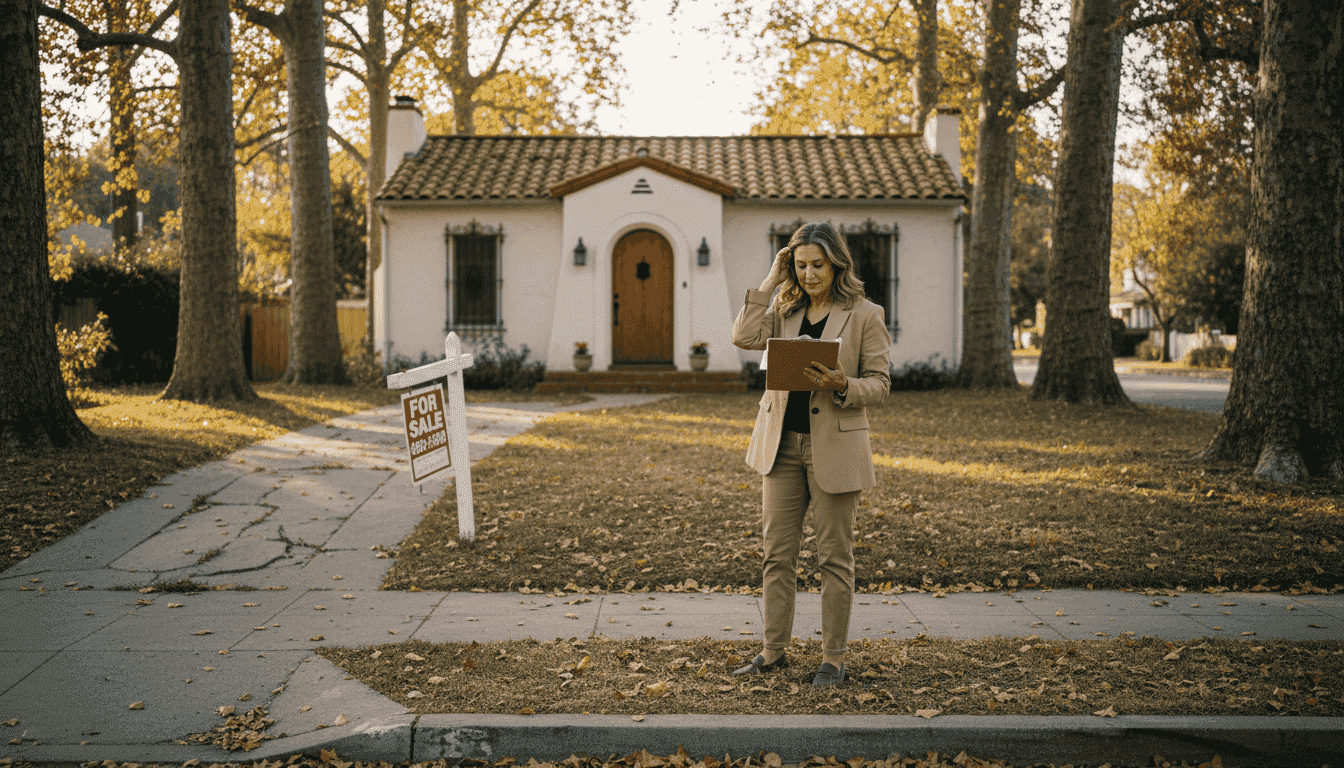
You list your home expecting quick offers, but weeks pass with little interest. Many Southern California homeowners believe their property lingers simply due to bad luck or market timing. The reality is far more specific. Homes stay longer on the market due to overpricing, poor presentation, and ineffective marketing. Understanding these obstacles and applying targeted strategies can dramatically reduce your time on market and attract serious buyers fast.
Table of Contents
- Common reasons homes stay on the market longer in Southern California
- The stale listing effect and its impact on buyer perception
- Strategies to reduce time on market and attract buyers fast
- Unique aspects of the Southern California market affecting home sales
- Ready to sell your home in Southern California? Here's how we can help
- Frequently asked questions about why homes stay on market
Key takeaways
| Point | Details |
|---|---|
| Overpricing kills interest | Homes priced above market value receive fewer showings and sit unsold for months. |
| Poor presentation deters buyers | Amateur photos and lack of staging create negative first impressions that reduce offers. |
| Ineffective marketing misses buyers | Weak promotion fails to reach motivated buyers or showcase your home's best features. |
| Stale listings create stigma | Extended market time signals hidden problems to buyers and reduces perceived value. |
| Strategic pricing accelerates sales | Pricing slightly below market with professional staging generates competitive offers quickly. |
Common reasons homes stay on the market longer in Southern California
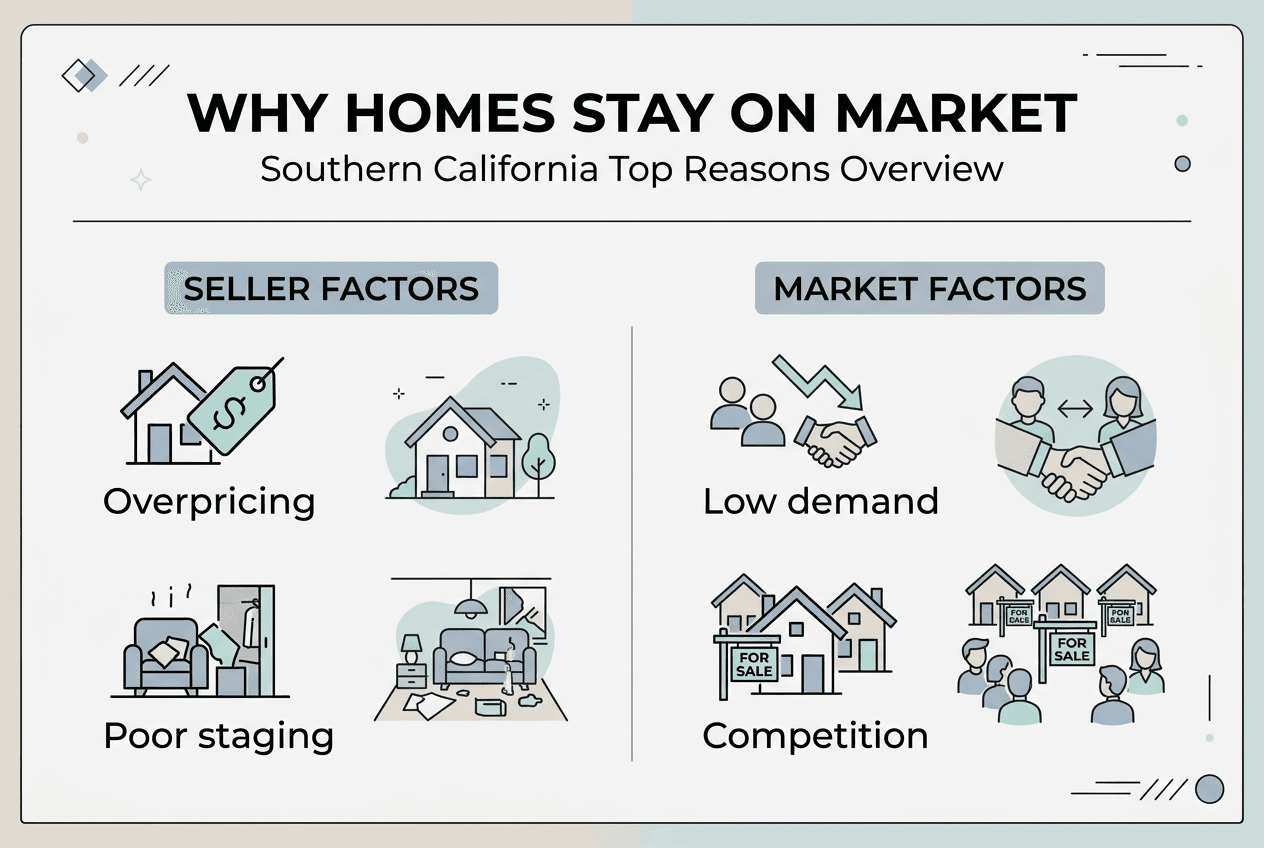
Three main factors explain why properties linger unsold in our region. Each compounds the others, creating a cycle that frustrates sellers and discourages buyers.
Overpricing remains the primary culprit. When you set your asking price above comparable homes, buyers skip your listing entirely. They compare dozens of properties online before scheduling showings. An inflated price signals either unrealistic expectations or hidden defects they want to avoid. Even a 5% premium over market value can extend your listing by months. Check the updated market snapshot to understand current pricing realities in your neighborhood.
Poor home presentation drives away interested buyers before they schedule visits. Amateur smartphone photos with bad lighting make rooms look smaller and less appealing. Cluttered spaces and personal items distract buyers from imagining themselves living there. Without professional staging, your home blends into the sea of listings instead of standing out. First impressions happen online now, and weak visuals eliminate your property from consideration immediately.
Ineffective marketing fails to reach the buyers actively searching for homes like yours. Generic descriptions, limited photo galleries, and poor social media promotion mean fewer eyes on your listing. Targeted marketing highlights your home's unique features and reaches buyers specifically interested in your neighborhood, price range, and property type. When marketing falls short, even well-priced, beautifully staged homes sit unsold.
Regional market competitiveness amplifies these issues in Los Angeles and Orange County where inventory moves fast and buyers have numerous options.
The combination of these factors creates a challenging situation. Overpriced homes with weak presentation and poor marketing can remain unsold for six months or longer. Meanwhile, strategically priced properties with professional staging and robust marketing often receive multiple offers within two weeks. The difference lies entirely in how you approach the sale.
Consider this: a case study on quick home sale showed a property that sat unsold for 180 days sold in just 14 days after addressing pricing, staging, and marketing simultaneously. The home itself hadn't changed. The approach had.
When you sell your home with Irvin Nierras, you gain expertise in avoiding these common pitfalls from the start. Professional guidance helps you price correctly, present beautifully, and market effectively to reach serious buyers fast.
The stale listing effect and its impact on buyer perception
Time itself becomes your enemy when a home sits unsold beyond 30 days. Buyers notice how long properties remain listed and draw negative conclusions that hurt your chances of selling.

Buyers assume long-listed homes have hidden problems or unrealistic pricing. When they see a property available for 60, 90, or 120 days, they wonder what's wrong with it. Even if nothing is actually wrong, the perception alone reduces interest. This stigma creates a self-reinforcing cycle where fewer showings lead to longer market time, which further decreases buyer confidence.
The psychological impact manifests in several ways:
- Buyers make lower offers assuming you're desperate to sell
- Fewer agents recommend your property to their clients
- Online algorithms demote your listing in search results
- Competing homes appear more desirable simply because they're newer listings
In competitive Southern California markets, timing and perception matter enormously. Properties that sell quickly often receive multiple offers above asking price. Properties that linger receive lowball offers or no offers at all. The difference isn't always the home itself but how buyers perceive its value based on market time.
Removing and relisting a property can refresh interest and perception. This strategy resets the days-on-market counter and gives you a chance to reintroduce your home with improved pricing, staging, and marketing. Many sellers resist this approach, viewing it as admitting failure. Smart sellers recognize it as a tactical reset that changes buyer psychology.
Review your market snapshot regularly to understand how your listing compares to recent sales and active competition. If your home approaches 45 days without strong offers, consider whether adjustments or relisting might serve you better than waiting.
Pro Tip: Track showing feedback weekly. If agents report pricing concerns or presentation issues repeatedly, address them immediately rather than hoping the right buyer will overlook these problems.
Strategies to reduce time on market and attract buyers fast
Overcoming market obstacles requires deliberate action across pricing, presentation, and promotion. Each strategy builds on the others to create momentum that attracts serious buyers quickly.
-
Price strategically below market value to stimulate competition. Pricing at 95% of market value with professional staging generates immediate interest and competitive offers. This approach seems counterintuitive but creates urgency among buyers who fear losing a well-priced property. Multiple offers often push the final sale price above asking, netting you more than an overpriced listing that sits unsold.
-
Invest in professional staging that creates emotional connections. Staged homes help buyers visualize living there, which accelerates decision making. Neutral decor, strategic furniture placement, and thoughtful lighting make spaces feel larger and more inviting. The cost of staging typically returns several times over through faster sales and higher offers.
-
Deploy high-quality photography and targeted digital marketing. Professional photos with proper lighting and angles showcase your home's best features. Targeted social media ads reach buyers actively searching in your price range and neighborhood. Virtual tours allow distant buyers to evaluate your property before scheduling in-person showings.
-
Offer incentives that differentiate your listing from competitors. Home warranties, closing cost credits, or included appliances can tip the scales when buyers compare similar properties. These incentives cost less than repeated price reductions and signal confidence in your home's condition.
-
Maintain flexibility with showing schedules to accommodate buyer availability. Restricted showing times reduce the pool of potential buyers who can view your home. The more accessible your property, the faster you'll find the right buyer.
| Pricing Strategy | Average Days on Market | Typical Outcome |
|---|---|---|
| 5% above market | 90-120 days | Price reductions, lower final price |
| At market value | 45-60 days | Eventually sells near asking |
| 3-5% below market | 14-21 days | Multiple offers, above asking |
Get a professional home valuation report to understand your property's true market value before setting your price. Accurate valuation forms the foundation of every other strategy.
Review showing feedback and adjust your approach quickly. If multiple buyers mention the same concern, address it immediately. Waiting weeks to respond to consistent feedback allows the stale listing effect to take hold. Access comprehensive home selling services that include ongoing strategy adjustments based on market response.
Pro Tip: Schedule your listing launch for Thursday or Friday when buyer activity peaks heading into the weekend. This timing maximizes initial showing requests and creates momentum from day one.
Unique aspects of the Southern California market affecting home sales
Regional factors significantly influence how quickly homes sell and at what price. Understanding these local dynamics helps you set realistic expectations and tailor your strategy appropriately.
Median home prices vary dramatically across Southern California counties. LA County homes average around $937,000, while Riverside County properties sit closer to $628,000. This price disparity affects buyer pools, competition levels, and time on market. Higher-priced markets like LA and Orange County attract more investors and move-up buyers with specific expectations about presentation and amenities.
| County | Median Home Price | Market Competitiveness | Typical Days on Market |
|---|---|---|---|
| Los Angeles | $937,000 | Very High | 25-35 days |
| Orange | $1,150,000 | Very High | 28-40 days |
| San Diego | $875,000 | High | 30-45 days |
| Riverside | $628,000 | Moderate | 35-50 days |
| San Bernardino | $515,000 | Moderate | 40-55 days |
Competition differs by region, impacting buyer urgency and pricing power. In coastal areas with limited inventory, well-priced homes receive multiple offers within days. Inland regions with more available land see steadier but slower sales activity. Your pricing and marketing strategy must account for these regional differences.
Key regional characteristics affecting sale speed:
- Coastal proximity commands premium pricing and faster sales
- School district quality heavily influences family buyer decisions
- Commute times to major employment centers affect demand
- Local amenities and walkability impact younger buyer interest
- HOA restrictions and fees deter some buyers while attracting others
Buyer preferences and expectations are shaped by local economic factors and market availability. Tech industry growth in certain areas brings cash buyers with different priorities than traditional mortgage buyers. International buyers focus on specific neighborhoods with established communities. Understanding your likely buyer profile helps you stage and market effectively.
Browse current homes for sale listings to see how your competition presents their properties and what price points dominate your neighborhood. This competitive intelligence informs every decision from pricing to staging to marketing messaging.
Seasonal patterns also affect Southern California sales. Spring and early summer traditionally see the highest activity, while late fall and winter slow down. However, serious buyers shop year-round, and less competition during slower months can work to your advantage if you price and present well.
Ready to sell your home in Southern California? Here's how we can help
You now understand why homes linger and how to avoid common pitfalls. Applying these strategies requires local expertise and professional execution.

Working with experienced home selling services gives you access to proven systems for pricing, staging, and marketing that reduce your time on market. Get your personalized market snapshot to see current conditions in your neighborhood. Request a professional home valuation report that accounts for recent sales, active competition, and unique property features. These tools help you make informed decisions that attract serious buyers and maximize your sale price while minimizing market time.
Frequently asked questions about why homes stay on market
Why do some homes linger on the market despite good condition?
Good condition alone doesn't guarantee quick sales. Overpricing, poor photography, weak marketing, and limited showing availability all prevent buyers from discovering or appreciating your home's quality. Even well-maintained properties need strategic pricing and professional presentation to compete effectively.
How does overpricing affect buyer interest?
Overpriced homes receive fewer showings because buyers filter search results by price range. When your listing appears overpriced compared to similar properties, buyers skip it entirely. This lack of initial interest creates the stale listing effect that compounds over time.
What is the benefit of professional staging?
Professional staging helps buyers emotionally connect with your space by showing how rooms function and feel when properly furnished. Staged homes photograph better, show better, and sell faster because they help buyers visualize living there. The investment typically returns several times over through quicker sales and higher offers.
Can relisting a home improve sale chances?
Relisting resets the days-on-market counter and gives you a fresh start with improved pricing and presentation. This strategy overcomes the stale listing stigma by making your home appear new to the market. Combined with strategic adjustments, relisting often generates renewed interest and competitive offers.
How important is local market knowledge when setting price?
Local market knowledge is critical because pricing varies significantly by neighborhood, school district, and proximity to amenities. Understanding recent comparable sales, active competition, and buyer preferences in your specific area ensures you price competitively. Access professional home value evaluation that incorporates hyperlocal data for accurate pricing. Generic online estimates often miss neighborhood nuances that affect actual sale prices.
What role does marketing play in reducing time on market?
Effective marketing reaches motivated buyers actively searching for homes like yours. Targeted digital advertising, professional photography, virtual tours, and strategic social media promotion increase visibility and generate more showing requests. Without robust marketing, even well-priced, beautifully staged homes can sit unsold because the right buyers never discover them. Learn more about comprehensive home selling tips that include proven marketing strategies.