
TL;DR:
- Home valuation estimates a property's market worth and influences key financial decisions.
- Accurate valuations prevent costly errors for buyers, sellers, and lenders in real estate transactions.
Home valuation is the process of estimating a property's current market value, and it determines nearly every financial decision tied to real estate. Whether you are buying, selling, refinancing, or managing your taxes, the number attached to your home shapes the outcome. Why home valuation matters becomes clear the moment a deal falls apart over a low appraisal or a seller leaves thousands on the table from mispricing. Increaltors works with buyers and sellers across Southern California who face these exact situations every day. Getting the number right is not optional. It is the foundation of every smart real estate move.
Why home valuation matters in buying and selling decisions
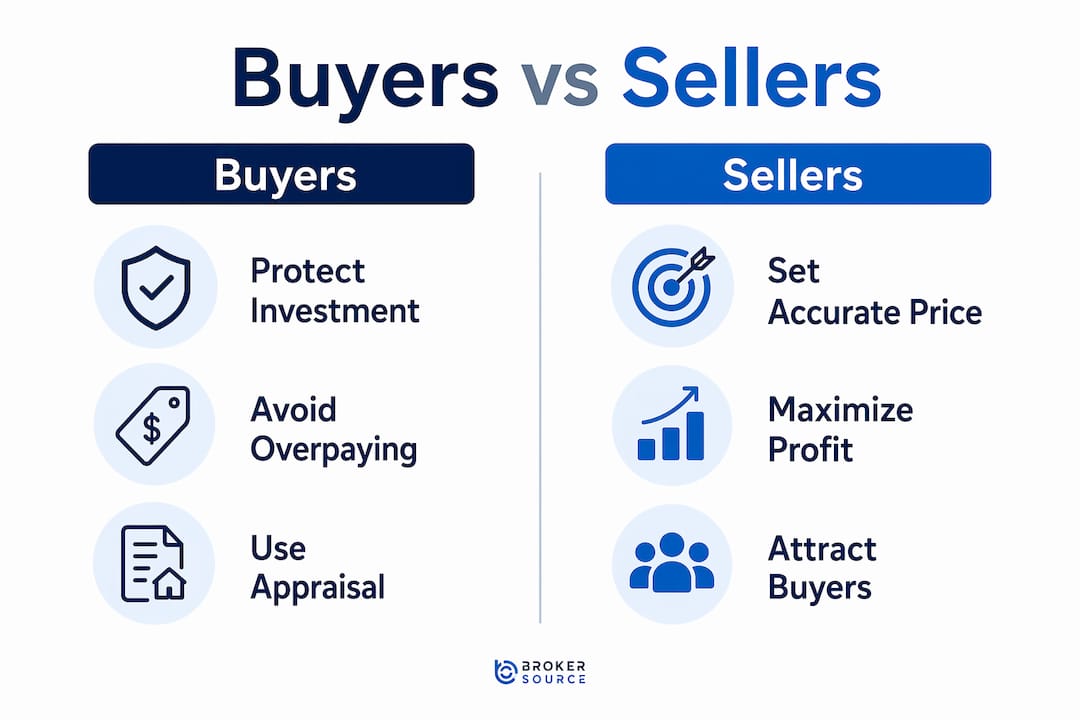
Accurate home valuation protects both sides of a real estate transaction from costly mistakes. Sellers who skip a verified valuation often price too high, which stalls the listing, or too low, which surrenders profit. Incorrect pricing causes listing stagnation or direct financial loss. That outcome is avoidable with a proper market analysis before the listing goes live.

Buyers face a different but equally serious risk. Without knowing a home's verified value, a buyer can easily overpay in a competitive market. Mortgage lenders add another layer of accountability here. Low appraisals can require larger down payments or result in declined loans entirely. That single number from an appraiser can change the entire financing picture.
How appraisal contingencies protect buyers
Contract contingencies tied to appraisals give buyers a legal exit when valuations come in below the agreed purchase price. Contingency clauses allow buyers to renegotiate the price or walk away with their deposit refunded. This protection only works if the buyer includes it in the offer. Skipping the appraisal contingency to win a bidding war is a gamble that can cost tens of thousands of dollars.
Pricing strategy for sellers
Sellers benefit most from valuation when they use it to set a price that attracts buyers quickly without sacrificing equity. A home priced at market value typically generates more offers and sells faster than one priced above it. Overpriced listings sit, accumulate days on market, and often sell below their original asking price after forced reductions. Understanding your home's true worth before listing is the single most effective pricing move a seller can make.
Pro Tip: Before listing your home, request a Comparative Market Analysis from a licensed agent. It costs nothing and gives you a data-backed price range based on recent sales in your neighborhood.
- Get a professional appraisal or agent market analysis before setting a listing price.
- Review comparable sales from the past 90 days in your zip code.
- Factor in your home's condition, upgrades, and lot size relative to comps.
- Build in an appraisal contingency on the buy side to protect your deposit.
- Revisit your valuation if your listing sits longer than 30 days without offers.
What are the main methods of home valuation?
Four distinct methods exist for estimating a home's value, and each serves a different purpose. Understanding which one applies to your situation prevents costly reliance on the wrong tool.
| Method | Best Use | Key Limitation |
|---|---|---|
| Professional appraisal | Mortgage approvals, legal disputes | Costs $300–$500; takes several days |
| Automated Valuation Model (AVM) | Quick online estimates | Misses interior condition and functional issues |
| Comparative Market Analysis (CMA) | Listing price strategy | Relies on agent judgment and local data quality |
| County tax assessment | Property tax calculation | Often lags behind current market conditions |
Professional appraisals: the gold standard
A licensed appraiser provides the most reliable estimate for any decision with real financial stakes. Appraisers analyze physical characteristics, comparable sales, and neighborhood factors to determine market value. This method is required by virtually every mortgage lender before approving a loan. The appraiser's independence from the buyer and seller is what makes the result credible.
Automated Valuation Models: fast but limited
AVMs like those embedded in popular real estate websites generate estimates in seconds using public records and sales data. The speed is useful for a quick gut check, but AVMs miss functional obsolescence and interior conditions that a professional appraiser identifies. A home with a 20-year-old HVAC system, water damage, or an awkward floor plan will often be overvalued by an AVM. Use these tools to orient yourself, not to make decisions.
Pro Tip: Run an AVM estimate first, then compare it to a licensed appraiser's report. A gap of more than 10% between the two signals something the algorithm missed, and that gap is worth investigating before you price or bid.
Comparative Market Analyses and tax assessments
A real estate agent's CMA uses recent comparable sales and local expertise to suggest a listing price range. It is not a formal appraisal, but it reflects current buyer behavior in a specific market. County tax assessments serve a completely different function. They calculate your property tax bill, not your sale price, and they frequently lag behind market shifts by one to three years.
How does home valuation affect taxes, insurance, and home equity?
Home valuation does not stop mattering after a sale closes. It shapes three ongoing financial realities: your property tax bill, your insurance coverage, and your ability to borrow against your equity.
Property taxes and the right to appeal
Property tax bills are based on county assessments that may not reflect actual market value. When a county overvalues your home, you pay more in taxes than you should. The fix is a formal appeal, which requires documented evidence that the assessed value exceeds the current market value. Homeowners who track their property's real value are the ones who catch these discrepancies and act on them.
Insurance coverage gaps from undervaluation
Undervalued homes face insufficient insurance coverage, which leaves owners paying out of pocket if they need to rebuild. Insurance premiums and coverage limits are tied to the estimated replacement cost of the structure. If your home has appreciated significantly but your policy has not been updated, you may be insured for far less than it would cost to rebuild. Reviewing your home's value annually and adjusting your coverage accordingly closes that gap.
Home equity as a financial tool
Home equity is the difference between what your home is worth and what you owe on it. Home equity serves as a liquidity resource for renovations, debt consolidation, and unforeseen expenses. A homeowner who knows their current market value can calculate their available equity and decide whether a home equity loan or line of credit makes sense. Most homeowners treat equity as a future sale benefit. The ones who build real financial flexibility treat it as a current asset.
Here are the three ongoing financial areas where home valuation directly affects your bottom line:
- Property taxes: An accurate valuation gives you grounds to appeal an inflated county assessment and reduce your annual tax bill.
- Insurance coverage: Knowing your home's replacement value prevents you from being underinsured after a fire, flood, or other loss.
- Home equity access: A verified valuation tells you exactly how much equity you can borrow against for major expenses or investments.
- Mortgage insurance removal: Once your equity reaches 20% of the home's value, you can request cancellation of private mortgage insurance, which saves hundreds per year.
- Refinancing decisions: Accurate valuations inform borrowing limits and minimize risk when refinancing at a lower rate.
How can you get reliable home valuation information in 2026?
Getting a reliable valuation requires knowing which tool to use and when. The wrong choice at the wrong moment leads to decisions built on inaccurate numbers.
Start with an AVM to get a ballpark figure, but treat it as a starting point only. AVMs are a useful starting point but miss important property condition factors that lead to over- or underestimation. For any decision involving a loan, a sale, or a legal matter, a licensed appraiser is the right choice.
Before hiring an appraiser independently, confirm their credentials with your lender. Lenders require appraisers from approved lists, and homeowners who skip this step can end up paying for two appraisals. One call to your lender before scheduling saves that cost entirely.
Pro Tip: Ask your real estate agent for a free CMA before you commit to any appraiser. In Southern California markets, where values shift quickly by neighborhood, a local agent's comparable sales data often reveals pricing nuances that online tools cannot capture.
The following practices give you the most accurate and useful valuation picture:
- Confirm appraiser credentials with your lender before hiring anyone independently.
- Use an AVM for orientation, then get a professional appraisal for any high-stakes decision.
- Request a CMA from a licensed agent when preparing to list or buy.
- Check your home's estimated value at least once a year to monitor equity growth and insurance adequacy.
- Read your appraisal report in full. The comparable sales section tells you exactly which homes drove the final number.
- Never waive an appraisal contingency without understanding the financial risk of a low valuation.
- Work with a local agent who knows your specific neighborhood, not just the broader metro area.
For homeowners in the Temecula area, understanding how local valuation tools work in your specific market adds another layer of accuracy to any estimate.
Key Takeaways
Home valuation is the single most important number in any real estate transaction, shaping pricing, financing, taxes, insurance, and equity access for buyers and sellers alike.
| Point | Details |
|---|---|
| Valuation drives pricing accuracy | Sellers who skip verified valuations risk overpricing or underpricing, both of which cost money. |
| Lenders require appraisals | Mortgage approval depends on an independent appraisal confirming the home's collateral value. |
| Taxes and insurance depend on value | County assessments and insurance coverage both tie directly to your home's estimated worth. |
| Equity is a current financial asset | Knowing your home's value lets you access equity now, not just at the time of sale. |
| Confirm appraiser credentials first | Always verify that your appraiser is on your lender's approved list before paying for an appraisal. |
What I've learned from watching homeowners get valuation wrong
Most homeowners I work with in Southern California think about their home's value twice: when they buy and when they sell. That gap in attention is where real money gets lost.
I have seen sellers price a home based on what their neighbor got two years ago, ignoring that the market shifted, interest rates changed, and buyer demand moved. The listing sits for 60 days, takes two price cuts, and closes below what a proper valuation would have suggested from day one. The frustration is real, and it was entirely avoidable.
The misconception I see most often is treating home value as a static number. A home's value moves with the market, with interest rates, with neighborhood development, and with the condition of the property itself. Homeowners who check their value once and forget it are operating on outdated information.
My advice is to treat your home's value the way you treat your investment portfolio. Review it at least once a year. When rates drop and refinancing becomes attractive, your current valuation tells you whether it makes sense. When your equity crosses a meaningful threshold, it opens doors to financial moves that most homeowners do not even know are available to them. Connecting with a knowledgeable local agent who tracks your specific market is the fastest way to stay current without doing the research yourself. The homeowners who get the best outcomes are not the ones who got lucky. They are the ones who stayed informed.
— Irvin Nierras
Real estate listings and home valuation services at Increaltors
Knowing your home's value is the first step. Acting on it is where the real advantage comes from.

Increaltors provides up-to-date property listings across Southern California, including single-family homes, condos for sale, and vacant land. For homeowners ready to understand what their property is worth right now, Increaltors offers a free home value report backed by local market expertise. Irvin Nierras and the Increaltors team specialize in the Los Angeles, Orange County, and surrounding Southern California markets, where neighborhood-level knowledge makes a measurable difference in valuation accuracy and transaction outcomes.
FAQ
What is home valuation and why does it matter?
Home valuation is the process of estimating a property's current market value using comparable sales, property condition, and neighborhood data. It matters because it drives pricing, financing, tax assessments, and insurance coverage for every homeowner.
How does a low appraisal affect a home purchase?
A low appraisal can require the buyer to increase their down payment, renegotiate the purchase price, or exit the deal entirely if an appraisal contingency is in place.
What is the difference between an appraisal and an AVM?
A professional appraisal is conducted by a licensed appraiser who physically inspects the property, while an AVM generates an automated estimate from public data without accounting for interior condition or functional issues.
Can I appeal my property tax assessment?
Yes. Homeowners can formally appeal a county assessment if documented evidence shows the assessed value is significantly higher than the current market value, which can reduce the annual tax bill.
How often should I check my home's value?
Reviewing your home's estimated value at least once a year keeps your insurance coverage current, helps you track equity growth, and positions you to act quickly when refinancing or selling opportunities arise.