

TL;DR:
- A real estate comp is a recently sold property with similar features used to estimate a home's current value. Comps rely on verified market data and strict selection criteria to produce reliable estimates for buyers, sellers, and lenders. Accurate valuation depends on proper adjustments, context understanding, and avoiding distressed or outdated sales.
A comp in real estate is a recently sold property with characteristics closely matching another property, used to estimate that property's current market value. The formal industry term is "comparable sale," and appraisers, agents, and lenders rely on comparable sales every time a home is priced, financed, or appraised. Comps are not suggestions or rough guesses. They are the factual foundation of property valuation, and understanding how they work gives you a real edge whether you are buying, selling, or simply evaluating a neighborhood. The process follows established appraisal standards, and getting it right requires knowing which sales qualify, how to adjust for differences, and which data to ignore.
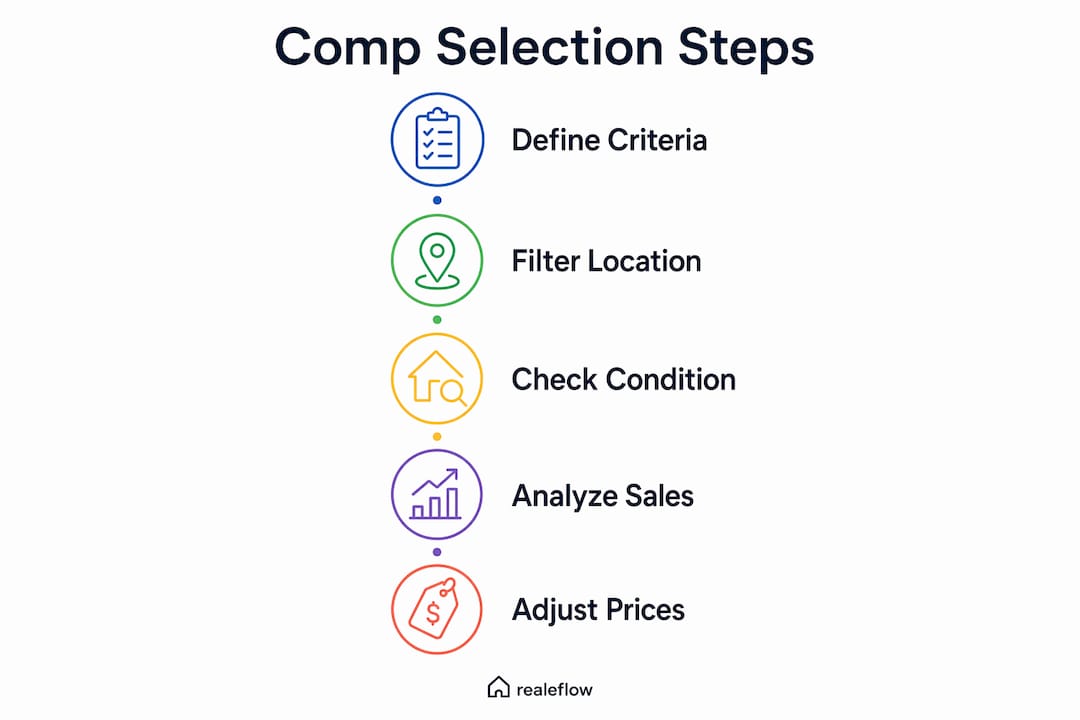
What is a comp in real estate and why does it matter?
A comparable sale, or comp, is a property that sold recently under normal market conditions and shares key features with the home being valued. "Normal market conditions" is the critical phrase. A sale qualifies as a comp only when it is an arm's length transaction, meaning neither the buyer nor the seller was under unusual pressure to close. That distinction matters because the goal is to find what a motivated, informed buyer would pay for a property today.
Comps matter because no two homes are identical, yet every home must be priced against something real. Without comparable sales, a listing price is just an opinion. With them, it becomes a defensible number backed by what actual buyers paid in the same market. Lenders require comps before approving a mortgage, and appraisers use them to produce the formal valuation report that protects both the buyer and the bank.

The real estate appraisal basics behind comp selection follow a clear logic: find properties that a typical motivated buyer would consider a legitimate alternative to the subject property. That framing, drawn from appraisal practice, is more useful than simply searching for the nearest or most recent sale. A buyer shopping for a three-bedroom ranch in Torrance does not view a two-bedroom condo in Long Beach as a substitute. The comp must reflect genuine buyer substitutability.
Comps also produce a price range, not a single number. Selecting 3–6 recent sales creates a reliable range and reduces the risk that one unusual transaction skews the entire valuation. That range is then reconciled into a final opinion of value through professional judgment.
How are real estate comps selected?
Comp selection follows strict filtering criteria, and the filters exist for good reason. Loose criteria produce unreliable valuations. Tight criteria produce numbers that hold up under scrutiny from lenders, appraisers, and buyers.
The four primary filters are:
- Proximity. Comps should come from the same neighborhood or a directly comparable area. A one-mile radius is a common starting point in suburban markets, but in dense urban areas like Los Angeles, a few blocks can represent an entirely different price tier.
- Recency. Sales within the past three to six months carry the most weight. Markets shift quickly, and a sale from 18 months ago may reflect conditions that no longer exist. Experts apply strict filtering criteria, avoiding sales older than 12 months without explicit adjustment for market changes.
- Property type. Single-family homes compare to single-family homes. Condos compare to condos. Mixing property types produces distorted results because buyers in each category have different expectations and motivations.
- Size. Gross living area should fall within 10–20% of the subject property. A 1,200-square-foot home and a 2,400-square-foot home are not interchangeable, even if they sit on the same street.
Beyond these four filters, condition and location within the neighborhood also matter. A home on a busy arterial road is not equivalent to one on a quiet cul-de-sac, even if every other feature matches.
Pro Tip: When pulling comps yourself, always check whether the sale was a standard transaction or a distressed one. Foreclosures and short sales look like data but often tell a different story than the open market.
The goal is not to find perfect matches. It is to find the best available evidence of what buyers are actually paying. Appraisers identify the highest and best use of the subject property first, then search for comps that reflect that same use. That sequence prevents a common error: selecting comps based on convenience rather than relevance.
How are adjustments applied to comparable sales?
Adjustments are the mechanism that converts raw comp data into a meaningful estimate of value for a specific property. The core rule is non-negotiable: adjustments apply to the comp, not the subject property. You modify the comp's sale price to reflect how it differs from the home you are valuing.
The logic works like this:
- Identify the difference. The comp has a feature the subject property lacks, or vice versa.
- Determine the dollar value of that difference. This relies on paired sales analysis, which compares two nearly identical sales that differ in only one feature. The price gap between those two sales reveals what the market pays for that specific feature.
- Apply the adjustment. If the comp is superior to the subject (it has a feature the subject lacks), subtract value from the comp's price. If the subject is superior, add value to the comp's price.
- Repeat for each meaningful difference. Bedrooms, bathrooms, garage spaces, pools, lot size, and condition all generate adjustments.
Bedroom and bathroom differences often require adjustments of $5,000–$15,000 per unit in many markets. That range varies significantly by location. In high-cost Southern California markets, the adjustment for a single bathroom can exceed $20,000 in some neighborhoods.
Pro Tip: Do not rely on a single comp after adjustments. The adjusted values from multiple comps should cluster in a narrow range. If one adjusted value sits far outside the others, investigate why before including it in your analysis.
A technique called bracketing strengthens the entire process. Bracketing uses comps that are both superior and inferior to the subject property, creating a defensible value range rather than a single adjusted number. If the subject property falls between the adjusted values of its superior and inferior comps, the analysis is credible. Bracketing prevents the bias that comes from selecting only favorable comps.
Qualitative factors often carry more weight than raw price-per-square-foot calculations in a final valuation. A home with a full kitchen remodel and updated bathrooms commands a premium that square footage alone cannot capture. Appraisers account for condition, quality of finishes, and functional utility alongside the numeric adjustments.
What are the most common mistakes when using comps?
Comp errors fall into predictable patterns, and most stem from using the wrong data or misunderstanding what comps can actually tell you.
- Relying on active listings. Active listings show asking prices, not what buyers actually paid. Buyers and sellers should prioritize sold data over active listings because sold prices represent verified proof of market willingness to pay. A seller can list at any price. The sale price is what the market decided.
- Including distressed sales. Foreclosures and short sales almost never reflect true market value. Distressed sales should be excluded because even the closest foreclosure sale tends to show misleadingly low value compared to arm's-length transactions. Including one can pull your entire valuation downward.
- Using outdated sales without adjustment. A sale from two years ago in a market that has moved significantly is not a reliable comp without explicit time adjustments. Markets in Los Angeles and Orange County can shift meaningfully within six months.
- Assuming comps must be perfect matches. No comp is ever identical to the subject property. The goal is to find the best available evidence and adjust for the differences. Waiting for a perfect match means waiting indefinitely.
"Price per square foot is a starting point, not a conclusion. Condition, upgrades, and location within the neighborhood often carry more weight than any single numeric metric. A comp that looks perfect on paper can be misleading if the qualitative context is different."
The most underestimated mistake is ignoring qualitative context. Two homes with identical square footage, bedroom counts, and lot sizes can sell for very different prices if one has been fully updated and the other has original 1970s finishes. Raw data does not capture that gap automatically. The appraiser or agent must recognize it and adjust accordingly.
How can buyers and sellers use comps effectively?
Comps are not just for appraisers. Buyers and sellers who understand how to find comps and interpret them correctly make better decisions at every stage of a transaction.
For buyers, comps serve as a reality check on asking prices:
- Pull sold data for similar homes in the same neighborhood before making an offer.
- Compare the asking price to the adjusted values of recent comps. If the asking price sits well above comparable sales, you have leverage to negotiate or walk away.
- Use comps to set a maximum bid in competitive situations. Paying above market is a choice. Paying above market without knowing it is a risk.
For sellers, comps are the foundation of a credible listing price:
- A Comparative Market Analysis (CMA) is the standard tool agents use to compile and adjust comps before recommending a list price.
- Overpricing relative to comps leads to longer days on market, which itself becomes a negative signal to buyers.
- Sellers in Southern California markets benefit from working with an agent who knows which micro-neighborhoods command premiums that broader comp searches might miss.
When to seek a professional appraisal versus relying on a CMA depends on the stakes. A CMA from a qualified agent is sufficient for most listing and offer decisions. A licensed appraisal is necessary for estate settlements, divorce proceedings, tax appeals, and any situation where a lender requires an independent opinion of value. For first-time homebuyers, understanding the difference between these two tools prevents costly confusion during the transaction.
Public records, county assessor databases, and Multiple Listing Service (MLS) data are the primary sources for pulling comps. MLS data is the most current and complete, which is why working with a licensed agent gives buyers and sellers a significant informational advantage over relying on public portals alone.
Key Takeaways
Comps are the factual backbone of every real estate valuation, and using them correctly requires strict filters, honest adjustments, and reliable sold data rather than asking prices or distressed sales.
| Point | Details |
|---|---|
| Comps are sold properties, not listings | Always use closed sales data; asking prices do not reflect what buyers actually paid. |
| Strict filters produce reliable results | Match property type, size within 10–20%, proximity, and recency within 3–6 months. |
| Adjust the comp, not the subject | Modify each comp's price to account for feature differences using paired sales analysis. |
| Bracketing creates a defensible range | Use both superior and inferior comps to establish a credible value range for the subject. |
| Qualitative factors matter as much as data | Condition, upgrades, and neighborhood position often outweigh raw square footage metrics. |
Why comps are more art than algorithm
I have watched buyers and sellers treat comps like a calculator output, as if plugging in the right numbers automatically produces the right answer. That mindset leads to real mistakes.
The truth is that two experienced appraisers looking at the same set of sales can reach different but equally defensible conclusions. That is not a flaw in the system. It reflects the reality that real estate valuation requires judgment, not just arithmetic. The data tells you what happened. It does not tell you which of those sales best represents what your specific property is worth today.
What I have found working in Southern California markets is that local knowledge changes everything. A comp two blocks away might cross a school district boundary, sit under a flight path, or back up to a commercial property. None of that shows up in the raw data. An agent or appraiser who knows the neighborhood catches those details. One who does not will produce a number that looks right on paper but misses the market entirely.
My honest advice: use comps as a guide, not a verdict. They narrow the range of reasonable value. They do not eliminate the need for judgment about where within that range your property actually falls. The best decisions come from combining solid comp data with someone who understands the qualitative context of the specific market you are working in.
— Irvin Nierras
How Increaltors approaches comp analysis for Southern California buyers and sellers
Accurate comp analysis in Los Angeles and Orange County requires more than pulling recent sales from a database. Micro-market dynamics, neighborhood-level price variations, and the pace of local inventory all affect which comps are relevant and how they should be weighted.

Increaltors provides professional home valuation grounded in current MLS data, local market knowledge, and a thorough understanding of appraisal standards. Whether you are preparing to list, evaluating an offer, or trying to understand what a home is actually worth before you bid, the process starts with a clear-eyed look at the right comparable sales. You can request a free home valuation to get a professional comp analysis specific to your property. For buyers, browsing current homes for sale alongside market data gives you the context to make confident, informed offers.
FAQ
What does "comp" stand for in real estate?
"Comp" is short for comparable sale, the formal term for a recently sold property used to estimate another property's market value. Appraisers and agents use comparable sales as the primary evidence in any valuation.
How recent does a comp need to be?
Comps should come from sales within the past three to six months in most markets. Sales older than 12 months require explicit time adjustments to remain useful, and many appraisers avoid them entirely in active markets.
Can I use active listings as comps?
Active listings are not reliable comps because they reflect asking prices, not what buyers actually paid. Sold data provides verified proof of market willingness to pay and is the standard for any credible valuation.
Why are foreclosures excluded from comps?
Distressed sales like foreclosures rarely reflect true market value because the seller is under pressure to close quickly, often at a significant discount. Including them in a comp analysis can pull the estimated value well below what the open market would actually support.
How many comps do I need for a reliable valuation?
Three to six recent comparable sales create a reliable price range and reduce the impact of any single outlier transaction. Using fewer than three comps increases the risk that one unusual sale distorts the entire analysis.