
TL;DR:
- Real estate disclosures require sellers to reveal all known material facts about a property to ensure transparency and legal protection. Federal law and state forms govern what must be disclosed, but disclosures are only based on what sellers know and do not guarantee current property conditions. Buyers should treat disclosures as a research tool, verify information through inspections, and use them to negotiate or walk away if necessary.
Real estate disclosures are legally required statements in which sellers reveal all known material facts about a property to prospective buyers. The role of real estate disclosures goes beyond paperwork. These documents protect buyers from hidden defects, give sellers a legal shield against future lawsuits, and keep transactions grounded in honesty. Federal law and state regulations both shape what sellers must reveal, when they must reveal it, and what happens when they don't. Whether you are buying or selling in Southern California or anywhere else in the country, understanding disclosure obligations is one of the most practical things you can do before signing anything.
What are the key legal requirements governing real estate disclosures?
Real estate disclosure requirements operate on two levels: federal law and state law. Both carry real consequences for sellers who ignore them.

Federal law: lead paint disclosures
The Residential Lead-Based Paint Hazard Reduction Act requires sellers of homes built before 1978 to provide buyers with an EPA-approved pamphlet on lead hazards, disclose any known lead paint in the property, and give buyers a 10-day window to conduct a lead inspection. This law applies to nearly every residential sale of pre-1978 housing across the country. Civil penalties exceed $23,000 per violation, with enforcement actions reaching $150,000 and probation in serious cases. That scale of penalty reflects how seriously federal regulators treat buyer safety in older housing stock.
State-level disclosure forms
Beyond federal law, most states require standardized seller disclosure forms delivered at or before the purchase agreement signing. These forms cover property systems such as plumbing, electrical, and HVAC, as well as structural conditions, past repairs, known hazards, and ownership history. Non-disclosure at the state level can lead to lawsuits, rescission of the sale, and punitive damages. That means a seller who skips or falsifies a disclosure form risks losing the deal and paying damages on top of it.
What sellers must report
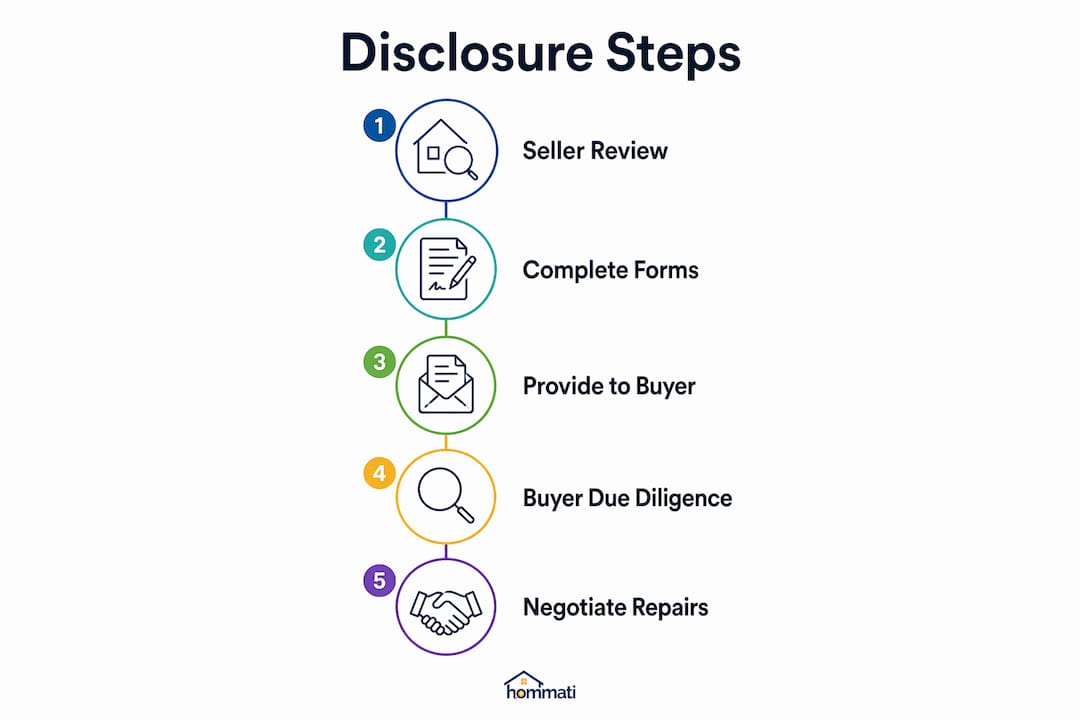
Disclosure forms typically require sellers to report on repairs, hazards, defects, HOA liabilities, and other conditions that affect property value or desirability. Material facts extend beyond physical defects. They include legal issues such as boundary disputes, environmental hazards like mold or asbestos, and neighborhood conditions such as flight paths or nearby industrial sites. Sellers who omit material facts face the same legal exposure as those who actively lie about them.
Pro Tip: If you are selling a home built before 1978, complete the EPA lead paint disclosure form before listing. Waiting until contract time creates unnecessary pressure and increases the chance of errors.
How do seller disclosure obligations protect buyers and manage seller liability?
Seller disclosures protect buyers by giving them documented, factual information before they commit to a purchase. They protect sellers by creating a legal record of what was known and shared.
Material facts and the "known defect" standard
Sellers are only required to disclose defects they actually know about. Courts distinguish between truly unknown defects and those a reasonable homeowner should have noticed. A seller who has lived in a home for 10 years and never noticed a slow roof leak may have a defensible position. A seller who received a contractor's written warning about foundation cracking and said nothing does not. The standard is what a reasonable homeowner in that situation would have known, not what the seller claims to have known.
Disclosure is not a warranty
Seller disclosure is not a warranty. Buyers who rely solely on disclosure forms without conducting independent inspections take on real risk. Disclosures inform buyers about past and known conditions. They do not certify the current state of every system in the house. A roof that was repaired three years ago and disclosed as such may still have developed new problems since the repair. Only a licensed home inspector can assess current condition.
"Disclosure laws are the referee in the real estate game, ensuring honesty and fairness for both sides of the transaction." Aptlie
The paper trail of honesty
Disclosure creates a paper trail of honesty that greatly reduces the chance of post-sale litigation for sellers. When a buyer later discovers a defect and considers suing, the first question attorneys ask is whether the seller disclosed it. A signed disclosure form showing the buyer received and acknowledged the information is a powerful defense. Sellers who skip documentation, even when they verbally mentioned an issue, lose that protection entirely.
For sellers considering an as-is property sale, disclosures remain mandatory. Selling as-is does not waive the obligation to reveal known defects. It simply signals that the seller will not make repairs.
What are the roles of real estate agents in the disclosure process?
Real estate agents are not passive bystanders in the disclosure process. They carry their own professional and legal responsibilities that run parallel to the seller's obligations.
Agents guide sellers through the following steps when completing disclosure documents:
- Review the disclosure form together. Agents walk sellers through each question on the standardized form, explaining what counts as a material fact and what level of detail is expected.
- Encourage full and truthful answers. Agents encourage accurate disclosures and verify that seller responses align with what the agent has observed about the property. An agent who notices water stains on a ceiling cannot ignore them.
- Document all disclosure communications. Agents keep written records of when disclosure forms were delivered, acknowledged, and signed. This documentation protects all parties if a dispute arises after closing.
- Disclose known facts independently if necessary. Agents may need to disclose known material facts themselves if the seller refuses to do so. An agent who knows about a significant defect and stays silent faces license revocation and personal liability.
- Clarify disclosures for buyers. Agents help buyers interpret disclosure language, flag items that warrant closer inspection, and explain the difference between minor wear and a potentially costly defect.
Understanding how agents drive negotiation outcomes starts with their role in the disclosure process. An agent who handles disclosures accurately and completely reduces friction at every stage of the transaction, from offer to close.
Agents also serve as a buffer between sellers and buyers when disclosure questions get contentious. A buyer who discovers an undisclosed issue during inspection is far more likely to walk away from the deal entirely if no agent is present to contextualize the finding and facilitate a solution.
How should buyers use real estate disclosures to guide their decisions?
Disclosure statements are a starting point for due diligence, not the finish line. Buyers who treat them as a complete picture of a property's condition make costly mistakes.
Reading disclosures strategically
Every item flagged on a disclosure form deserves a follow-up question. If a seller discloses past water intrusion in the basement, the buyer's inspector should examine that area with specific attention to current moisture levels, drainage, and any remediation work. Discrepancies between disclosure and inspection findings are the most important signal in any transaction. A gap between what the seller said and what the inspector found is grounds for renegotiation or withdrawal.
Using disclosures to negotiate
Buyers use disclosures to negotiate repairs, price reductions, or credits when known defects are confirmed by inspection. The disclosure form creates the baseline. The inspection report creates the evidence. Together, they give buyers a documented case for asking the seller to fix a problem, lower the price, or offer a closing credit.
The table below shows how buyers can respond to common disclosure scenarios:
| Disclosure scenario | Buyer response |
|---|---|
| Roof repaired 5 years ago | Request inspector to assess current condition and remaining lifespan |
| Past mold remediation disclosed | Hire a certified mold inspector for independent testing |
| HOA litigation disclosed | Review HOA financials and consult an attorney before proceeding |
| Foundation repair disclosed | Get a structural engineer's assessment before removing contingencies |
| Unpermitted addition disclosed | Verify with local building department and factor in permit costs |
Contingency rights and walk-away options
Buyers who discover undisclosed material defects during the inspection period have the right to walk away under most purchase contracts without losing their earnest money deposit. This contingency protection exists precisely because disclosures are imperfect. Sellers do not always know everything, and some sellers conceal what they do know. The inspection contingency is the buyer's safety net when the disclosure form falls short.
- Review the disclosure form before the inspection, not after. It tells the inspector where to look.
- Flag every "yes" answer on the form and ask for supporting documentation such as repair receipts or contractor reports.
- Never waive the inspection contingency based on a clean disclosure form alone.
- If a material defect surfaces after closing that was not disclosed, consult a real estate attorney immediately.
Key takeaways
Real estate disclosures are the legal and practical foundation of every honest property transaction, protecting buyers from hidden defects and protecting sellers from post-sale lawsuits.
| Point | Details |
|---|---|
| Federal law sets the floor | The Residential Lead-Based Paint Hazard Reduction Act mandates lead disclosures for all pre-1978 homes with penalties exceeding $23,000 per violation. |
| State forms cover the rest | Standardized state disclosure forms must be delivered at or before contract signing, covering systems, hazards, and property history. |
| Sellers disclose what they know | Courts hold sellers to a "reasonable homeowner" standard, not a perfect knowledge standard, for known defects. |
| Disclosures do not replace inspections | Buyers must conduct independent inspections because disclosures reflect past knowledge, not current property condition. |
| Agents carry independent duties | Real estate agents must encourage accurate disclosures and may be legally required to disclose known facts if the seller refuses. |
Why I think most buyers misread disclosure forms
By Irvin Nierras
Most buyers scan disclosure forms looking for red flags and breathe a sigh of relief when they don't find any. That is exactly the wrong way to use them. A clean disclosure form does not mean a clean property. It means the seller did not know about, or chose not to report, any issues. Those are very different things.
What I have seen in Southern California transactions is that the most valuable disclosures are the ones with something on them. A seller who discloses a past roof repair and provides the contractor's invoice is showing you exactly where to focus your inspection. That transparency is worth more than a blank form from a seller who "doesn't recall" any issues.
Sellers benefit from being thorough and proactive, even when it feels uncomfortable. Disclosing a known issue upfront gives you control over the narrative. Hiding it and having an inspector find it anyway puts you in a far weaker negotiating position and opens you up to legal exposure after closing. The paper trail of honesty is not just a legal concept. It is a practical transaction tool.
Buyers gain real protection when they treat disclosures as a research document rather than a pass-fail test. Cross-reference every disclosed item with your inspection report. Ask questions. Request documentation. The importance of real estate disclosures is not in what they guarantee. It is in what they reveal about the seller's relationship with the property.
— Irvin Nierras
How Increaltors helps buyers and sellers navigate disclosures
Working through disclosure documents without professional guidance is one of the most common sources of transaction delays and post-sale disputes in Southern California.

Increaltors, led by agent Irvin Nierras of HomeSmart Evergreen Realty, provides hands-on support for both buyers and sellers throughout the disclosure process. Sellers receive guidance on completing state-required forms accurately and completely. Buyers get help interpreting disclosure statements, coordinating inspections, and using findings to negotiate effectively. Whether you are browsing single-family homes for sale or preparing to list your property, Increaltors brings the local market knowledge and transaction experience needed to keep disclosures from becoming deal-breakers. Contact Increaltors directly through increaltors.com to connect with an agent who knows Southern California's disclosure requirements inside and out.
FAQ
What is the purpose of a real estate disclosure statement?
A real estate disclosure statement requires sellers to reveal all known material facts about a property to prospective buyers before the sale closes. Its purpose is to promote transparency and reduce the risk of post-sale disputes.
Are sellers required to disclose defects they don't know about?
Sellers are only required to disclose defects they actually know about. Courts apply a "reasonable homeowner" standard, meaning sellers cannot claim ignorance of issues they clearly should have noticed.
Can a buyer walk away after reviewing disclosures?
Buyers can walk away during the inspection contingency period if they discover undisclosed material defects. Most purchase contracts protect the buyer's earnest money deposit in this situation.
What happens if a seller fails to disclose a known defect?
Non-disclosure of a known material defect can result in lawsuits, rescission of the sale, and punitive damages. Federal violations involving lead paint carry civil penalties exceeding $23,000 per violation.
Do real estate agents have disclosure obligations too?
Real estate agents carry independent disclosure duties and may be legally required to disclose known material facts if the seller refuses. Agents who stay silent about known defects face license revocation and personal liability.