
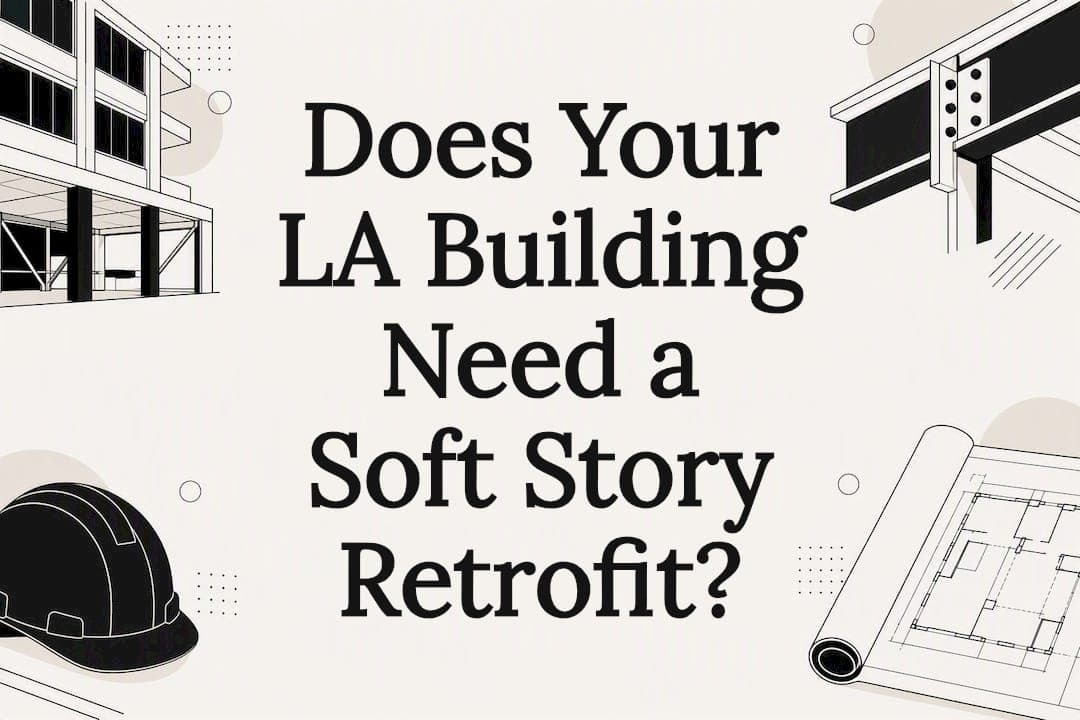
If your building went up before January 1, 1978, has two or more stories, wood-frame construction, and ground-floor parking or open-front walls, Los Angeles's mandatory soft-story retrofit program likely applies to you. That's the short answer. The city identified thousands of such buildings under Ordinance 183893 and its companion Ordinance 184081, and if yours is one of them, you should already have received an Order to Comply from the Los Angeles Department of Building and Safety.
One exception matters: residential buildings with three or fewer units are exempt, no matter how old or how the ground floor is framed.
Here's what to do right now:
- Confirm whether your property has an active Order to Comply through LADBS.
- Note the date on that order. It starts your compliance clock.
- If you haven't received one but think your building might qualify, contact the LADBS Soft-Story Retrofit Unit directly rather than assuming you're clear.
Key Takeaways
Los Angeles's mandatory soft-story retrofit program requires pre-1978 wood-frame buildings with two or more stories and ground-floor soft-story conditions to complete structural upgrades within fixed deadlines tied to their Order to Comply.
| Point | Details |
|---|---|
| Check eligibility first | Pre-1978, wood-frame, 2+ stories, and soft or open-front ground floor triggers the ordinance; 3-unit-or-fewer buildings are exempt. |
| Verify with LADBS directly | Search your address in the Permit & Inspection Report or call the Soft-Story Retrofit Unit to confirm an active Order to Comply. |
| Follow the three deadlines | Two years to submit plans, 3.5 years for permits, seven years to finish construction, all measured from the order's service date. |
| Budget for cost recovery | LAHD allows up to 50% pass-through of approved costs for rent-stabilized units, filed within program timing rules after completion. |
| Plan your next transaction with Increaltors | Once compliance is complete, Increaltors offers valuations and listing support for retrofitted LA properties heading to sale or refinance. |
Where to Verify Your Retrofit Status and Filings
- LADBS Soft-Story Retrofit Program for eligibility and Order to Comply lookup.
- LAHD Seismic Retrofit Work Program for cost-recovery applications.
- LADBS ePlanLA portal for plan-check submittals and permit tracking.
Table of Contents
- Is My Building Covered by the Soft Story Retrofit Los Angeles Program?
- What Are the Retrofit Deadlines After an Order to Comply?
- How Do You Complete a Soft Story Retrofit Step by Step?
- How Much Does a Soft Story Retrofit Cost in Los Angeles?
- What Documents and Inspections Does LADBS Require?
- What Happens if You Don't Comply With the Retrofit Order?
- How Do You Choose a Structural Engineer for Retrofit Work?
- What Retrofit Status Means for Selling or Managing Your Building
- Frequently Asked Questions
- Sources
Is My Building Covered by the Soft Story Retrofit Los Angeles Program?
The eligibility test has four parts, and a building has to hit all of them to fall under the ordinance. It must have been built before January 1, 1978, use wood-frame construction, stand two stories or taller, and include a soft, weak, or open-front condition on the ground floor, most commonly tuck-under parking or large storefront-style openings.
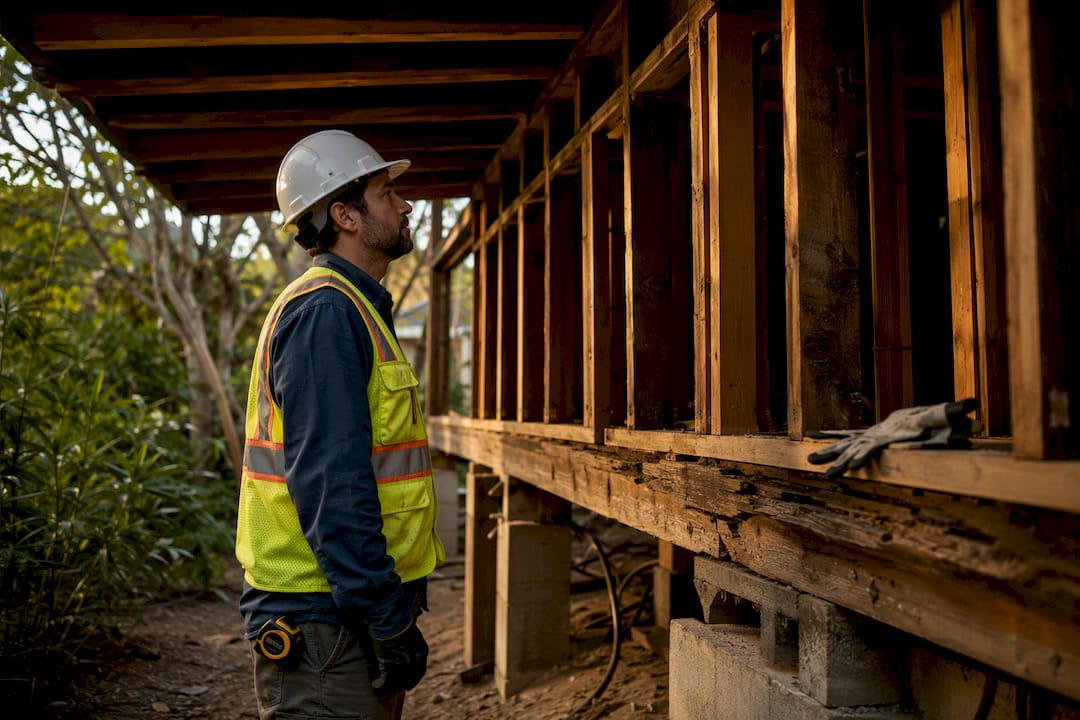
Condo buildings and mixed-use properties aren't automatically excluded. A ground-floor retail space with residential units above can still trigger the ordinance if the structural conditions match, and condo associations face the same obligations as single-owner apartment buildings when the building itself qualifies.
Don't guess. Verify directly:
- Search your address through the LADBS Permit & Inspection Report system to see if a soft-story case is on file.
- Look specifically for a formal Order to Comply document, not just a general permit history entry. Only that Order starts the legal clock.
- If your search comes up empty but you suspect the building qualifies, call the Soft-Story Retrofit Unit for a manual check.
What Are the Retrofit Deadlines After an Order to Comply?
Once LADBS serves your building with an Order to Comply, three milestones govern your timeline, and each one is measured from that service date, not from when you get around to reading the notice.
- Two years to submit retrofit plans to LADBS, or documentation proving the building was already retrofitted.
- Three and a half years to obtain your building permit.
- Seven years to complete construction and pass final inspection.
Fact check: these durations come straight from the LADBS soft-story program page, and missing any one of them can trigger enforcement action against the property.
The city didn't send every order at once. Larger and taller buildings were prioritized first in the original rollout, so if you own a big apartment complex, you may already be years into your window. Smaller qualifying properties sometimes received orders later and remain in earlier phases. Many of the original citywide deadlines have shifted or been phased over time, but LADBS has continued active enforcement throughout, so an older order doesn't mean the pressure is off.
How Do You Complete a Soft Story Retrofit Step by Step?
Once you've confirmed your Order to Comply, the process follows a fairly predictable sequence. Here's how it plays out from first call to final sign-off.
- Commission a structural evaluation. Hire a California-licensed structural or civil engineer to assess the existing building and confirm the specific soft-story deficiency LADBS flagged.
- Get sealed retrofit plans prepared. Your engineer develops a structural analysis and stamped retrofit drawings, often involving steel moment frames or new shear wall assemblies at the ground floor. If the building was already retrofitted, this step becomes documentation instead of design.
- Submit for plan check and pull permits. Plans go to LADBS through the ePlanLA portal or over the counter. Expect at least one round of corrections; budget time for it rather than treating the first submittal as final.
- File a Tenant Habitability Plan. Once permits are issued, LAHD requires a THP outlining tenant notices, construction impacts, and any temporary relocation needs before work begins.
- Build, inspect, and close out. Construction proceeds with scheduled LADBS inspections and structural observation by the engineer of record, ending with a final inspection and a Certificate of Compliance.
Standard details to have ready before you even talk to an engineer: existing foundation drawings if you have them, unit count and floor plans, and any prior permit history for the ground floor. This shortens the evaluation phase considerably.
Pro Tip: Start the engineer evaluation the same week you receive the Order to Comply, not months later. Early evaluation cuts down plan-check cycles and keeps you safely inside the 3.5-year permit deadline instead of racing it.
How Much Does a Soft Story Retrofit Cost in Los Angeles?
Retrofit costs swing widely based on building size, ground-floor configuration, and how much structural work the engineer specifies. Industry cost summaries put small multiunit projects roughly in the $45,000 to $95,000 range, medium properties between $60,000 and $180,000, and larger buildings sometimes exceeding $150,000 to $350,000. Treat these as planning ranges, not quotes.
What actually drives the number:
- Steel moment frame installations versus simpler shear wall additions.
- Foundation upgrades needed to anchor new structural elements.
- Utility relocations when plumbing or electrical runs sit in the retrofit zone.
- Total unit count and the building's overall square footage.
If your property is rent-stabilized, LAHD's Seismic Retrofit Work Program lets you recover part of that cost through tenant rent surcharges, capped at a pass-through of up to 50% of approved retrofit expenses. The application has to be filed within strict timing rules after construction wraps, so track every invoice and permit as you go rather than reconstructing paperwork later. Get at least three contractor bids with itemized scope before committing. A vague lump-sum quote makes both your budgeting and your eventual LAHD filing harder.
What Documents and Inspections Does LADBS Require?
A clean plan-check submittal saves weeks. LADBS typically wants:
- Architectural plans showing the existing and proposed ground-floor conditions.
- Structural plans and calculations, sealed by a California-licensed engineer or architect, including details for moment frames or shear wall schedules.
- A Title 24 CF-1R form when energy code triggers apply to the scope of work.
- Existing-condition photos and foundation details supporting the engineer's analysis.
On the construction side, expect a defined inspection sequence tied to structural milestones, with structural observation required at key stages by the engineer of record. Before permits issue, your contractor needs an active City Business Tax Registration Certificate, current insurance, and BCID standing in good order. Once construction passes final inspection, LADBS issues the Certificate of Compliance, which becomes your proof of legal completion and starts the clock on your LAHD cost-recovery filing window.
What Happens if You Don't Comply With the Retrofit Order?
Ignoring an Order to Comply doesn't make it disappear. Consequences stack up fast:
- Fines that accrue the longer a building sits out of compliance.
- A code violation flag attached to the property record, visible in title searches.
- Escrow complications when buyers or lenders discover an open Order to Comply mid-transaction.
- In serious safety cases, a vacate order for an unsafe structure.
Noncompliance also complicates insurance renewal and can stall a refinance, since lenders increasingly ask for retrofit status upfront. If you believe the building was already retrofitted, gather proof and submit it to LADBS rather than letting the order sit open. Demolition and, in limited cases, permitted extensions are also on the table depending on your circumstances.
How Do You Choose a Structural Engineer for Retrofit Work?
Your engineer needs to be a California-licensed structural or civil engineer, and your contractor should hold an active CSLB license with specific experience pulling soft-story retrofit permits through LADBS. General residential remodeling experience isn't the same skill set.
Before signing anything, ask for:
- Examples of soft-story retrofits they've taken through LADBS plan check to completion.
- References from Los Angeles property owners, not just general contracting clients.
- A structural observation plan for the construction phase.
- Proof they've personally pulled permits on similar projects in the city.
Watch for red flags: contractors who won't name past LA soft-story projects, or engineers quoting a flat fee before seeing the building. Your contract should spell out scope, schedule, payment milestones, and exactly who's responsible for permit submittals and corrections.
If your building's ground-floor layout also needs design work beyond the structural retrofit itself, permitting and design partners like Upright Construction & HVAC handle overlapping plan-check and permit coordination work in Los Angeles.
Pro Tip: Ask every engineer candidate one direct question: "How many soft-story retrofit permits have you personally closed out with LADBS?" Vague answers are the clearest red flag you'll get.
What Retrofit Status Means for Selling or Managing Your Building
I've watched retrofit status decide how smoothly an escrow closes more than once. Buyers and lenders now ask about Order to Comply status early, and a completed Certificate of Compliance removes a major point of friction before it ever reaches negotiation. If tenant relocation or notices come up during your retrofit, our rent control and relocation guides walk through the practical side of managing that transition.
Get Ready to Sell or Refinance After Your Retrofit
Owners finishing up a soft-story retrofit usually have one question next: what's the building worth now, and is this the right time to sell or refinance? Increaltors works with Los Angeles property owners at exactly that stage, offering property valuations that reflect completed compliance work, agent coordination for contractor referrals during the retrofit itself, and full listing support once your Certificate of Compliance is in hand.
A completed retrofit is a selling point buyers actively look for in older LA multiunit properties, and pricing it correctly matters more than most owners expect. Start with a free home valuation from Irvin Nierras to see how your compliant building stacks up in today's market, or browse current listings to see how comparable retrofitted properties are priced before you decide your next move.
Frequently Asked Questions
Does the soft story ordinance apply to duplexes or triplexes? No. Residential buildings with three or fewer units are exempt from Ordinance 183893 regardless of construction date or ground-floor configuration.
How do I know if I already received an Order to Comply? Search your address in the LADBS Permit & Inspection Report system, or call the Soft-Story Retrofit Unit to confirm whether an order is on file for your property.
Can I pass retrofit costs on to tenants? Under LAHD's Seismic Retrofit Work Program, owners of eligible rent-stabilized properties can pass through up to 50% of approved retrofit costs, subject to filing deadlines and program rules.
What happens if I miss the permit deadline? Missing the 3.5-year permit deadline or the 7-year construction deadline can trigger LADBS enforcement action, including fines and property record flags that complicate future sales or refinancing.
Do I need an engineer, or can a general contractor design the retrofit? LADBS requires structural calculations and retrofit plans sealed by a California-licensed structural or civil engineer or architect. A general contractor alone cannot prepare or stamp these documents.
Sources
- Soft-Story Retrofit Program - LADBS - City of Los Angeles
- The Seismic Retrofit Work Program – LAHD
- Mandatory Wood Frame Soft-story Retrofit Program — permitting and inspection guidance (Information Bulletin)
- LA Soft-Story Retrofit Deadline 2026 | Ord 183893 Compliance