

If you're selling a home in California, plan on closing costs eating up roughly 6% to 9% of your sale price once agent commissions are included, with non-commission fees typically landing between 1% and 3%. On a $900,000 sale, that's somewhere between $54,000 and $81,000 walking out the door before you see a dime of equity.
Commissions are almost always the biggest deduction. After that, the next three costs to watch are:
- Owner's title insurance, which sellers customarily pay in most California counties
- Escrow and settlement fees, often $1,000 to $3,000 depending on price and complexity
- Documentary transfer taxes, which vary by county and can spike sharply inside certain cities
Your immediate next move: ask your escrow officer for an estimated closing statement, or have your agent run a net-proceeds estimate before you list. Guessing at this stage costs sellers real money.
Key Takeaways
Sellers who request an estimated closing statement early and verify commission, title, and transfer tax figures against their actual contract consistently protect more of their net proceeds than those who rely on rule-of-thumb percentages.
| Point | Details |
|---|---|
| Budget the full range | Plan for 6% to 9% of sale price in total closing costs, with commissions as the largest single deduction. |
| Request your closing statement early | Ask escrow for an estimated closing statement as soon as you accept an offer, not right before signing. |
| Verify your mortgage payoff | Get a current payoff statement from your lender rather than trusting your last billing balance. |
| Check local transfer tax rates | County baseline taxes and city add-ons stack, so confirm your specific city's rate before estimating net proceeds. |
| Shop escrow and title providers | Fees aren't fixed by law, and a written quote comparison can meaningfully reduce your closing costs. |
Table of Contents
- Seller Closing Costs in California: A Line-by-Line Breakdown
- Estimate Your Net Proceeds Before You List
- Who Pays What in California, and Where Regions Differ
- How to Lower Your Closing Costs Before You Sign
- How Irvin Nierras Helps Sellers Control Closing Costs
- Extra Costs That Catch Sellers Off Guard
- Short Sales, Foreclosures, and How They Change Your Closing Costs
- Common Closing Cost Mistakes California Sellers Make
- What Sellers Get Wrong About Closing Costs
- Sources
Seller Closing Costs in California: A Line-by-Line Breakdown
Every seller closing cost falls into one of several categories, and knowing what drives each one is how you avoid an unpleasant surprise at the signing table.
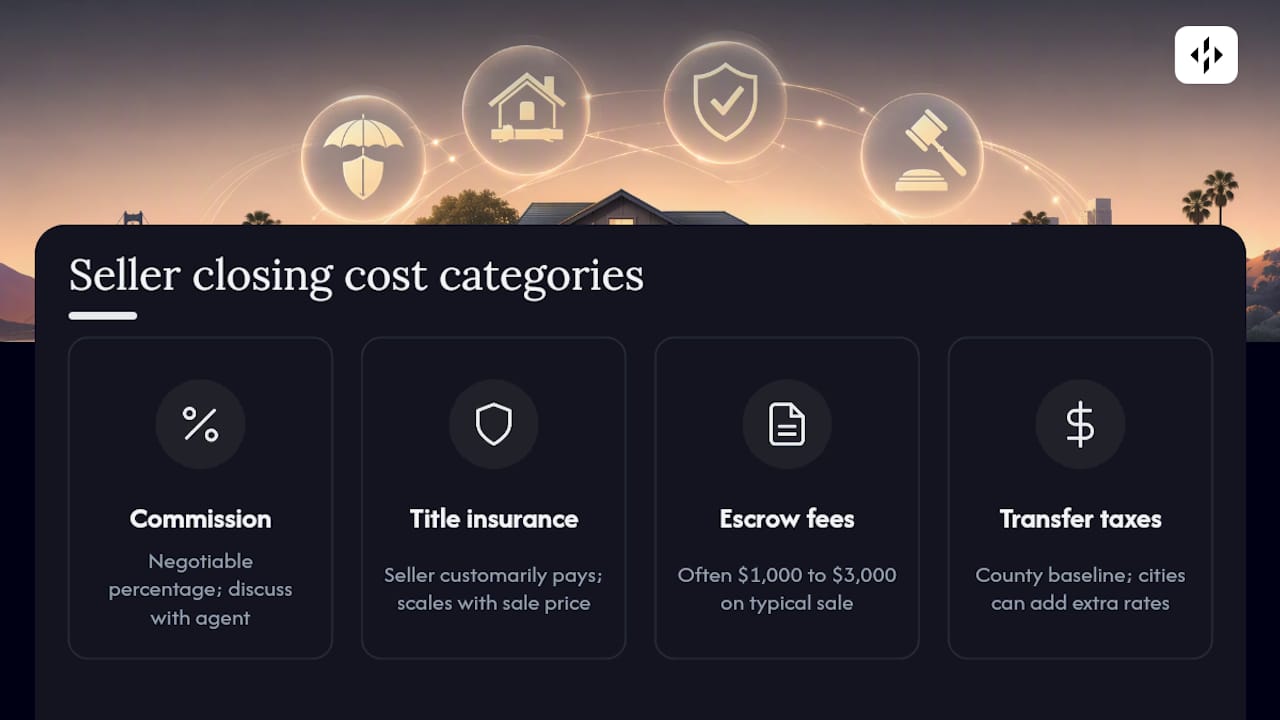
Commission percentages are negotiable, and the split isn't fixed by law, so this is the first number worth discussing with your agent.
Owner's title insurance protects the buyer against defects in the property's title history, and in most California counties, sellers customarily pay this premium. Premiums scale with sale price, so a $500,000 home and a $1.5 million home will see meaningfully different bills. Ask your title company for a "reissue rate" if you purchased title insurance recently. It can shave real dollars off the premium.
Escrow and settlement fees cover the neutral third party that holds funds and coordinates paperwork through closing. The California Department of Real Estate is explicit that escrow fees are not set by law and vary by provider and transaction complexity. Expect a base charge plus a per-thousand-dollar rate, often totaling $1,000 to $3,000 on a typical residential sale.
Documentary transfer taxes are where sellers get caught off guard. California counties impose a baseline documentary transfer tax under state law, but individual cities can layer on their own add-on rate. San Francisco, for example, publishes its own city transfer tax schedule that climbs steeply for higher-value properties. Always check your specific city's finance or assessor page rather than assuming the county rate is the whole story.
Beyond those four, expect prorated property taxes (calculated against the county's tax calendar), HOA resale and transfer fees if you're in a managed community, and smaller line items like recording fees and courier charges.
Pro Tip: Request your estimated closing statement the week you accept an offer, not the week before closing. It gives you time to question a fee that looks off instead of discovering it at the signing table.
Estimate Your Net Proceeds Before You List
The math isn't complicated once you have real numbers instead of guesses. Your net proceeds formula looks like this:
Sale price − mortgage payoff − commission − title insurance − escrow fees − transfer taxes − prorations − negotiated concessions = net proceeds
To run it accurately, gather your current mortgage payoff statement (request it from your lender, since it changes daily with accrued interest), your agreed commission percentage, a title insurance quote, an escrow fee estimate, and your local documentary transfer tax rate.
Here's how that plays out across three price points, using typical California cost ranges:
Three verification steps before you trust any number:
- Confirm your mortgage payoff amount directly with your lender, not from your last statement balance.
- Get a written escrow fee quote and a title premium quote rather than relying on a rule-of-thumb percentage.
- Ask your listing agent to run a formal net-proceeds sheet using your actual contract terms once you're in escrow.
A net-proceeds calculator on your agent's site can give you a starting figure, but the real number always comes from your escrow officer's closing statement.
Who Pays What in California, and Where Regions Differ
The purchase agreement, not custom or tradition, determines who pays which fee. The DRE is direct on this point: contract language controls, and regional habits are just defaults that get overridden the moment a clause says otherwise.
That said, common patterns hold across most Southern California transactions:
- Sellers typically cover the agent commissions and the owner's title insurance policy.
- Escrow fees are frequently split 50/50 between buyer and seller in Southern California, though Northern California transactions often shift the escrow fee to the buyer entirely.
- Documentary transfer tax responsibility is negotiable by contract, even though many local customs assume the seller pays it.
Sellers relocating from Northern California, or buyers moving down from the Bay Area, are the ones most likely to get blindsided by this north/south split. Don't assume your last transaction's fee allocation carries over to this one.
Pro Tip: Before signing your listing agreement, ask your agent to walk through exactly which fees are seller-paid under your specific contract draft. Vague boilerplate language is where most "who pays this?" disputes start.
Confirm exact local transfer tax rates with your city's finance or assessor's page, since county baseline rates and city add-ons stack, and the difference between assuming the county rate and paying the actual city rate can run into thousands of dollars on a higher-value home.
How to Lower Your Closing Costs Before You Sign
You have more leverage over these numbers than most sellers realize. Work through this in order:
- Negotiate your commission structure first. A lower percentage sounds appealing, but weigh it against what a well-marketed listing might add to your final sale price. Sound negotiation strategy often nets more than a bare-bones commission cut.
- Shop your escrow and title providers. Fees are negotiable and not fixed by law, and asking for a reissue rate on title insurance is a routine request, not a favor.
- Resolve liens early. Waiting until escrow to discover a lien delays closing and can force you into rushed, costlier fixes.
- Avoid throwing in unnecessary concessions. A home warranty or repair credit offered reflexively during negotiations often costs more than it buys in goodwill.
- Bring in a real estate attorney for complex situations like a 1031 exchange, an estate sale, or multiple liens. For a standard sale, your agent and escrow officer typically cover what you need.
Pro Tip: Get all fee quotes in writing before you open escrow. A verbal estimate from a provider your agent recommends isn't binding, and prices can shift once you're locked into the transaction.
How Irvin Nierras Helps Sellers Control Closing Costs
I've built my practice around one idea: sellers shouldn't be guessing at their bottom line. Working with Increaltors in the Los Angeles and Orange County markets, here's what that looks like in practice:
- A CMA paired with a net-proceeds report before you list, so you know your realistic range early
- Escrow coordination that keeps fee estimates current as your transaction moves forward
- Fee-shopping assistance on escrow and title so you're not defaulting to the first quote
- Support clearing liens or title issues before they threaten your closing date
If you want a personalized estimate for your property, request your free home valuation report or browse current listings to see how comparable homes are pricing in your area.
Extra Costs That Catch Sellers Off Guard
A few smaller costs don't show up on every closing statement but hit often enough that you should budget for them anyway. A home warranty, if you offer one as a buyer incentive, typically runs a few hundred dollars and gets paid at closing, either by you directly or deducted from proceeds.
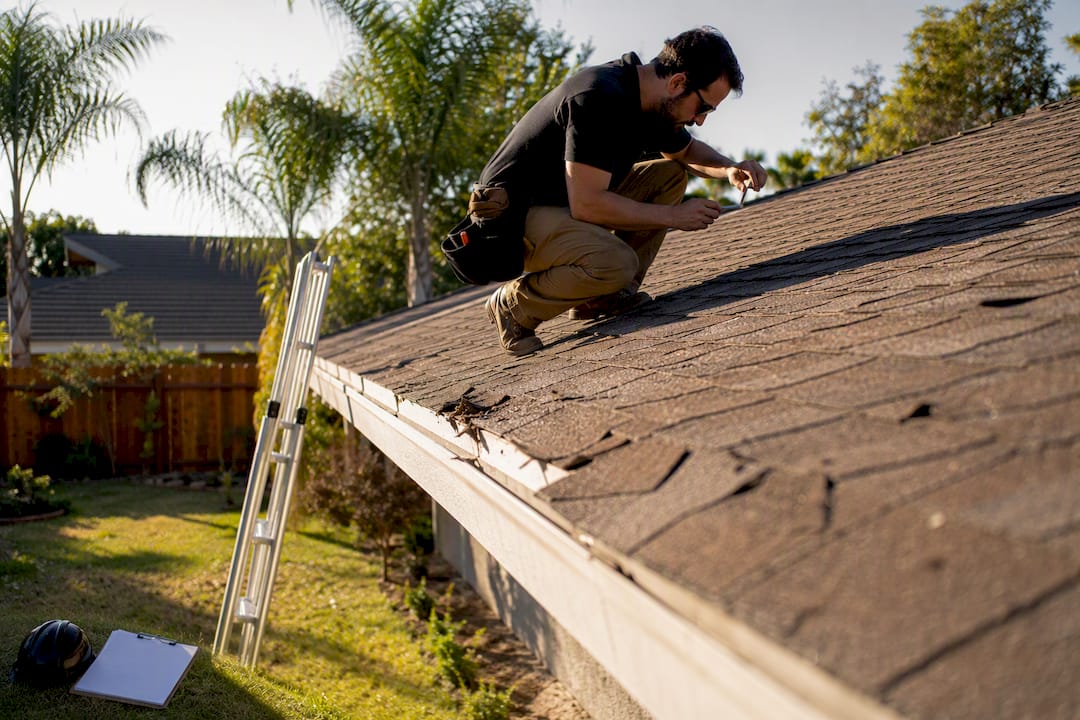
Inspection-related repairs are the wildcard. If a buyer's inspector flags a roof issue, electrical problem, or plumbing concern, you'll negotiate either a price reduction, a repair credit, or an agreement to fix it yourself before closing. Sellers who get a pre-listing inspection tend to avoid last-minute repair negotiations entirely, since they've already priced in known issues.
HOA transfer fees apply if your property sits in a homeowners association. These cover the cost of transferring membership records and issuing required disclosure documents to the buyer, and they're separate from any prorated HOA dues you owe through your closing date. Fees vary by association, sometimes running from under $100 to several hundred dollars depending on how the HOA structures its transfer process.
None of these are large individually, but stacked together, they can add a few thousand dollars to your total closing costs. Ask your escrow officer to itemize every one of these on your estimated closing statement so nothing arrives as a surprise deduction on closing day. This is exactly the kind of detail that makes an early closing statement request worth the effort.
Short Sales, Foreclosures, and How They Change Your Closing Costs
A standard sale and a distressed sale don't play by the same closing-cost rules. In a short sale, where the sale price falls short of what's owed on the mortgage, your lender has to approve the transaction, and that approval often comes with conditions about what costs the lender will and won't cover. Commission structures can shift, and some fees you'd normally negotiate freely become subject to lender sign-off instead.
Foreclosure sales, whether you're selling to avoid foreclosure or the property is already bank-owned, tend to move faster and with less room to negotiate seller-paid costs. If you're the homeowner trying to sell before a foreclosure completes, timing becomes the dominant factor, sometimes more urgent than minimizing fees.
Both scenarios usually mean less flexibility on commission negotiation, less time to shop escrow and title providers, and lender-driven paperwork requirements that add complexity to an already stressful process. If you're facing either situation, loop in your agent and, where liens or lender approval are involved, a real estate attorney, earlier rather than later. The closing-cost math still applies, but your control over it shrinks considerably.
Common Closing Cost Mistakes California Sellers Make
The costliest mistake is assuming a percentage you saw online applies exactly to your sale. Every property, price point, and city carries its own combination of transfer tax rates and fee structures, which is why the 6% to 9% range is a planning tool, not a guarantee.
The second mistake: skipping the estimated closing statement request until late in escrow. By then, you've lost the leverage to question a fee or shop a provider.
Third, sellers frequently forget to confirm their exact mortgage payoff amount, relying instead on their last statement balance. Accrued interest and fees mean the real payoff figure is almost always higher than what your last bill showed.
Finally, many sellers assume fee allocations from a past sale, or from a friend's experience in a different county, will carry over automatically. As covered earlier, the north/south escrow split difference alone trips up plenty of relocating sellers. Read your specific purchase agreement, every time, rather than relying on memory or hearsay from a previous transaction.
What Sellers Get Wrong About Closing Costs
Most closing cost advice treats California like it has one set of rules, and that's the biggest gap I see between what sellers read online and what actually lands on their closing statement. A percentage range is useful for planning, but it's not a substitute for checking your city's actual transfer tax ordinance or getting a real escrow quote.
Commission is negotiable. Escrow and title providers are shoppable. Even the timing of your close can shift proration math in your favor. Where I'd push back hardest on standard guidance: don't wait until you're deep in escrow to ask questions. The sellers who come out ahead are the ones who treat their net-proceeds estimate as a living document, updated as real quotes come in, not a number they calculated once in January and trusted through closing in June.
Start with the estimated closing statement. Everything else follows from there.
— Irvin Nierras
Sources
- Surviving the Real Estate "Escrow" Process in California: Important Things and Tips You Should Know, and Mistakes to Avoid
- California Revenue and Taxation Code — documentary transfer tax provisions
- California Seller Closing Costs: Complete Guide for 2026
- Title insurance consumer guidance — California Department of Insurance