
If your building has two or more units and was constructed on or before October 1, 1978, it's almost certainly covered by the LA Rent Stabilization Ordinance, and the City just changed the increase formula effective February 2, 2026. If it doesn't fit that description, California's AB 1482 likely steps in as a statewide backstop, capping increases at 5% plus local inflation, up to 10% maximum. Newer buildings, single-family homes with proper exemption notices, and certain owner-occupied duplexes may fall outside both.
Here's your immediate checklist:
- City address: search ZIMAS to confirm your unit's RSO status.
- Unincorporated LA County address: search the Rent Registry instead.
- Either way: screenshot the result, save every rent-increase notice you receive, and note the date you checked.
Key Takeaways
Rent control coverage in Los Angeles depends on building age, unit type, and location, and verifying it through official registries before acting is the single most important step for both tenants and landlords.
| Point | Details |
|---|---|
| Check coverage first | Use ZIMAS for City addresses and the Rent Registry for unincorporated County addresses before assuming coverage. |
| Know your 2026 cap | RSO units are capped at 3% through June 2027; AB 1482 units cap at 5% plus inflation, up to 10%. |
| Document every notice | Save rent-increase and eviction notices with dates; screenshots of registry searches count as evidence. |
| Register and post correctly | Landlords must register covered units and post Notice of Renters' Protections and Right to Counsel. |
| Ask for help early | Contact LAHD, DCBA, or Stay Housed LA before a dispute escalates to eviction proceedings. |
Table of Contents
- Which Rent Control Laws Apply in Los Angeles?
- How Much Can Rent Increase in Los Angeles Right Now?
- Eviction Rules, Just Cause, and Relocation Payments
- Landlord Compliance Checklist: Registration and Notices
- How to Check If Your Unit Is Covered
- What to Do When You Get a Rent Increase or Eviction Notice
- Where to Get Help With Rent Disputes in LA
- Common Compliance Mistakes Landlords Make in LA
- The Priorities That Actually Matter in LA Rent Control
- Ready to Explore Homeownership Instead of Renting?
- Frequently Asked Questions
- Sources
Which Rent Control Laws Apply in Los Angeles?
Three separate legal frameworks can govern your rent, and figuring out which one applies is the first real step. The LA Rent Stabilization Ordinance (RSO), sometimes called LARSO, generally covers rental buildings with two or more units built on or before October 1, 1978. It caps annual increases and requires a specific just cause for eviction. The City's separate Just Cause Ordinance (JCO) extends eviction protections to many rental units that fall outside RSO, even though it doesn't limit rent amounts the way RSO does.

Statewide, AB 1482 (the California Tenant Protection Act) acts as a backstop for units not covered by local ordinances, capping increases at 5% plus the regional cost of living change, or 10%, whichever is lower, according to the California Department of Justice. If you live in unincorporated LA County, the Rent Stabilization & Tenant Protections Ordinance (RSTPO) governs instead of the City's RSO.
| Framework | Typical Coverage |
|---|---|
| RSO (City) | 2+ unit buildings built on or before 10/1/1978 |
| RSTPO (County) | Unincorporated LA County rentals, similar age/unit thresholds |
| AB 1482 (State) | Most units not covered above, with 15-year new-construction exemption |
Common traps: single-family homes and condos need a specific AB 1482 exemption notice referencing the correct Civil Code sections. Skip that notice, and the unit is treated as covered whether the landlord intended it or not.
How Much Can Rent Increase in Los Angeles Right Now?
Effective February 2, 2026, LAHD amended the RSO formula to 90% of CPI, with a floor of 1% and a ceiling of 4%. For the period running July 1, 2025, through June 30, 2027, LAHD has set the annual RSO increase at 3%, and that figure holds regardless of the formula update since it falls within the new range. RSO increases can only happen once every 12 months.
For units under AB 1482, the allowable increase is based on a base percentage plus the regional cost-of-living change, with an overall cap to prevent excessive hikes.
A few notice rules matter here:
- Increases of 10% or less generally require 30 days' written notice.
- Increases above 10% require 60 days' notice under state law.
- Utility surcharges and the old additional 10% dependent-relative charge are no longer permitted add-ons under current rules.
Run your own numbers through LAHD's rent increase calculator before accepting or issuing a notice.
Eviction Rules, Just Cause, and Relocation Payments
"Just cause" means a landlord needs a legally recognized reason to evict, not just a preference for a new tenant. Under RSO and JCO, that includes at-fault reasons (nonpayment, lease violations) and no-fault reasons (owner move-in, Ellis Act withdrawal, substantial remodel). AB 1482 requires the same just-cause standard once a tenant has lived in a unit for 12 months.
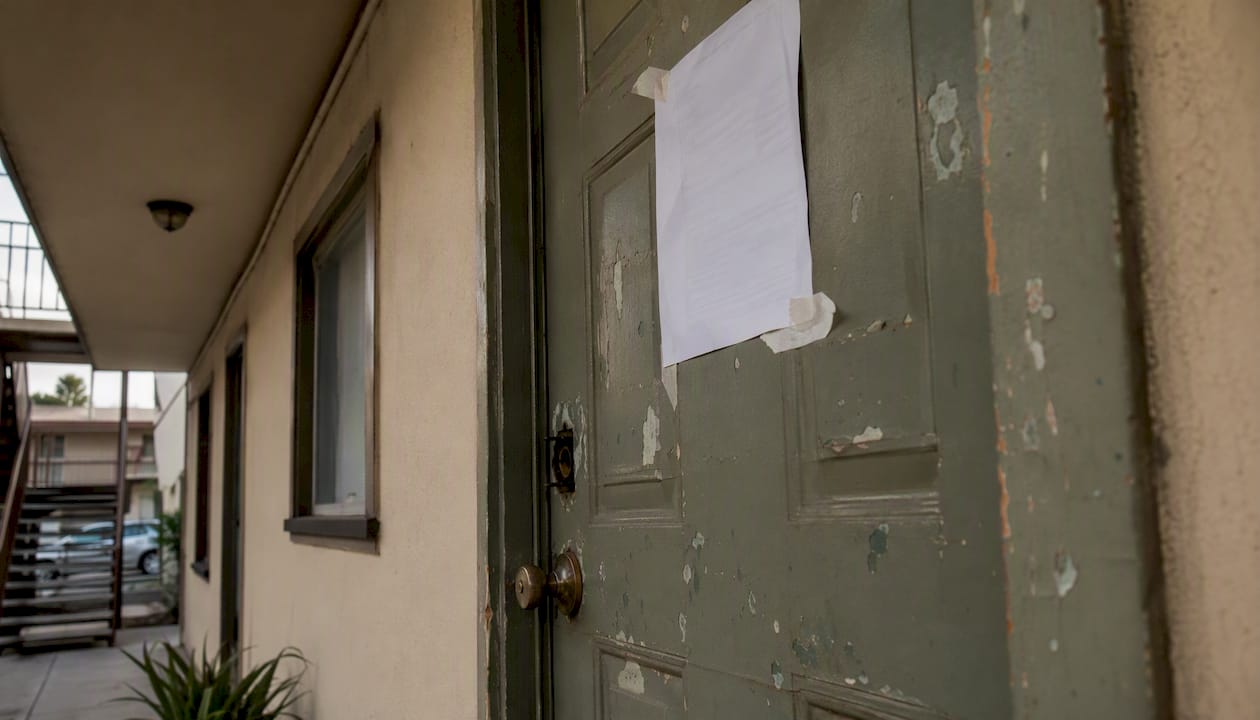
Non-payment thresholds recently shifted. Effective April 16, 2026, LA County raised the threshold for RSTPO-covered units to 2 months of Fair Market Rent before an owner can file a non-payment eviction, a meaningful buffer for tenants facing temporary hardship.
Key eviction procedure points:
- At-fault eviction notices generally must be uploaded to LAHD within three business days of service.
- No-fault evictions (owner move-in, Ellis Act, remodel) typically trigger relocation assistance obligations.
- Tenants facing eviction should receive a Notice of Right to Counsel on a specific timeline tied to the eviction notice.
- Save every notice you receive, dated and complete.
- Confirm the stated reason for eviction matches a recognized just-cause category.
- Ask LAHD directly if you're unsure whether relocation payment applies to your situation.
Landlord Compliance Checklist: Registration and Notices
Compliance isn't optional paperwork. It's the difference between a landlord who can legally raise rent and one who can't. RSO units need annual registration and fee payment with LAHD. County landlords with units in unincorporated areas register through the Rent Registry portal, which also handles rent adjustment documentation.
Required postings and disclosures include:
- The Notice of Renters' Protections, posted where tenants can see it.
- The Notice of Right to Counsel, delivered on the required timeline before eviction proceedings.
- RSO registration certificates, current and visible.
- AB 1482 exemption notices for single-family homes and condos that qualify, using the exact statutory language.
Skip registration or fail to post required notices, and you risk administrative fines, an inability to legally raise rent until you fix the problem, and exposure to tenant overcharge claims. None of these penalties require a lawsuit to bite. They start the moment LAHD or DCBA flags the gap.
How to Check If Your Unit Is Covered
- City address: run it through ZIMAS and note the zoning and RSO flag.
- Unincorporated County address: search the Rent Registry by address or APN.
- Cross-check the building's construction date against RSO's October 1, 1978, cutoff or AB 1482's 15-year new-construction exemption.
- Screenshot every search result with the date visible.
Pro Tip: If your landlord claims your single-family home is AB 1482 exempt but never handed you a written exemption notice citing the specific Civil Code sections, document that gap immediately. Missing notices are one of the most common reasons a supposedly exempt unit ends up treated as fully covered.
What to Do When You Get a Rent Increase or Eviction Notice
For tenants:
- Verify coverage using ZIMAS or the Rent Registry before responding to anything.
- Confirm the notice period matches the increase percentage (30 or 60 days).
- Request the landlord's written calculation method for the increase.
- Ask about mediation or right-to-counsel eligibility if an eviction notice arrives.
- Keep every text, email, and letter related to the dispute.
For landlords:
- Confirm your registration status is current before sending any increase notice.
- Calculate the allowable increase using LAHD's calculator and save that documentation.
- Deliver all required notices on the correct legal timeline.
- File eviction-related uploads with LAHD within the required window.
A short written response template helps both sides: state the unit address, the coverage law you believe applies, the specific increase or eviction notice date, and a direct request for the landlord's calculation or legal basis. That single paragraph often resolves disputes before they reach a hearing.
Where to Get Help With Rent Disputes in LA
LAHD handles RSO enforcement, registration, and City filings. DCBA manages the RSTPO and Rent Registry for unincorporated County properties. Mediation through DCBA and Stay Housed LA tends to resolve disputes faster and cheaper than court, a point County guidance emphasizes repeatedly.
Other resources worth knowing:
- Tenant Right to Counsel (TRTC): free legal representation for eligible tenants facing eviction.
- REAP (Rent Escrow Account Program): for habitability issues where a landlord won't make repairs.
- File a complaint with LAHD or DCBA before hiring private counsel; many disputes resolve at that stage.
Common Compliance Mistakes Landlords Make in LA
Pro Tip: Keep a folder, physical or digital, with your registration receipt, every posted notice photographed with a date stamp, and screenshots of any Rent Registry updates. That folder is your defense if a tenant ever disputes an increase.
- Failing to register a covered unit at all.
- Skipping the AB 1482 exemption notice for single-family homes.
- Never posting the Notice of Renters' Protections or Notice of Right to Counsel.
Each mistake risks the same outcome: fines, a frozen ability to raise rent, and exposure to overcharge claims that can follow a property for years.
The Priorities That Actually Matter in LA Rent Control
Most rent control confusion in Los Angeles comes down to skipping verification. Renters assume protections apply without checking ZIMAS. Landlords assume exemptions apply without delivering the correct notice. Both mistakes are avoidable with five minutes on an official registry.
My advice, after watching how these disputes typically unfold: verify coverage first, document everything second, and reach out to LAHD or DCBA the moment a disagreement starts rather than after it escalates. If eviction is on the table, don't wait to explore Right to Counsel eligibility. Increaltors works with LA renters and buyers navigating exactly these transitions. Our local market guides cover the ground beyond rent control too.
Ready to Explore Homeownership Instead of Renting?
If rent increases and coverage uncertainty have you rethinking whether renting still makes sense, buying might be worth a serious look. Owning a home removes you from the entire rent-control equation, no more annual increase notices, no coverage verification, no landlord disputes. Increaltors helps Los Angeles and Orange County buyers find single-family homes and condos that fit both budget and lifestyle, with local market knowledge built specifically for Southern California. If you're a landlord weighing whether continued rent-control compliance still pencils out against selling, our full listings page and free home valuation report are good starting points to compare your options side by side.
Frequently Asked Questions
Is rent control still active in Los Angeles in 2026? Yes. RSO remains active with a 3% annual cap through June 30, 2027, and the City's formula update effective February 2, 2026 sets a 90% CPI, 1% to 4% range going forward.
How do I know if my apartment is under LA rent control? Check ZIMAS for City addresses or the Rent Registry for unincorporated County addresses. Buildings with two or more units built on or before October 1, 1978, are generally RSO covered.
What's the maximum rent increase allowed under AB 1482?
Can my landlord evict me without a reason in Los Angeles? No. Units under RSO, JCO, or AB 1482 after 12 months of tenancy require a legally recognized just cause for eviction.
Where do I file a complaint about an illegal rent increase? File with LAHD for City RSO units or DCBA for County RSTPO units. Both agencies handle enforcement and can direct you to mediation through Stay Housed LA.
This article is general information, not a substitute for advice from a qualified lawyer. Consult a qualified legal professional about your own circumstances before acting on anything here.
Sources
- California Department of Justice — Tenant Protections Under AB 1482
- Los Angeles County Department of Consumer and Business Affairs — Rent Stabilization
- Los Angeles Housing Department — Renter protections & RSO updates