
Selling your home remotely from Southern California presents unique challenges that traditional sellers never face. You need to coordinate showings, manage inspections, and handle closing paperwork without being physically present, all while navigating a market where median home prices hover around $852,000 and inventory conditions shift rapidly. This guide walks you through proven strategies to successfully sell your property from anywhere, backed by current market data and expert insights tailored specifically for SoCal homeowners managing transactions from a distance.
Table of Contents
- Key Takeaways
- Understanding Southern California's current real estate market
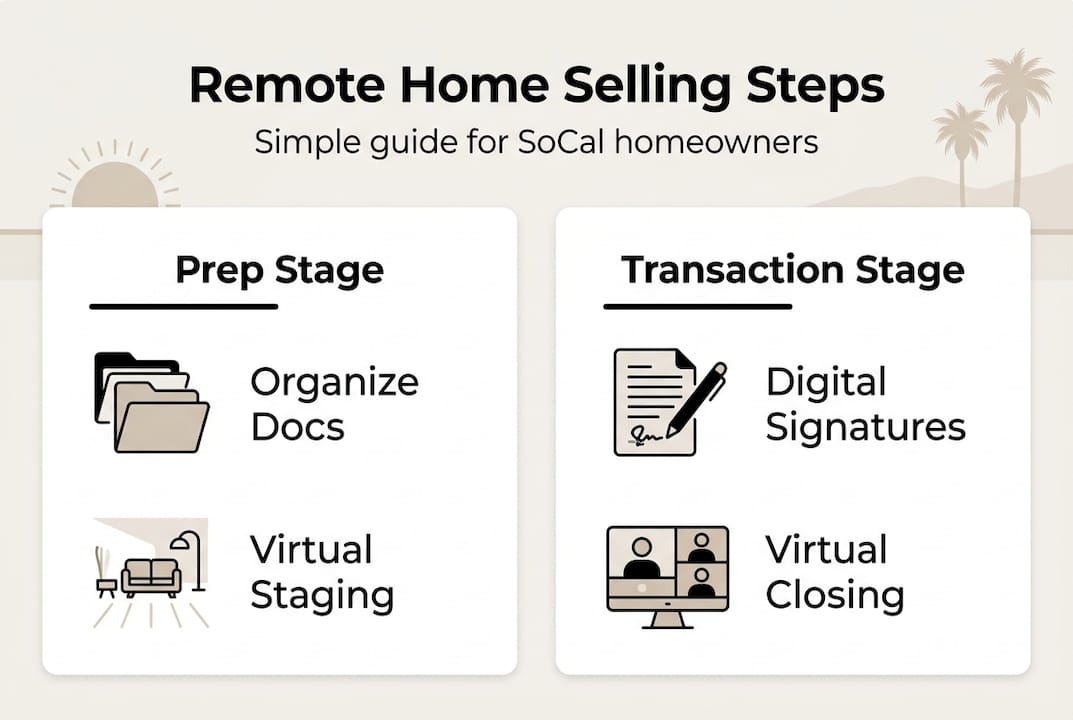
- Preparing your home and documents for remote selling
- Executing the remote home selling process step-by-step
- Confirming sale completion and next steps after remote closing
- How we support your remote home selling journey
- FAQ
Key Takeaways
| Point | Details |
|---|---|
| Pricing reflects comps | Pricing must reflect current comps rather than peak market values due to higher inventory and buyer leverage. |
| Digital marketing emphasis | More inventory means you need stronger online marketing to capture remote buyers. |
| Remote document readiness | Organize a digital file system with disclosures and records to keep closing on track from afar. |
| Virtual showings essential | Invest in three dimensional tours and video to reduce buyer uncertainty and generate serious inquiries. |
Understanding Southern California's current real estate market
The 2026 Southern California housing landscape shows distinct patterns that directly impact your remote selling strategy. Current median home prices range from $852,000 to $905,000, with forecasts projecting modest 3.6% growth through the year. This stability creates predictable pricing conditions, but you need to understand the nuances beneath these headline numbers.
Inventory levels tell a different story than price trends alone. Year over year increases of approximately 20% mean buyers have more options to consider, shifting leverage away from sellers compared to the tight markets of previous years. This doesn't mean homes aren't selling, it means presentation and pricing accuracy matter more than ever. Properties that sit too long signal problems to buyers, especially when they're evaluating remotely without the emotional connection of an in-person visit.
Mortgage rates currently hover between 5.9% and 6%, influencing buyer affordability calculations significantly. A buyer approved at 5.9% can afford roughly $50,000 more home than one facing 6.5% rates, so rate movements create urgency or hesitation in the market. Days on market have extended in some submarkets, particularly in areas where prices climbed fastest during the pandemic surge. Coastal properties still move quickly, while inland areas see more negotiation.
Current market factors affecting remote sellers:
- Increased inventory requires stronger digital marketing to stand out
- Buyer leverage means pricing must reflect current comps, not peak values
- Remote work patterns boost Inland Empire demand with significant rent growth
- Virtual showings have become standard, reducing geographic barriers
The market snapshot data reveals another critical trend: buyer behavior has permanently shifted toward digital-first property research. Over 90% of buyers now begin their search online, and remote buyers especially rely on virtual presentations to narrow their options before committing to in-person visits. This works in your favor as a remote seller, you're targeting the same audience already comfortable with technology-mediated transactions.
| Market Metric | Current Status | Impact on Remote Sellers |
|---|---|---|
| Median Price | $852k-$905k | Stable pricing enables confident listing |
| Inventory Growth | +20% YoY | Requires competitive positioning |
| Mortgage Rates | 5.9-6% | Affects buyer pool size |
| Days on Market | Increasing | Speed to market matters |
Pro Tip: Monitor weekly market updates rather than relying on monthly reports. In transitioning markets, two weeks can shift buyer sentiment significantly, and remote sellers need real-time data to make pricing adjustments quickly.
Preparing your home and documents for remote selling
Successful remote sales begin long before listing day. Your preparation phase determines whether buyers can visualize themselves in your space despite never physically walking through it. Start with professional photography and videography, but go beyond standard listing photos. Three-dimensional virtual tours using platforms like Matterport create immersive experiences that reduce buyer uncertainty and generate serious inquiries rather than casual browsers.
Document organization separates smooth transactions from nightmare scenarios when you're managing everything remotely. Create a digital folder system containing property disclosures, HOA documents, utility bills, warranty information, renovation receipts, and title documents. Digital tools and technology enable secure sharing of these materials with buyers, agents, and escrow officers without overnight shipping delays or lost paperwork. Scan everything at high resolution, and organize files with clear naming conventions that anyone can navigate.
Technology selection matters more for remote sellers than traditional ones. You need reliable platforms for video calls, document signing, secure file sharing, and transaction management. Test everything before listing, not during your first showing request. Verify your internet connection can handle HD video streaming, confirm your e-signature platform integrates with your escrow company, and ensure your agent uses transaction management software that provides real-time updates.
Essential preparation checklist:
- Professional photos capturing every room in optimal lighting
- 3D virtual tour allowing buyers to explore independently
- Video walkthrough narrated by you or your agent
- Digital copies of all property-related documents
- Secure cloud storage accessible to authorized parties
- Tested video conferencing setup for virtual showings
| Tool Category | Recommended Options | Primary Purpose |
|---|---|---|
| Virtual Tours | Matterport, Zillow 3D | Immersive property exploration |
| Document Signing | DocuSign, Adobe Sign | Legally binding remote signatures |
| Video Conferencing | Zoom, Google Meet | Live virtual showings |
| File Sharing | Dropbox, Google Drive | Secure document distribution |
| Transaction Management | Dotloop, Skyslope | Centralized deal tracking |
Home staging for virtual presentation follows different rules than in-person staging. Cameras emphasize clutter and capture wider angles than human eyes, so declutter aggressively. Neutral colors photograph better than bold statements, and natural light creates warmth that artificial lighting struggles to match. Consider hiring a virtual staging service for empty rooms, as furnished spaces help buyers understand scale and functionality better than vacant boxes.
Pro Tip: Schedule a technology walk-through with your agent at least one week before listing. Test every platform you'll use, practice screen sharing property documents, and identify any technical gaps that could delay responses to buyer inquiries. Remote sellers who fumble technology lose deals to competitors who respond instantly.
Executing the remote home selling process step-by-step
The actual selling process requires methodical execution when you're managing it from a distance. Start by listing your property with comprehensive digital marketing that reaches buyers wherever they're searching. Your agent should deploy your listing across MLS, major real estate portals, social media platforms, and targeted email campaigns to agents representing qualified buyers. High-quality visuals and detailed descriptions do the heavy lifting that in-person curb appeal normally provides.
Step-by-step remote selling sequence:
- Finalize listing price based on current comparable sales and market conditions
- Launch digital marketing campaign across all relevant platforms
- Schedule and conduct virtual showings via video conferencing
- Review and respond to offers using secure digital communication
- Negotiate terms through your agent with real-time updates
- Coordinate remote inspections with local representatives
- Review and sign all documents electronically through escrow
- Monitor closing process through transaction management software
- Confirm fund transfer and document recording digitally
Remote home selling requires adapted negotiation approaches to maintain transaction momentum. When offers arrive, you need immediate access to market data, comparable sales, and buyer qualification information to make informed decisions quickly. Delays signal uncertainty to buyers, especially in competitive situations where they're considering multiple properties. Your agent becomes your eyes, ears, and physical presence, so choose someone experienced in remote transactions who communicates proactively.
| Traditional Selling | Remote Selling | Key Advantage |
|---|---|---|
| In-person showings only | Virtual + in-person options | Reaches distant buyers |
| Local marketing focus | National marketing reach | Expands buyer pool |
| Paper document signing | Electronic signatures | Faster transaction speed |
| Physical presence required | Managed entirely remotely | Sell from anywhere |
| Limited showing flexibility | 24/7 virtual tour access | Accommodates all schedules |
Inspections present unique challenges for remote sellers. You can't walk the property with the inspector or address concerns in real-time, so establish a local contact who can provide access and take photos of any issues identified. Review inspection reports immediately and consult with contractors remotely to understand repair costs and timelines. Many inspection negotiations stall because remote sellers delay responses while researching issues, so prepare a network of trusted local professionals before listing.
Closing coordination requires attention to detail and timeline management. Escrow companies handle most logistics, but you need to monitor deadlines for contingency removals, document signing, and fund transfers. Remote transaction methods have become standardized, but verify every step gets completed on schedule. Wire fraud targeting real estate transactions has increased, so confirm all payment instructions through verified phone calls, never email alone.
Pro Tip: Communicate proactively rather than reactively throughout negotiations. Send your agent daily availability windows for calls and decision-making, share your priorities clearly upfront, and respond to inquiries within hours rather than days. Remote sellers who stay engaged close faster and often negotiate better terms than those who create communication gaps.
Confirming sale completion and next steps after remote closing
Verifying your sale closed correctly requires systematic document review even though you're not sitting at a closing table. Request copies of all signed documents immediately after recording, including the settlement statement, deed, and any lender payoff confirmations. Cross-reference the settlement statement against your initial estimates to confirm all fees and credits match expectations. Discrepancies occasionally occur, and catching them quickly enables faster resolution.
Fund security represents the biggest concern for remote sellers. Remote transactions require careful coordination to ensure sale proceeds reach your account safely. Never accept wire transfer instructions via email without phone verification using a number you independently looked up, not one provided in the email. Confirm receipt of funds before releasing keys or access codes, and verify the full amount matches your settlement statement expectations.
Post-closing checklist for remote sellers:
- Verify all closing documents signed and recorded correctly
- Confirm sale proceeds deposited to your designated account
- Cancel homeowners insurance effective on closing date
- Forward final utility bills to your current address
- Update IRS and state tax records with new address
- Save all transaction documents for tax reporting
- Request home value evaluation for future reference
Tax considerations extend beyond the transaction itself. If you lived in the home for two of the past five years, you likely qualify for capital gains exclusion on up to $250,000 of profit as a single filer or $500,000 as married filing jointly. Remote sellers sometimes forget to track improvement costs that increase their cost basis and reduce taxable gains. Compile receipts for major renovations, additions, and capital improvements to provide your tax preparer.
Property records need updating even after closing completes. Confirm the county recorder's office shows the new owner and that your name no longer appears on tax rolls. Occasionally recording errors occur, and discovering them months later creates complications. Request a copy of the recorded deed showing the new owner's information as final confirmation everything processed correctly.
Pro Tip: Use digital escrow services that hold funds in secure accounts until all closing conditions are verified and met. These services add a layer of protection against wire fraud and ensure you receive your proceeds only after confirming the buyer's funds cleared and all documents recorded properly.
How we support your remote home selling journey
Navigating a remote home sale in Southern California's dynamic market requires expertise you can trust from anywhere. Whether you're relocating for work, managing an investment property from out of state, or simply prefer handling transactions digitally, having a knowledgeable partner makes all the difference between a smooth sale and a stressful ordeal.

Our remote home selling expertise combines deep Southern California market knowledge with cutting-edge digital tools designed specifically for distance transactions. We provide professional photography, 3D virtual tours, and targeted digital marketing that showcases your property to qualified buyers actively searching in your area. Real-time market snapshots keep you informed about pricing trends, inventory changes, and buyer behavior patterns affecting your sale timeline and negotiating position. From initial consultation through final closing, we handle local coordination while keeping you connected and informed every step of the way. Explore our current home listings to see how we present properties for maximum remote buyer engagement.
FAQ
What is the typical timeline for a remote home sale in Southern California?
Remote sales generally take 30 to 60 days from listing to closing, slightly longer than traditional sales due to coordination requirements for virtual showings and remote document signing. Market conditions, property condition, and pricing accuracy influence timeline more than the remote nature of the transaction. Planning ahead and ensuring all digital systems are tested before listing can actually shorten your timeline compared to sellers who encounter technical difficulties mid-transaction.
How can I ensure my home shows well to remote buyers?
High-quality professional photography and comprehensive 3D virtual tours are non-negotiable for remote buyer appeal. Buyers viewing properties virtually scrutinize details more carefully than during quick in-person walkthroughs, so declutter thoroughly, stage for camera angles, and ensure every room is well-lit. Professional staging services and detailed property descriptions that highlight features buyers can't physically touch or see in photos increase engagement significantly. Check out virtual home showing tips for specific techniques that convert virtual viewers into serious offers.
What technology is needed for a secure remote home sale?
Secure digital document signing platforms like DocuSign or Adobe Sign are essential for legally binding agreements without physical presence. Reliable video conferencing software enables virtual showings and negotiations, while encrypted file sharing services protect sensitive financial and personal information. Your escrow company should offer remote closing capabilities with verified wire transfer protocols to prevent fraud. Learn more about remote selling technology options that streamline your transaction.
Are there additional costs associated with remote selling?
Remote selling may incur costs for enhanced digital marketing, professional 3D virtual tour production, and occasional courier services for documents requiring physical signatures or notarization. However, you'll likely save on some traditional expenses like staging furniture rental if you use virtual staging, and you won't incur travel costs for attending showings or closing appointments. Overall costs typically remain comparable to traditional sales, with expenses shifting toward digital services rather than physical presence.
Can I sell my home remotely if I've never met my agent in person?
Absolutely, many successful remote transactions occur between sellers and agents who never meet face to face. Video conferencing creates sufficient rapport and communication for effective representation, and digital tools enable document sharing, market analysis review, and strategy discussions as effectively as in-person meetings. Choose an agent experienced in remote transactions who communicates proactively and uses professional transaction management systems. The key is establishing clear communication protocols and ensuring both parties are comfortable with the technology platforms being used throughout the process.