

Orange County property tax works off a 1% base levy under Proposition 13, plus local voter-approved bonds and special assessments layered on top based on your Tax Rate Area (TRA). Secured taxes come due Nov 1 (delinquent after Dec 10) and Feb 1 (delinquent after Apr 10); unsecured bills are due Aug 31.
Before you do anything else:
- Look up your parcel on Octreasurer to see your actual rate and charges.
- Sign up for email or text payment reminders. Miss a deadline and you're looking at a 10% penalty plus added fees.
- If you just bought a home, expect at least one supplemental bill that your mortgage escrow probably will not cover.
Key Takeaways
| Point | Details |
|---|---|
| Know your TRA | Look up your parcel on TaxBill to see your exact combined rate, not a citywide average. |
| Mark your calendar | Secured installments are due Nov 1 and Feb 1, delinquent Dec 10 and Apr 10, with a 10% penalty for missing either. |
| Budget for supplemental bills | New owners typically owe at least one prorated supplemental bill that escrow often doesn't cover. |
| File your exemption | The Homeowner's Exemption cuts $7,000 off assessed value and only requires a one-time filing. |
| Get a tax-aware valuation | Increaltors offers free home value reports and parcel checks before you buy, sell, or make an offer. |
Table of Contents
- How Is Orange County Property Tax Calculated?
- What's the Difference Between Secured, Unsecured, and Supplemental Tax Bills?
- When Are Orange County Property Taxes Due?
- How Do I Find My Exact Tax Rate and Any Mello-Roos Charges?
- What Exemptions and Propositions Affect My Bill?
- New Homeowner Checklist for Orange County Property Tax
- How Do I Pay My Orange County Property Tax Bill?
- Why Local Tax Details Change Your Buying Strategy
- How Do You Appeal Your Orange County Property Tax Assessment?
- Does Remodeling or New Construction Raise Your Tax Bill?
- What Else Can Make Your Property Tax Go Up?
- What Is Mello-Roos and How Does It Affect Your Tax Bill?
- An Agent's Take on Property Tax Due Diligence
- Get a Tax-Aware Home Valuation Before You Buy or Sell
- Frequently Asked Questions
- Sources
How Is Orange County Property Tax Calculated?
Three numbers matter here, and homeowners often confuse them. Market value is what your home would sell for today. Assessed value is what the Orange County Assessor has on file, which starts at your purchase price and rises no more than 2% a year under Proposition 13. Taxable value is the assessed value minus any exemptions, and it's what your bill actually gets calculated against.
Here's a detail most guides skip: the Assessor enrolls whichever is lower, your Prop 13 factored value or current market value, every January 1. That's the mechanism behind Proposition 8, and it's why some owners get a value-reduction notice during a downturn while their neighbor's bill stays flat.
- The 1% basic levy applies uniformly across the county.
- Your TRA determines which bonds, school district debt, and special assessments get added on top.
- The OC Auditor's Tax Rate Book lists every TRA and its total combined rate.
Pro Tip: Don't assume your neighbor's tax rate matches yours just because your homes look identical. Pull your specific TRA number off your bill and check it against the Tax Rate Book before you budget.
What's the Difference Between Secured, Unsecured, and Supplemental Tax Bills?
Most Orange County homeowners deal with one bill type. New buyers usually deal with two or three, and that catches people off guard.
- Secured taxes cover real property (land and buildings) and are billed in two installments each fiscal year, mailed in September.
- Unsecured taxes apply to business personal property, boats, and aircraft. These are due Aug 31 regardless of ownership changes, since there's no real estate to secure the debt against.
- Supplemental tax bills arrive after a sale or completed new construction, prorated from the date of the change to the end of the fiscal year. The Orange County Assessor confirms many mortgage companies simply don't pay these, leaving the bill to the owner directly.
That third category trips up more new buyers than any other part of the system.
When Are Orange County Property Taxes Due?
Missing a deadline costs you real money fast, and the penalty structure escalates quickly if a bill goes unpaid for a full year.
| Bill Type | Due Date | Delinquent After |
|---|---|---|
| Secured, 1st installment | November 1 | December 10 |
| Secured, 2nd installment | February 1 | April 10 |
| Unsecured | August 31 | August 31 |
Miss a secured installment and you owe a 10% penalty immediately. The second installment adds a $23 cost fee on top of that 10%. Taxes still unpaid after June 30 (the close of the fiscal year) start accruing 1.5% monthly interest.
If you genuinely can't pay:
- Homeowners over 62 or with disabilities may qualify for the state's property tax postponement program.
- Long-term delinquent accounts can sometimes qualify for a five-year payment plan.
- Call the Tax Collector's office directly before a deadline passes, not after.
How Do I Find My Exact Tax Rate and Any Mello-Roos Charges?
Your specific rate lives at the parcel level, not the citywide level, and two official tools make that lookup painless.
Run your address or parcel number through TaxBill to see your current bill, payment history, and every line-item charge. The OC GIS mapping app layers parcel boundaries over TRA zones so you can confirm which district rules apply to a specific property. For the underlying rate math, the OC Auditor's Tax Rate Book breaks down exactly how district debt and fixed-charge assessments stack on top of the 1.00000 basic levy for each TRA.
- Mello-Roos charges typically show up as a fixed dollar amount, not a percentage, labeled by the Community Facilities District name.
- PACE assessments (solar, energy retrofits) appear as a separate line tied to the improvement financed.
- School bond debt shows up as a small additional percentage layered into the TRA total.
Pro Tip: Ask the seller for their two most recent tax bills before you write an offer. It's the fastest way to see real Mello-Roos costs instead of guessing from a listing sheet.
What Exemptions and Propositions Affect My Bill?
The Homeowner's Exemption reduces your assessed value by $7,000, a modest but easy win; for a comprehensive overview, see What Is Property Tax? A Clear Guide for Owners. File it once with the Assessor's office and it stays in effect as long as the home remains your primary residence.
Proposition 13 caps annual assessed-value growth at 2% maximum as long as ownership doesn't change and no major construction happens. A change of ownership or new construction triggers reassessment to current market value, which can produce a large one-time jump.
Proposition 19 changed the landscape significantly. Homeowners over 55, those with severe disabilities, or wildfire and disaster victims can now transfer their existing tax base to a replacement home anywhere in California, up to three times. It also narrowed the old parent-child transfer exclusion. Inherited property no longer keeps its low tax base unless the child moves in as a primary residence, and even then, a value cap applies.
- File the Homeowner's Exemption within the required window after purchase.
- Confirm eligibility for Prop 19 base transfers before assuming you'll keep your old rate.
- Understand that inherited rental or vacation property will likely reassess at current market value.
New Homeowner Checklist for Orange County Property Tax
Buying a home here means budgeting for bills that don't show up in your loan estimate.
- Expect a supplemental tax bill within a few months of closing, prorated from your purchase date.
- Confirm with your escrow officer whether anticipated property taxes were paid at closing, and get it in writing.
- Verify your mailing name and address with the Assessor so bills don't go to the previous owner.
- File your Change in Ownership Statement and Homeowner's Exemption paperwork promptly.
- Check TaxBill periodically for the first year. Notices can arrive without much warning.
How Do I Pay My Orange County Property Tax Bill?
Paying online through TaxBill is the fastest route, and eCheck payments are free with same-day credit and an immediate confirmation number. That confirmation matters more than people realize. It's your proof of payment if a processing delay ever creates a dispute with the county.
If you're mailing a check close to a deadline, don't trust a mailbox drop. Some post offices no longer apply automated postmarks reliably, so get a hand-stamped postmark directly from a postal clerk to lock in your payment date.
- Online eCheck: no cost, instant confirmation, same-day credit.
- Credit or debit card: convenient but carries a processing fee.
- Mail: allow extra time and get a hand-stamped postmark near deadlines.
If a hardship makes paying on time impossible, the state's property tax postponement program and the county's payment-plan option are worth calling about before, not after, a deadline passes.
Why Local Tax Details Change Your Buying Strategy
A house that looks affordable on paper can carry a materially higher effective tax rate once Mello-Roos or a school bond assessment gets factored in. Buyers who skip parcel-level checks routinely underestimate their real monthly carrying cost by hundreds of dollars.
- Pull the seller's actual tax bills before making an offer, not just the county's generic rate estimate.
- Run a TaxBill lookup on any home you're seriously considering.
- Ask directly whether a supplemental assessment is likely after your purchase closes, especially on new construction or recently sold parcels.
Understanding these numbers before you make an offer protects your home-buying budget from an unpleasant surprise six months in.
How Do You Appeal Your Orange County Property Tax Assessment?
If you believe the Assessor's value overstates what your home is actually worth, you have the right to appeal, and the window is specific: July 2 through November 30 each year for the regular assessment roll.
Start by requesting an informal review directly with the Assessor's office. Many disputes resolve here without a formal hearing, especially when you can show comparable sales that dropped after the assessment date.
If the informal route doesn't get you the adjustment you expect, file a formal application with the Assessment Appeals Board. You'll need:
- Recent comparable sales (within roughly 90 days of the January 1 lien date) for similar properties in your neighborhood.
- An independent appraisal if your case relies on condition issues the county wouldn't have observed.
- Photos documenting any deferred maintenance, damage, or functional obsolescence that lowers value.
- Your current assessment notice and parcel number.
The board schedules a hearing where you present evidence and the Assessor's staff presents theirs. Decisions typically take weeks to months depending on caseload. If you win, the reduction usually applies going forward and sometimes retroactively for that tax year. If you lose, you can still request an informal review the following year if market conditions keep shifting. One caution worth noting: filing an appeal doesn't pause your obligation to pay the current bill. Pay on time regardless, then apply for a refund of the difference if your appeal succeeds.
Does Remodeling or New Construction Raise Your Tax Bill?
Yes, but only for the value the improvement actually adds, not your entire property. This is one of the most misunderstood pieces of Prop 13.

When you pull a permit for a room addition, pool, or major remodel, the Assessor evaluates the new construction separately and adds its market value to your existing assessed value. Only the new square footage or improvement gets assessed at current market value and folded into your total.
Routine maintenance and repairs don't trigger reassessment at all. Repainting, replacing a roof with similar materials, or updating a kitchen with comparable fixtures generally doesn't count as new construction for tax purposes. The distinction the Assessor draws is between restoring what already existed and adding genuinely new value, whether that's square footage, a pool, an ADU, or a significant structural upgrade.
Timing matters too. If your project isn't complete on January 1, the Assessor may assess it based on percentage of completion, then true it up once finished. A newly built accessory dwelling unit, increasingly common across Orange County as homeowners add rental income, gets its own supplemental assessment separate from the main structure's base year value.
A $150,000 addition doesn't just cost the renovation. It adds a new, separately escalating layer to your tax bill for as long as you own the home.
What Else Can Make Your Property Tax Go Up?
Most homeowners assume their tax bill only rises when the housing market heats up. That's rarely the actual driver in Orange County.

The single biggest jump most owners will ever see comes from a change in ownership. Sell your home, and the buyer's new assessed value resets to the purchase price, often far above what you were paying under your Prop 13 base year. This isn't a market-driven increase. It's a mechanical reset triggered purely by the transaction itself.
Voter-approved measures are the second major factor, and they hit everyone in a district regardless of individual property value. When local voters approve a new school bond or infrastructure measure, that debt service gets added to every affected parcel's TRA rate the following fiscal year. You don't get a vote on whether your household participates once the measure passes countywide or citywide.
New special assessment districts work similarly. A city or district can form a new Community Facilities District or add a benefit assessment for services like street lighting or landscaping, and that shows up as a new line item with no connection to your home's market value at all.
Finally, expired temporary reductions push bills back up. If your assessed value was lowered under Proposition 8 during a downturn, the Assessor restores it toward the full Prop 13 factored value as the market recovers, sometimes faster than owners expect. None of these triggers require your home to have appreciated a single dollar.
What Is Mello-Roos and How Does It Affect Your Tax Bill?
Mello-Roos is not a tax on your property's value. It's a fixed special assessment tied to bonds a Community Facilities District (CFD) issued to fund infrastructure, typically for newer master-planned communities across Orange County like parts of Irvine, Ladera Ranch, and Rancho Santa Margarita.
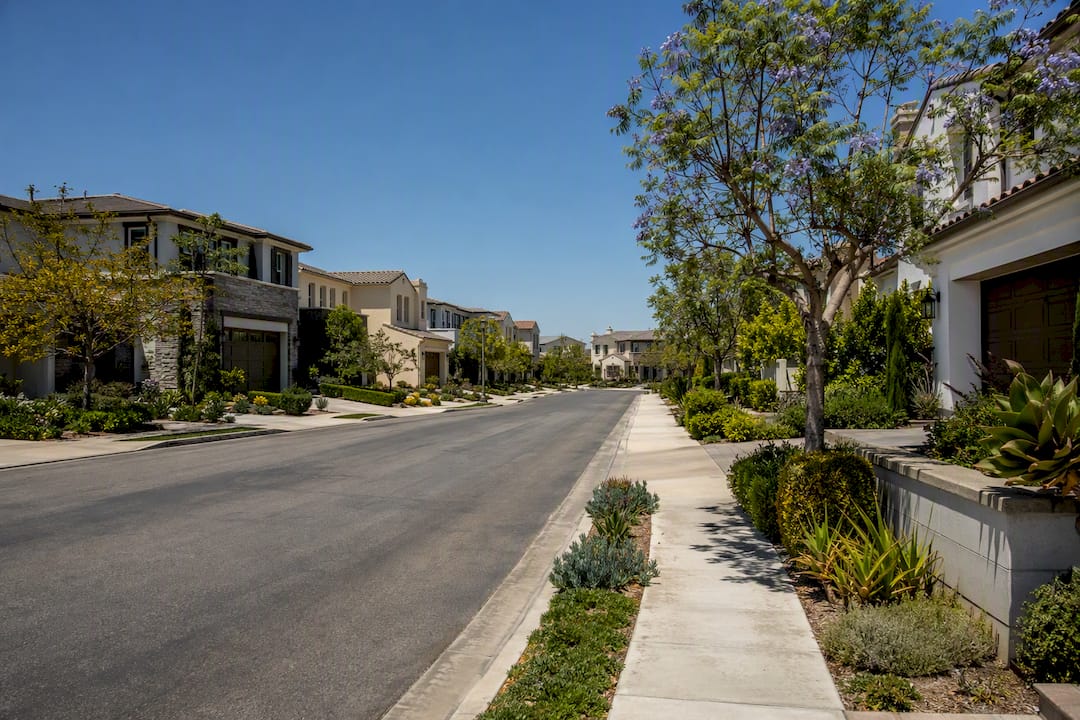
Cities and counties use CFDs to finance schools, roads, sewer systems, and parks in areas that were undeveloped land before a builder broke ground. Rather than the developer or city fronting that infrastructure cost, homeowners in the district repay it over time, usually 20 to 40 years, through their annual tax bill.
Some CFD assessments actually increase by a fixed annual escalation rate written into the original bond formation, regardless of what your home is worth.
These charges also don't disappear when the bond matures for everyone at once. Different CFDs within the same city can retire on completely different schedules, so a neighbor two streets over might already be free of a charge you're still paying. Before making an offer on a newer-build home, check whether the parcel sits inside an active CFD and ask how many years remain on the bond term. It changes your real monthly carrying cost more than almost any other line item on the bill.
An Agent's Take on Property Tax Due Diligence
Buyers rarely ask about supplemental bills until they've already made an offer. The clients who fare best always pull the seller's actual tax history and confirm the TRA before signing anything. If you're weighing a purchase and want a parcel-specific read, reach out directly.
Get a Tax-Aware Home Valuation Before You Buy or Sell
Increaltors gives Orange County buyers something most listing searches skip entirely: a parcel-level look at what a property actually costs to own once you factor in TRA rates, Mello-Roos balances, and pending supplemental assessments, not just its list price.

Whether you're selling and need to know how a reassessment might affect your net proceeds, or buying and want someone to check a property's actual tax burden before you write an offer, that kind of review changes your numbers before you're locked into a deal. A free home value report gives you a starting point grounded in current market data rather than a generic online estimate. From there, you can browse current Orange County listings with a clearer sense of what each property will actually cost you to hold long term. Request your free valuation today and get answers before you're under contract, not after.
Frequently Asked Questions
What is the average property tax rate in Orange County, CA? Your exact figure depends on your TRA.
How do I find my property tax rate in Orange County? Search your address or parcel number on TaxBill, or look up your TRA number in the OC Auditor's Tax Rate Book for the itemized breakdown.
What is a supplemental tax bill in Orange County? It's a one-time, prorated bill triggered by a change of ownership or completed new construction, reflecting the difference between the prior assessed value and the new value for the remainder of the fiscal year.
Can I appeal my Orange County property tax assessment? Yes. The formal appeal window runs from July 2 through November 30 each year, filed with the Assessment Appeals Board after an informal review with the Assessor.
How does Proposition 19 affect property tax transfers in Orange County? It lets eligible homeowners over 55, disabled homeowners, and disaster victims transfer their tax base to a replacement home statewide, while narrowing the parent-child exclusion for inherited property that isn't used as a primary residence.