

TL;DR:
- Temecula's limited traditional multi-family listings create opportunities in ADUs, townhome developments, and syndications.
- Smart investors focus on high-demand neighborhoods, proper due diligence, and leveraging California legislation to maximize income and growth potential.
If you've been searching for multi family homes Temecula has to offer, you've probably noticed that traditional listings are sparse. Unlike Los Angeles or San Diego, Temecula's residential market leans heavily single-family. But that scarcity doesn't mean opportunity has dried up. It means the smart money is looking in different places: accessory dwelling units, emerging townhome developments, and real estate syndications that open doors most investors overlook. This guide breaks down exactly where those opportunities are, what they cost, and how to evaluate them so you can make a confident move in 2026.
Table of Contents
- Key takeaways
- 1. Understanding the multi family homes Temecula market
- 2. Criteria for evaluating Temecula investment properties
- 3. ADUs: the most accessible path to dual rental income
- 4. Traditional multi-family properties and townhome developments
- 5. Real estate syndications for multi family exposure
- 6. Comparison of multi family investment strategies in Temecula
- 7. Best neighborhoods for multi family homes in Temecula
- 8. How to choose the right multi family investment for your goals
- My take on Temecula's multi-family opportunity
- Ready to find your next Temecula investment property?
- FAQ
Key takeaways
| Point | Details |
|---|---|
| Traditional listings are rare | Temecula has limited multi-family inventory, but active development projects signal future growth. |
| ADUs are the sleeper strategy | California legislation makes ADU development one of the most accessible paths to dual rental income. |
| Syndications lower the barrier | Accredited investors can access multi-family commercial deals starting at $25,000 with targeted IRR of 6 to 20%. |
| Location drives returns | Neighborhood selection in Temecula directly affects occupancy rates, tenant quality, and rental pricing. |
| Professional management matters | Data-driven property management consistently outperforms DIY approaches in occupancy and net income. |
1. Understanding the multi family homes Temecula market
Temecula is a mid-sized Inland Southern California city with a reputation for wine country, strong schools, and family neighborhoods. What it is not known for is an abundant supply of traditional multi-family housing. If you search for Temecula duplex listings or triplexes for sale, you'll find the inventory is thin compared to the broader demand.
That said, the development pipeline is growing. Projects like Prado Townhomes, which includes 204 multi-family units currently under construction as of late 2025, show that the city is moving toward higher-density residential development. The demand is real, the supply is catching up, and investors who get in early on the right strategies will benefit most.
The Temecula real estate market also benefits from consistent population growth, proximity to San Diego and Riverside, and a relatively lower price-per-unit compared to coastal markets. That combination makes it a genuinely compelling target for investors willing to look beyond conventional listings.
2. Criteria for evaluating Temecula investment properties
Before you spend a dollar on any multi-unit property in Temecula, you need a clear framework for evaluation. Not all multi family homes generate equal returns, and the ones that look attractive on paper can underperform badly without the right due diligence.
Here are the core criteria to apply:
- Cash flow. After mortgage payments, taxes, insurance, and management fees, is the property generating positive monthly income? Aim for at least 6 to 8% cash-on-cash return in the current rate environment.
- Occupancy rates. Temecula's rental demand is strong, but location within the city matters. Properties near Old Town, the highway 79 corridor, or established neighborhoods like Redhawk tend to stay occupied.
- Property type. Your options include traditional duplexes, triplexes, accessory dwelling units (ADUs), multi-unit townhomes, and syndication shares. Each has different capital requirements and return profiles.
- Zoning and legal compliance. California's ADU laws have made many single-family lots eligible for second units, but you still need to verify local zoning with the City of Temecula's planning department before buying.
- Management complexity. Two units require twice the tenant management of one. Four units require a systems approach. If you're not ready to self-manage, budget for a property manager, typically 8 to 12% of gross rents.
Pro Tip: When analyzing any Temecula rental income property, always model a 10% vacancy rate into your projections. The Temecula market is strong, but every property will experience turnover, and you don't want a single vacant month to derail your cash flow.
The most successful investors in Temecula use data-driven pricing across 30-plus rental platforms, comprehensive tenant screening, and coordinated maintenance systems to keep occupancy high and returns consistent.
3. ADUs: the most accessible path to dual rental income
Accessory Dwelling Units are reshaping what it means to invest in multi family homes in Temecula. California's housing legislation has systematically lowered barriers for ADU construction, and the result is that single-family property owners can now create dual rental income streams with simplified approval processes.
Here is what makes ADUs compelling right now:
- Lower upfront cost than buying a traditional duplex or multi-family property outright.
- Ability to build on an existing lot you already own or plan to purchase.
- Strong tenant demand for smaller, affordable units in a high-cost housing market.
- Support for multi-generational living, which is a growing preference in Southern California's demographic profile.
The numbers make sense when you run them. A detached ADU in Temecula typically rents for $1,400 to $2,000 per month depending on size and location. With construction costs ranging from $150,000 to $250,000 for a fully permitted unit, a well-located ADU can achieve a cap rate that beats many traditional rental acquisitions.
There is also a newer exit strategy worth knowing. Under California Assembly Bill 1033, cities can adopt ordinances allowing ADUs to be sold separately from the primary residence. If Temecula adopts this framework, ADU investors would gain a liquidation option that didn't previously exist, turning what was once a long-hold strategy into a more flexible asset.
Pro Tip: Before purchasing a lot or single-family home with ADU plans, request a pre-application meeting with the City of Temecula's planning department. You can often get informal feedback on setbacks, height limits, and utility requirements before spending money on architectural drawings.
4. Traditional multi-family properties and townhome developments
For investors who want a true multi-unit property, the Temecula market does have options. They just require patience and the right timing. Watch for Temecula duplex listings that come up in older residential neighborhoods, particularly in areas that were built before the city's more recent suburban expansion. These properties often have below-market rents that can be repositioned upward.
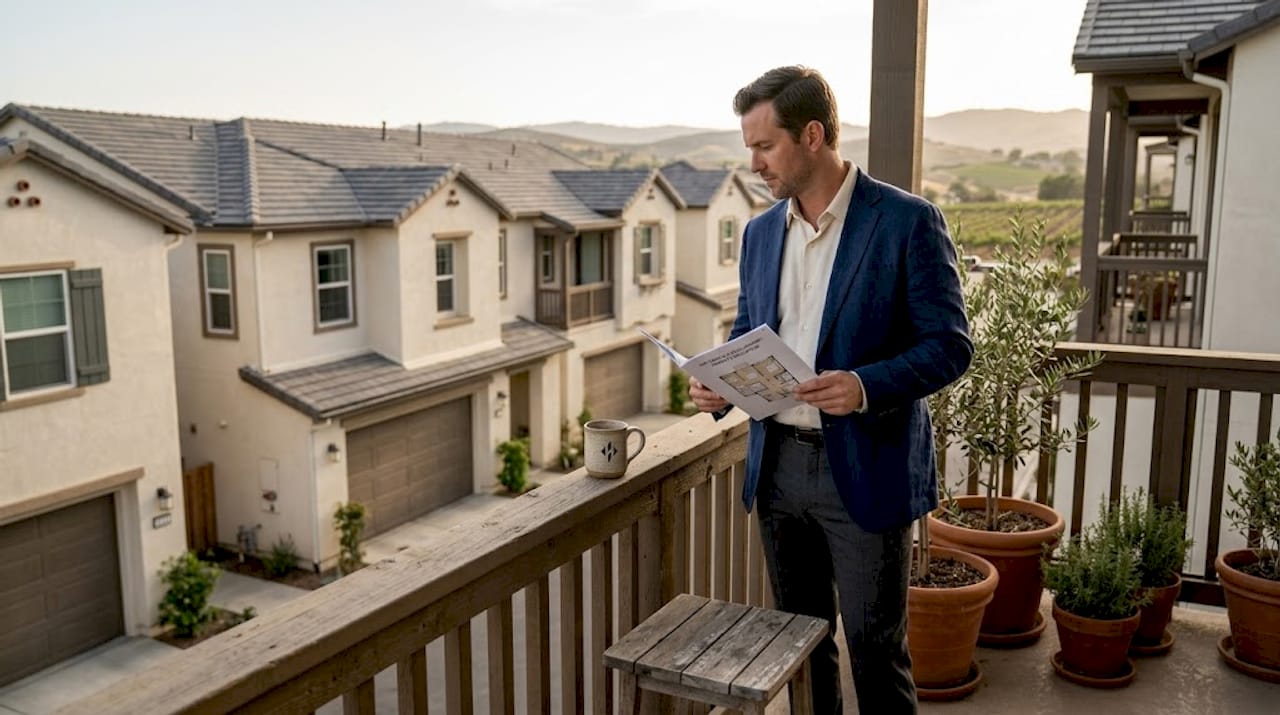
Multi-unit townhome developments like the 204-unit Prado Townhomes project represent a newer category of investment target. As these developments complete construction and units come to market, investors will have a genuine opportunity to acquire income-producing properties within a professionally managed community framework.
Townhomes in planned developments also tend to attract higher-quality tenants because of the amenities and maintenance standards. That translates to longer average tenancy, lower turnover costs, and more stable cash flow over time.
If you're considering a traditional multi-family acquisition, use the Temecula neighborhood guide to identify which communities have the strongest rental demand before narrowing your search.
5. Real estate syndications for multi family exposure
Not every investor has the capital or appetite to own property directly. Real estate syndications offer a way to access multi-unit commercial properties in and around Temecula without taking on operational responsibility.
Here's how syndications work: a sponsor (the lead investor or operator) acquires a multi-family property using capital pooled from multiple investors. Each investor receives a pro-rata share of income and appreciation. Most syndications require accredited investor status, with minimum investments typically ranging from $25,000 to $100,000, and they target returns of 6 to 20% IRR depending on the strategy and hold period.
The upside is significant. A single $10 million-plus syndication can add over 100 rental doors to your effective portfolio without you managing a single tenant. The fees, preferred returns, and profit shares create multiple income layers.
The downside is real too. Syndications come with illiquidity, market risk, and sponsor risk. You cannot sell your position easily if you need cash. If the sponsor makes poor operational decisions, your returns suffer. Mitigation strategies include vetting sponsors rigorously, diversifying across multiple syndications, and avoiding deals with excessive leverage.
For investors who want to diversify their Temecula investment properties without direct ownership complexity, syndications fill a meaningful gap in the strategy stack.
6. Comparison of multi family investment strategies in Temecula
Not all paths to multi family real estate in Temecula lead to the same destination. Understanding the trade-offs side by side helps you select the right vehicle for your specific goals and resources.
| Strategy | Typical entry cost | Target return | Management burden | Liquidity |
|---|---|---|---|---|
| Traditional duplex or triplex | $550K to $900K+ | 5 to 8% cash-on-cash | High (owner-managed) | Moderate |
| ADU on single-family lot | $150K to $250K build cost | 6 to 10% cap rate | Medium | Low to moderate |
| Multi-unit townhome | $400K to $650K per unit | 4 to 7% net yield | Low to medium | Moderate |
| Real estate syndication | $25K to $100K minimum | 6 to 20% IRR | None (passive) | Very low |
A few things stand out in this comparison. ADUs offer a strong return relative to their entry cost, particularly if you already own the land. Syndications deliver the highest potential IRR but lock up your capital for years. Traditional duplexes give you the most control but also the most operational exposure.
For investors with the budget and hands-on capacity, a duplex in a strong Temecula rental corridor is a proven path. For those prioritizing passive income and diversification, combining an ADU strategy with selective syndication participation creates a well-rounded Temecula real estate market position.
Check the Temecula ROI guide for deeper analysis on how these return profiles play out over five to ten year hold periods.
7. Best neighborhoods for multi family homes in Temecula
Where you buy matters as much as what you buy. Temecula has distinct micro-markets, and the best neighborhoods for multi family homes are not always the most obvious ones.
Old Town Temecula draws consistent demand because of walkability, restaurants, and entertainment. Rental demand is high, and short-term rental potential exists for ADU owners, though you'll need to verify local short-term rental regulations carefully.
Redhawk and Wolf Creek offer newer housing stock, excellent schools, and family-oriented demographics. These neighborhoods attract long-term tenants who stay for years, which reduces your turnover costs significantly.
Highway 79 South corridor sits between the wine country and the urban core. Properties here benefit from both tourism spillover and the strong local rental market. ADU development on larger lots in this corridor has been particularly active.
Harveston is a master-planned community with a lake and strong HOA standards. Townhomes here attract professional tenants and command above-average rents for Temecula's inland location.
For investors comparing multiple SoCal markets, the top investment locations in SoCal for 2026 article puts Temecula's position in regional context.
8. How to choose the right multi family investment for your goals
Selecting the right multi-family strategy in Temecula is not a one-size-fits-all decision. Your budget, accreditation status, risk tolerance, and time availability all drive the right answer.
Start with your capital position. If you have $200,000 to $300,000 to work with and you own or can purchase a qualifying lot, an ADU strategy is likely your most efficient first move. If you have $600,000 or more and want direct control over an income-producing asset, look for Temecula duplex listings or emerging townhome units.
If you're an accredited investor who wants passive exposure, syndications let you access affordable multi family housing Temecula deals at scale without the operational complexity. The trade-off is that you give up control and liquidity. Be deliberate about that decision before you commit.
Consider whether you want to self-manage or hire professionals. Professional property management using multi-channel syndication and rigorous tenant screening reduces vacancies and maximizes net income, but it costs 8 to 12% of gross rents. That cost is almost always worth it for investors with full-time careers or multiple properties.
Here is a quick decision framework:
- Budget under $300K: ADU development or syndication participation.
- Budget $400K to $700K: Multi-unit townhome acquisition or duplex purchase.
- Budget $700K+: Direct multi-family property with full management infrastructure.
- Accredited and passive: Syndication with a vetted sponsor and a minimum two-syndication diversification rule.
Pro Tip: Work with a local agent who understands both the residential and investment sides of the Temecula market. The nuance between a property that will rent well and one that will sit vacant for weeks is often invisible on a listing sheet but obvious to someone with ground-level market knowledge.
Use the home value estimator to get a baseline read on any property's current value before entering due diligence.
My take on Temecula's multi-family opportunity
I've worked with investors across Southern California for years, and I keep coming back to Temecula as a market that consistently underperforms its potential in terms of investor attention. Most people look at the thin multi-family listing inventory and move on. That's the wrong response.
What I've learned from watching this market closely is that the scarcity itself is an advantage. When affordable multi family housing Temecula inventory is thin, the properties that do perform well face less competition from comparable units. Tenants in Temecula are not spoiled for choice the way they are in San Diego. That means lower vacancy risk for owners who buy right.
My strong opinion is that ADUs are the most underutilized strategy in this market right now. California's legislation has done the heavy lifting in removing regulatory barriers, and yet most investors here are still waiting for a traditional duplex to appear on the MLS instead of building the multi-unit income they want from the ground up. The investors I've seen win in this market are not finding deals. They're creating them.
On syndications, I'd urge caution without dismissing the strategy entirely. I've seen investors get burned by chasing high IRR projections without properly vetting the sponsor's track record or understanding the capital stack. Real estate syndication opens significant doors for smaller investors, but the due diligence bar needs to be high. Ask for references, review past deals, and never put more than 20 to 30% of your investable capital into any single syndication.
The investors who will look back at 2026 as a great year for Temecula multi-family are the ones moving now, not waiting for the market to make it obvious.
— Irvin
Ready to find your next Temecula investment property?
The opportunity in multi-family and income-producing properties in Temecula is real, but it takes local knowledge to move fast and buy smart. Increaltors specializes in connecting investors and homebuyers with exactly the right properties across the Southern California market.
Whether you're looking for your first duplex, a single-family home with ADU potential, or a condo that fits your investment profile, the current listings at Increaltors give you a live view of what's available right now. Get a personalized consultation with Irvin Nierras and put your investment strategy into motion with someone who knows this market from the ground up.
FAQ
How many multi family homes are available in Temecula?
Traditional multi-family listings in Temecula are limited, but the development pipeline is growing. The Prado Townhomes project alone adds 204 new multi-family units to the local market as of late 2025.
Are ADUs a good investment in Temecula?
Yes. ADUs generate dual rental income streams on a single lot, benefit from streamlined California approval processes, and can potentially be sold separately under newer state legislation. They offer some of the best risk-adjusted returns available to Temecula investors.
What returns can I expect from Temecula rental income properties?
Traditional duplexes typically target 5 to 8% cash-on-cash returns. ADUs can reach 6 to 10% cap rates. Real estate syndications targeting Temecula-area multi-family assets often project 6 to 20% IRR depending on the hold strategy and leverage used.
Do I need to be an accredited investor to buy multi family homes in Temecula?
For direct property purchases, no accreditation is required. For real estate syndications, most sponsors require accredited investor status with minimum investments typically ranging from $25,000 to $100,000.
What neighborhoods have the strongest demand for multi unit properties in Temecula?
Old Town, Redhawk, Wolf Creek, the Highway 79 South corridor, and Harveston consistently show strong rental demand. Neighborhoods near major employment centers and top-rated schools attract long-term tenants and support premium rents.