
TL;DR:
- Moving in Los Angeles involves obtaining permits, coordinating building rules, and planning traffic to avoid delays. Preparation, such as early permit applications, documenting the unit, and assessing neighborhood access, helps prevent costly mistakes. Success depends on detailed planning and understanding local regulations to ensure a smooth relocation.
The move in process in Los Angeles is defined by a set of local requirements that most newcomers do not expect: city-issued moving permits, building-specific protocols, California Civil Code §1950.5 security deposit rules, and traffic patterns that can turn a two-hour move into an all-day ordeal. LA's relocation process differs from most American cities because the Los Angeles Department of Transportation (LADOT) actively regulates moving truck parking on public streets, and landlords operate under strict state law governing deposits and inspections. Getting these details right before moving day saves you money, time, and real stress. This guide walks you through every stage of the LA relocation process so you arrive prepared, not surprised.

How do you secure moving permits and reserve parking in Los Angeles?
Moving permits in Los Angeles are temporary no-parking authorizations issued by LADOT that reserve curb space for your moving truck. Without one, your truck driver parks illegally, risks a tow, and you lose hours on moving day. The permit system exists because street parking in LA is scarce and heavily enforced.
Types of permits you need
Two permit types cover most residential moves. The first is a temporary no-parking permit, which posts signs on the curb to clear space for your truck on moving day. The second is an oversize vehicle permit, required when your truck exceeds standard size limits for the street. Most full-size moving trucks need both.
Apply for permits at least 8 business days in advance so LADOT has time to post the temporary no-parking signs. Each permit typically reserves a minimum of 30 feet of curb space. Fines for violations can exceed $500, and that number climbs for repeat offenses.
You can submit permit applications online through the LADOT website or in person at a district office. Online applications are faster, but in-person visits let you ask questions about specific street restrictions. Either way, confirm the permit is approved and signs are posted before your truck arrives.
Parking enforcement details
LA parking enforcement is aggressive. Red curbs, street sweeping schedules, and loading zone rules all apply even on moving day. Violations start at $500 and escalate for repeat offenses. That is not a typo. A single ignored street sweeping sign can cost you more than a full day of professional movers.
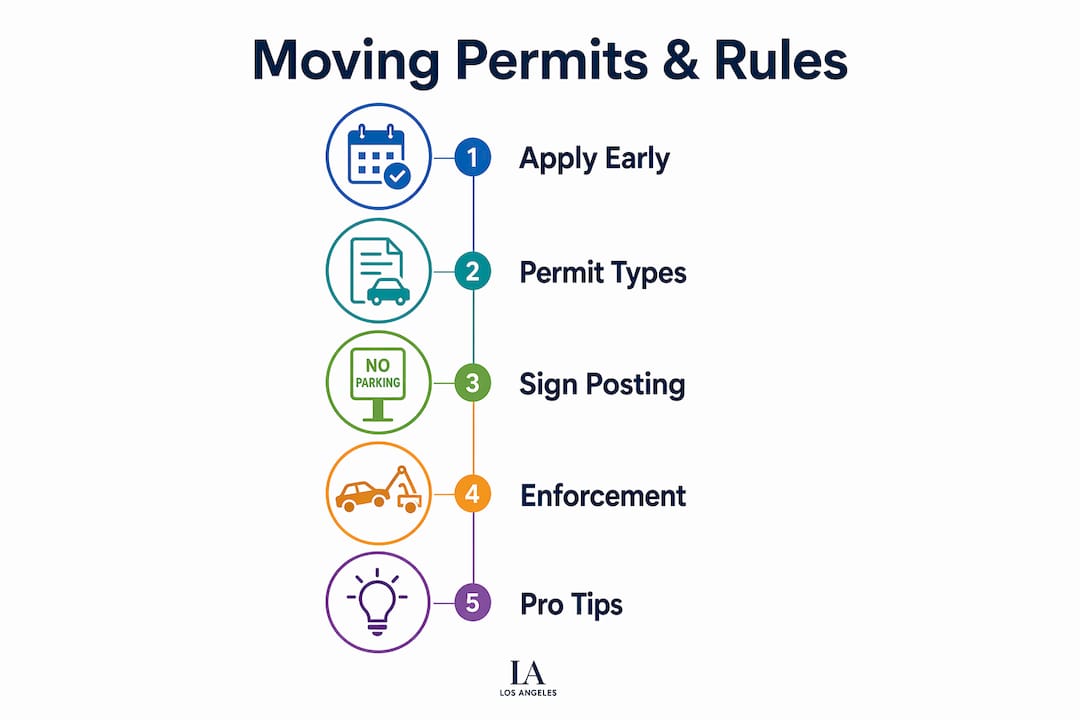
Check the posted signs on your street the day before the move. Confirm the temporary no-parking signs are in place. If they are missing, call LADOT immediately. Do not assume the permit alone protects you if the physical signs were never posted.
Pro Tip: Walk your new street at the same time of day as your planned move. Note fire hydrant clearances, bus stop zones, and any "No Parking 8 AM–10 AM" street sweeping signs that could conflict with your permit window.
What should you know about building rules and planning your move day timing?
Building rules in LA apartments and condos add another layer to the relocation process that catches many movers off guard. Most multi-unit buildings have written move policies that restrict which days, hours, and entry points you can use. Ignoring these rules can result in fees, denied access, or a rescheduled move.
Common building requirements
- Freight elevator reservations: Most LA apartment buildings require you to reserve the freight elevator in advance. Showing up without a reservation means you wait, or you carry everything up the stairs.
- Certificate of Insurance: Many LA buildings require your moving company to provide a Certificate of Insurance before they allow any crew inside. Request this document from your mover at least a week early.
- Move-in time windows: Buildings often restrict moves to weekdays between 9:00 AM and 5:00 PM. Weekend moves may require special approval or carry additional fees.
- Designated entry points: Many buildings designate a specific door or loading dock for moves. Using the main lobby entrance with a dolly full of boxes is a fast way to get your move shut down.
- Elevator padding: Some buildings require you to pad the elevator walls before use. Your moving company should handle this, but confirm it in advance.
Contact your building manager at least two weeks before your move date. Ask for the written move policy, confirm elevator availability, and get the insurance requirement in writing. Residents who skip this step frequently encounter delays and unexpected fees on moving day.
Timing your move around LA traffic
Rush hour on freeways 405, 101, and 10 can turn a 20-minute drive into a 3-hour crawl. Schedule your loading and driving windows before 7:00 AM or after 7:00 PM to avoid the worst congestion. That single decision can shave hours off your moving day.
The challenge is that building move windows and traffic windows often conflict. A building that only allows moves between 9:00 AM and 5:00 PM forces you into peak traffic. In that case, plan your truck route to avoid the worst corridors. Surface streets through Silver Lake or Culver City often move faster than the 405 during midday.
Pro Tip: Visit your new building at the exact time you plan to move. Walk the path from the parking area to your unit with a tape measure if needed. Note doorway widths, stairwell turns, and elevator dimensions. This 30-minute visit can prevent a furniture-stuck-in-the-stairwell situation on moving day.
How can you efficiently pack and prepare for Los Angeles apartment moves?
Smart packing for an LA move accounts for the physical realities of the building, not just the volume of your belongings. Stairs, narrow hallways, small freight elevators, and long walks from the parking area all affect how you pack and label boxes.
- Match box size to carry distance: Use smaller boxes for heavy items like books and dishes. Movers carrying heavy boxes up three flights of stairs slow down fast. Lighter loads mean faster trips and fewer injuries.
- Label every box with room and floor: Write the destination room and floor number on the top and two sides of every box. When movers are moving fast, they need to read the label from any angle.
- Declutter before you pack: Every item you do not move is money saved. Donate, sell, or discard anything you have not used in a year. A smaller load means a smaller truck, fewer hours billed, and less to unpack.
- Pack a "first 48 hours" box: Put your phone charger, a change of clothes, toiletries, coffee supplies, and any medications in one clearly labeled box that rides in your car. This box does not go on the truck. When the movers leave and you cannot find anything, this box keeps you functional.
- Protect items for elevator moves: Wrap furniture corners with moving blankets before it enters the elevator. Buildings that require padded elevators will hold you responsible for any scratches to the cab walls.
A common mistake LA movers make is packing everything into large boxes to save time. Large boxes are harder to carry through tight spaces, harder to stack in a small freight elevator, and more likely to shift and break in transit. Smaller, well-labeled boxes move faster through LA buildings than large ones.
Visit your new residence at the planned move-in time before moving day. Measure doorways, check elevator dimensions, and walk the path your movers will take. That single site visit shapes every packing decision you make.
What are your rights and responsibilities during move-in inspection and security deposit handling?
California law gives renters specific rights around security deposits and move-in inspections. Knowing these rights before you hand over your keys protects your money.
Security deposit rules under California law
- Deposit cap: California Civil Code §1950.5 caps residential security deposits at one month's rent, regardless of whether the unit is furnished or unfurnished. This cap applies to all residential leases in Los Angeles.
- Return deadline: Landlords must return your deposit or provide an itemized list of deductions within 21 days of your move-out date. Missing this deadline can cost the landlord the right to make deductions.
- Itemized deductions: Any deduction must include receipts or invoices. A landlord cannot simply write "cleaning fee" and keep $400. They must show proof of the actual cost.
- Pre-move-out inspection: You have the right to request a pre-move-out inspection. The landlord must give you a written list of issues you can fix before you leave. Fixing those issues yourself prevents deductions.
- Forwarding address: Send your forwarding address to your landlord in writing on or before your move-out date. The 21-day clock starts from move-out, but the landlord needs your address to send the check.
Move-in inspection best practices
| Step | What to do | Why it matters |
|---|---|---|
| Document on day one | Photograph every wall, floor, and fixture within 24 hours of receiving keys | Creates timestamped evidence of pre-existing damage |
| Use a signed checklist | Complete a written move-in condition report and get the landlord's signature | Unsigned reports carry less legal weight in disputes |
| Note all existing damage | Mark scratches, stains, holes, and broken fixtures on the checklist | Prevents landlord from attributing old damage to you |
| Keep copies | Store photos and the signed checklist in cloud storage | Physical copies can be lost; digital copies are retrievable |
Document the unit condition with photos and a signed checklist within 24 hours of receiving your keys. This documentation is your strongest defense against improper damage deductions. Landlords frequently retain deposits when move-in paperwork is missing or incomplete. Insist on a signed move-in condition report every time.
What neighborhood and logistical factors should you consider when moving in Los Angeles?
Los Angeles covers more than 500 square miles. The logistical challenges of moving in Brentwood differ completely from moving in Echo Park or the Hollywood Hills. Knowing your neighborhood's physical constraints before booking a truck saves you from expensive surprises.
Hillside and narrow-street neighborhoods
Narrow roads and steep hills in neighborhoods like Hollywood Hills require shuttle trucks when full-size moving trucks cannot access the street. Shuttle trucks cost an extra $300–$600 on top of your base moving rate. That fee is not negotiable once the crew arrives and discovers the access problem.
Research your new street before booking your mover. Use Google Street View to check road width and grade. If the street looks tight, call your moving company and describe it. A reputable mover will send someone to assess the route before moving day.
Choosing the right truck size
| Neighborhood type | Typical road access | Recommended truck approach |
|---|---|---|
| Flat urban areas (Mid-City, Koreatown) | Wide streets, standard access | Full-size truck, standard permit |
| Hillside areas (Hollywood Hills, Silverlake hills) | Narrow, steep roads | Shuttle truck or smaller vehicle |
| Dense apartment corridors (Westwood, Palms) | Limited curb space, heavy enforcement | Permit critical, early arrival required |
| Suburban areas (Encino, Woodland Hills) | Wide streets, driveways available | Full-size truck, lower permit urgency |
Timing matters as much as truck size. Moving into a dense neighborhood like Koreatown on a Saturday morning means competing with weekend traffic, street markets, and other residents moving in or out. A Tuesday morning move in the same neighborhood is a completely different experience.
Experienced movers recommend scheduling moves outside rush hours to save hours of delay and reduce stress. That advice applies to the drive between locations and to the time you spend loading and unloading on the street. Every minute your truck sits in a no-parking zone without a permit is a fine waiting to happen.
For buyers researching the best neighborhoods for moving in LA, Increaltors provides local market insights that cover neighborhood-level details beyond what a moving checklist can offer.
Key Takeaways
The move in process in Los Angeles requires permits, building coordination, legal documentation, and traffic planning to avoid costly delays and deposit disputes.
| Point | Details |
|---|---|
| Secure permits early | Apply for LADOT moving permits at least 8 business days before your move to avoid fines over $500. |
| Coordinate with your building | Request the written move policy, reserve the freight elevator, and get the Certificate of Insurance from your mover in advance. |
| Time your move around traffic | Schedule loading and driving before 7:00 AM or after 7:00 PM to avoid rush-hour delays on freeways 405, 101, and 10. |
| Document the unit on day one | Photograph every room and get a signed move-in checklist within 24 hours of receiving keys to protect your security deposit. |
| Research neighborhood access | Check road width and grade before booking a truck; hillside areas may require a shuttle truck costing $300–$600 extra. |
What I have learned from watching LA moves go wrong
The moves I have seen go sideways in Los Angeles almost always share one trait: the person moving assumed the process here works like it does everywhere else. It does not.
The permit requirement surprises people most. They book a truck, pick a date, and never think about LADOT. Then the truck arrives, there is no curb space, and the driver parks in a red zone. By 10:00 AM, the truck is getting ticketed. By noon, it is towed. That is a $500 fine plus tow fees plus a move that does not happen that day.
Building rules are the second blind spot. I have seen movers show up to a high-rise in Westwood without a Certificate of Insurance and get turned away at the door. The building manager was not being difficult. The rule was in the lease. The renter just never read it.
The security deposit piece is where I see the most lasting damage. Renters who skip the move-in inspection or do not get a signed checklist hand landlords a blank check. California law is actually very protective of renters. But the law only helps you if you have documentation. A photo taken on your phone with a timestamp is worth more in a dispute than any verbal agreement.
My honest advice: treat the LA relocation process like a project with a checklist, not an event you wing. Start the permit application two weeks out. Call the building manager the same week you sign the lease. Visit the new address at the time of day you plan to move. Pack a first-48-hours box. Photograph everything before you unpack a single item.
The people who move smoothly in LA are not lucky. They are prepared.
— Irvin Nierras
Finding your next home in Los Angeles with Increaltors
Moving logistics matter, but finding the right property to move into matters more. Increaltors specializes in Los Angeles residential real estate, connecting buyers and renters with properties that fit their neighborhood preferences, budget, and lifestyle.

Whether you are looking for a single-family home with a driveway that fits a moving truck or a condo in LA with freight elevator access, Increaltors agent Irvin Nierras brings local market knowledge that goes beyond the listing description. Reach out directly through increaltors.com to get personalized guidance on neighborhoods, property access, and the buying process before your next move.
FAQ
How far in advance should I apply for a moving permit in Los Angeles?
Apply at least 8 business days before your move date. LADOT needs time to post temporary no-parking signs, and permits require reserving a minimum of 30 feet of curb space.
What does California law say about security deposit limits in Los Angeles?
California Civil Code §1950.5 caps residential security deposits at one month's rent. Landlords must return the deposit or provide itemized deductions within 21 days of move-out.
Do I need a Certificate of Insurance to move into an LA apartment building?
Most multi-unit buildings in Los Angeles require your moving company to provide a Certificate of Insurance before allowing the crew inside. Request this document from your mover at least one week before moving day.
What is the best time of day to move in Los Angeles to avoid traffic?
Schedule your loading and driving windows before 7:00 AM or after 7:00 PM. Rush hour on freeways 405, 101, and 10 can turn a 20-minute drive into a 3-hour delay.
Why do hillside neighborhoods in LA cost more to move into?
Narrow roads and steep grades in areas like Hollywood Hills prevent full-size moving trucks from accessing many streets. Moving companies use shuttle trucks in these cases, which adds $300–$600 to the total cost.