
TL;DR:
- Los Angeles's housing market in 2026 features a 10% decline in median listing prices and slower sales, indicating a more balanced environment. Structural supply constraints, shifting buyer preferences, and strong demand from high earners and international buyers sustain market stability despite affordability pressures. Neighborhood-specific dynamics highlight insular luxury segments, vibrant mid-market areas, and growing suburban interest, creating nuanced investment opportunities.
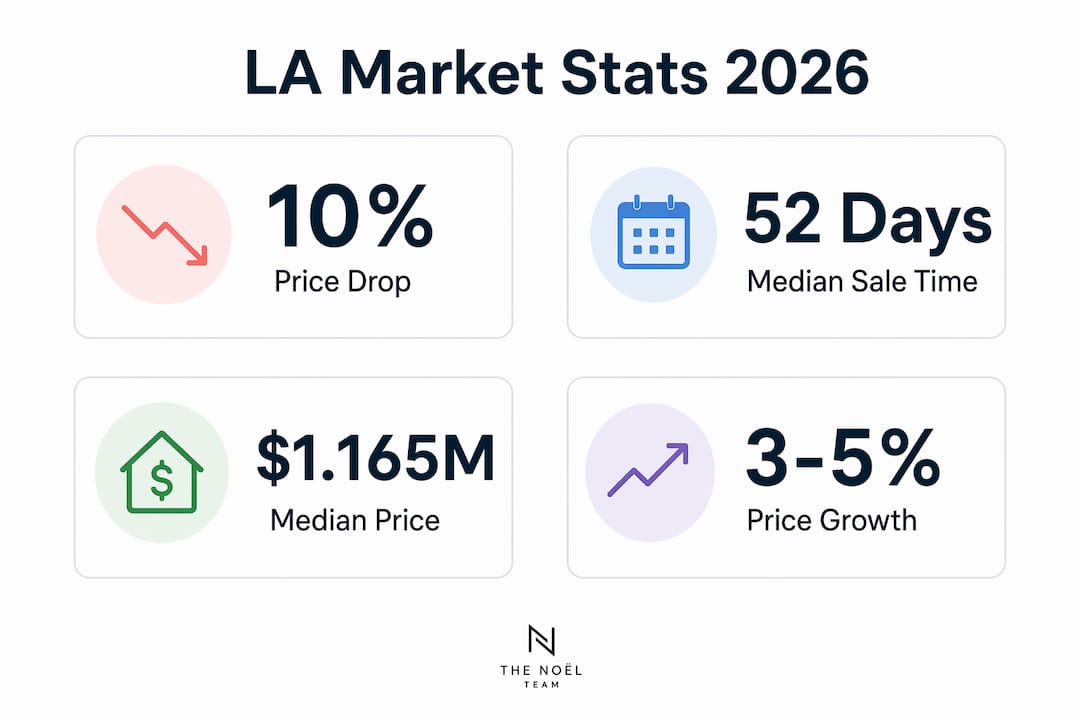
The Los Angeles residential real estate market 2026 is defined by a meaningful shift in buyer leverage, with the median listing price dropping 10% year-over-year to $1,165,000 as of may 2026. The average home value sits at approximately $951,035, and homes are taking a median of 52 days to sell. That slower pace signals a more balanced market after years of seller dominance. Inventory remains historically tight, with active listings up only 0.3% year-over-year, which continues to put a floor under prices even as demand softens. For buyers and investors, this is one of the most nuanced entry points the LA market has offered in years.
What is driving the los angeles residential real estate market in 2026?
The structural forces shaping the LA property market in 2026 go deeper than interest rates or seasonal demand. Understanding them helps you make smarter decisions, whether you are buying your first home or adding to a portfolio.

Zoning and construction constraints
Supply growth in Los Angeles is structurally limited. Zoning restrictions and long construction timelines prevent meaningful inventory increases, even when demand softens. New construction projects in LA typically take three to five years from permit to occupancy, which means the market cannot self-correct quickly. This supply ceiling is the main reason prices have not collapsed despite reduced buyer activity.
Hybrid work and shifting buyer priorities
Buyer preferences have changed significantly since 2022. Suburban and family-friendly neighborhoods are gaining traction as hybrid work arrangements allow buyers to prioritize space over commute proximity. The San Fernando Valley, Pasadena, and the South Bay are all drawing buyers who previously focused on Westside urban cores. This shift is redistributing demand across the metro area rather than concentrating it in a few zip codes.
Employment anchors and international capital
Los Angeles retains powerful demand anchors that most metros lack. The tech sector, entertainment industry, and creative economy continue to attract high earners who can absorb LA's price levels. International capital, particularly from Asia and Latin America, flows steadily into the trophy corridor neighborhoods. These demand sources do not disappear during rate cycles, which is why the LA real estate outlook 2026 remains fundamentally supported even as affordability pressures persist.
- Zoning laws in LA restrict density in most single-family zones, limiting new supply
- Construction costs in Southern California rank among the highest in the nation
- Hybrid work has expanded the geographic range of competitive neighborhoods
- Tech and entertainment employment provides a durable income base for buyers
- International buyers treat trophy corridor properties as capital preservation assets
Pro Tip: If you are buying in 2026, look at neighborhoods adjacent to established demand centers. Areas like Glassell Park near Eagle Rock, or Inglewood near the South Bay, often offer 15–20% lower prices than their neighbors with similar access to employment and lifestyle amenities.
How does the LA market vary by neighborhood and price segment?
The 2026 property market in Los Angeles is not one market. It is a collection of micro-markets with very different supply, demand, and pricing dynamics. Treating them as uniform leads to poor decisions on both sides of a transaction.
The trophy corridor: bel air, holmby hills, and beverly hills
The luxury segment anchored by Bel Air, Holmby Hills, and Beverly Hills operates by different rules than the broader market. Trophy corridor properties show faster sales and stronger price appreciation compared to mid-market segments, driven by sustained international capital inflows. A $10 million estate in Holmby Hills competes for a global buyer pool, not just a local one. That distinction insulates these neighborhoods from the affordability pressures affecting the rest of the city.
Mid-market neighborhoods: silver lake, venice, and culver city
Silver Lake and Venice represent the most competitive mid-market segment in LA. Both neighborhoods attract buyers from the tech and creative industries who want walkability, design, and proximity to the Westside. Culver City has benefited from Amazon Studios and Apple TV+ establishing major operations there, creating a localized employment magnet. These neighborhoods are holding value better than the broader mid-market average because their buyer pool is both employed and committed to the lifestyle.
Suburban and valley neighborhoods
The San Fernando Valley, Pasadena, and the South Bay are the clearest beneficiaries of the hybrid work shift. Buyers in these areas get more square footage, better schools, and lower price-per-square-foot than comparable Westside properties. This segment is seeing the most first-time buyer activity in 2026, partly because prices are more accessible and partly because remote work flexibility makes the longer commute irrelevant on most days.
Transitional and revitalizing districts
Parts of South and Central LA continue to show slower activity. These areas have long-term appreciation potential, but buyer demand in 2026 remains limited by perception, infrastructure gaps, and financing challenges for some property types. Investors with a five-plus year horizon find value here, but families seeking immediate livability tend to look elsewhere.
| Neighborhood Type | Price Trend | Buyer Profile | Days on Market |
|---|---|---|---|
| Trophy Corridor (Bel Air, Beverly Hills) | Appreciating | International, ultra-high-net-worth | Below market average |
| Mid-Market Urban (Silver Lake, Venice) | Stable to slight gains | Tech, creative industry professionals | Near market average |
| Suburban/Valley (Pasadena, South Bay) | Stable with growing demand | Families, hybrid workers, first-time buyers | Near market average |
| Transitional Districts (South/Central LA) | Flat to slight decline | Long-term investors | Above market average |
- Trophy corridor properties are the most insulated from rate sensitivity
- Silver Lake and Venice benefit from employer anchors like Amazon Studios and Apple TV+
- Valley neighborhoods offer the best value-per-square-foot for families in 2026
- Transitional districts carry higher risk but offer the most upside for patient investors
What are the pricing and negotiation dynamics for buyers and sellers in 2026?
The negotiation environment in LA has shifted materially. Buyers have more leverage than at any point since 2019, and sellers who do not recognize this are paying a real cost in time and final sale price.
Why overpricing is the biggest seller mistake in 2026
Pricing discipline is the single most critical factor for sellers in the current market. Homes priced above comparable sales linger on the market, accumulate days-on-market stigma, and ultimately sell for less than they would have at a correct initial price. The 52-day median market time in LA is already long by historical standards. An overpriced home can easily sit for 90 to 120 days, at which point buyers assume something is wrong with the property.
How buyers can use market timing to their advantage
Buyers now have time on their side. With homes sitting an average of 52 days on market, you can conduct thorough due diligence, negotiate inspection contingencies, and request seller concessions without the panic of a 48-hour offer deadline. This is a meaningful change from 2021 and 2022, when waiving contingencies was almost required to compete.
Here is a practical framework for buyers navigating the 2026 LA market:
- Establish your true budget before touring homes. Pre-approval is not enough. Model your monthly payment at current rates and factor in property taxes, insurance, and HOA fees where applicable.
- Identify homes that have been listed for 30-plus days. These sellers are more likely to negotiate on price, closing costs, or repairs. A listing that has sat for 45 days in this market is a negotiating opportunity.
- Use comparable sales from the past 60 days, not 90 or 120. The market is moving, and older comps may overstate value. Your agent should pull the most recent data before you make an offer.
- Request a home inspection and review it carefully. Sellers in 2026 are less likely to walk away from a deal over inspection findings than they were two years ago. Use the report to negotiate credits or repairs.
- Understand the seller's timeline. A seller who needs to close quickly may accept a lower price in exchange for a fast escrow. A seller who is not in a hurry will hold firm. Knowing which situation you are in shapes your strategy.
Pro Tip: Ask your agent to pull the list-to-sale price ratio for the specific neighborhood you are targeting. In some LA zip codes, homes are selling at 97–98% of list price. In others, the ratio is closer to 93–94%. That gap tells you exactly how much negotiating room exists before you make your first offer.
For sellers, the guidance is direct: price it right from day one. Review the step-by-step listing guide to understand how to position your property competitively in the current environment.
What is the future outlook for LA real estate investment in 2026?
The future of LA residential real estate through the rest of 2026 is moderately positive, with clear opportunities for buyers and investors who understand where value is concentrated.
Price forecast and market direction
Home prices are projected to rise 3–5% through the remainder of 2026, led by trophy neighborhoods and design-driven mid-market areas. That forecast assumes no major shock to employment or interest rates. The structural inventory shortage means that even modest demand recovery will push prices upward. New construction timelines and strict zoning make meaningful supply growth unlikely in the near term, which underpins this pricing pressure.
The rental market as an investment signal
The rental market in LA sends a clear signal to investors. Average rents sit at approximately $2,795 per month, up about 3.4% year-over-year. Strong rental demand means that investors who purchase now and hold through a softer sales period can generate returns from rental income while waiting for appreciation. This dynamic makes buy-and-hold strategies particularly attractive in 2026, especially in suburban neighborhoods where purchase prices are lower relative to achievable rents.
Regulatory and tax developments to watch
Federal proposals to increase capital gains exclusions for home sales could meaningfully change the supply picture. Expanded capital gains exclusions would reduce the tax penalty for long-term homeowners who want to downsize or relocate, potentially unlocking inventory that has been locked up for years. If passed, this could increase listings in the $1.5 million to $3 million range, which is currently one of the tightest segments in LA.
| Investment Factor | Current Status | 2026 Outlook |
|---|---|---|
| Home Price Growth | Median down 10% YoY | Forecast 3–5% gain through year-end |
| Rental Yields | Average rent $2,795/month, up 3.4% YoY | Continued growth, tight vacancy |
| Inventory | Active listings up only 0.3% YoY | Structural shortage persists |
| Buyer Leverage | Median 52 days on market | Buyers hold negotiating advantage |
- The structural inventory floor makes long-term holding a sound equity strategy
- Rental income provides a return buffer during periods of price softness
- Suburban neighborhoods offer the best entry points for first-time investors
- Tax policy changes could shift supply dynamics in the $1.5M to $3M segment
- Time in the market consistently outperforms attempts to time the market in LA
For a broader view of Southern California investment opportunities in 2026, the fundamentals across the region share many of the same structural supports as the LA market.
Key takeaways
The Los Angeles residential real estate market in 2026 rewards buyers who act with data and patience, and sellers who price with discipline from the first day of listing.
| Point | Details |
|---|---|
| Prices have moderated, not collapsed | The median listing price dropped 10% to $1,165,000, but tight inventory keeps a floor under values. |
| Buyer leverage is real but limited | Homes sit 52 days on average, giving buyers time to negotiate without triggering a price war. |
| Neighborhood selection is critical | Trophy corridor and mid-market urban areas outperform; suburban neighborhoods offer the best value for families. |
| Rental demand supports investment | Average rents of $2,795/month and 3.4% annual growth make buy-and-hold strategies viable in 2026. |
| Long-term holding beats market timing | Structural supply constraints mean LA prices have a durable floor, rewarding patient equity builders. |
What i have learned watching the LA market shift in 2026
By Irvin Nierras
The clients who struggle most in this market are the ones waiting for a signal that never comes. They want prices to drop another 15% before they buy, or they want rates to fall to 5% before they list. Neither of those things is likely to happen in the timeframe they are imagining.
What I have seen consistently is that the buyers who move decisively in a balanced market, with solid data and a clear strategy, end up in a better position than those who wait. The 52-day average market time is not a warning sign. It is an opportunity. You have time to inspect, negotiate, and make a considered decision. That was not true two years ago.
For sellers, the lesson is harder to accept but equally clear. The market will tell you what your home is worth within the first three weeks of listing. If you are not getting offers, the price is the problem. Adjusting early costs you less than adjusting after 60 days of carrying costs and stigma.
The neighborhoods I am most confident about for the rest of 2026 are the ones with employment anchors and lifestyle amenities that attract buyers regardless of rate environment. Silver Lake, Culver City, and the South Bay all fit that description. The trophy corridor will continue to attract international capital. And the Valley will keep drawing families who want more space without leaving LA County.
My advice is straightforward: work with an agent who knows the specific neighborhood you are targeting, not just the broader LA market. The difference between a good deal and a great deal in 2026 often comes down to knowing the list-to-sale ratio on a specific street, not just a zip code.
— Irvin Nierras
Ready to buy or invest in los angeles? Increaltors can help
Increaltors, led by Irvin Nierras of HomeSmart Evergreen, specializes in helping buyers, sellers, and investors navigate the Los Angeles and Southern California markets with localized expertise and current data.

Whether you are searching for single-family homes for sale in established neighborhoods or exploring condo options in high-demand urban areas, Increaltors provides access to active listings, personalized market analysis, and hands-on guidance through every step of your transaction. If you are a homeowner considering selling, start with a free home valuation report to understand exactly where your property stands in the current market. Contact Increaltors today to get a current market snapshot and take the first step toward your 2026 real estate goal.
FAQ
What is the median home price in los angeles in 2026?
The median listing price in Los Angeles is $1,165,000 as of may 2026, down 10% year-over-year. The average home value sits at approximately $951,035.
How long are homes sitting on the market in LA right now?
Homes in Los Angeles are taking a median of 52 days to sell in 2026. That is significantly longer than the seller's market pace of 2021 and 2022, giving buyers more time to negotiate.
Is 2026 a good time to buy a home in los angeles?
For buyers with stable income and a long-term horizon, 2026 offers more negotiating leverage than any year since 2019. Prices have moderated, inventory is slowly improving, and sellers are more flexible on terms.
Which los angeles neighborhoods are the strongest investments in 2026?
The trophy corridor (Bel Air, Beverly Hills, Holmby Hills) leads on price appreciation. Mid-market areas like Silver Lake and Culver City are holding value well. Suburban neighborhoods in the San Fernando Valley and South Bay offer the best entry points for families and first-time investors.
Will LA home prices rise or fall through the rest of 2026?
Prices are forecast to rise 3–5% through the remainder of 2026, particularly in prime and design-driven neighborhoods. Structural inventory shortages limit the downside, making a significant price drop unlikely without a major employment shock.