
TL;DR:
- Torrance, California, offers a balanced coastal community with strong schools, diverse neighborhoods, and outdoor amenities. Its real estate market is competitive and costly, requiring careful financial planning for buyers and renters. The city provides a family-friendly environment with a stable community, but a car is essential for daily life due to low walkability.
Torrance, CA is defined as one of Southern California's most balanced urban-suburban communities, offering top-ranked public schools, cultural diversity, and coastal access without the premium price tag of neighboring beach cities. As of mid-2026, the city holds a population of 136,656 residents with a median household income of $116,217, placing it firmly in the upper tier of Los Angeles County communities. Living in Torrance CA means trading the flash of Santa Monica or Manhattan Beach for something more grounded: strong neighborhoods, reliable amenities, and schools that consistently outperform the region. For families and individuals planning a move, that trade is often worth every dollar.
What is the lifestyle and community culture like in Torrance, CA?
Torrance delivers a lifestyle that few South Bay cities can match at its price point. The city blends middle-America neighborhood charm with genuine urban convenience, sitting close enough to Los Angeles to access world-class dining, entertainment, and employment, while feeling distinctly quieter and more residential at home.
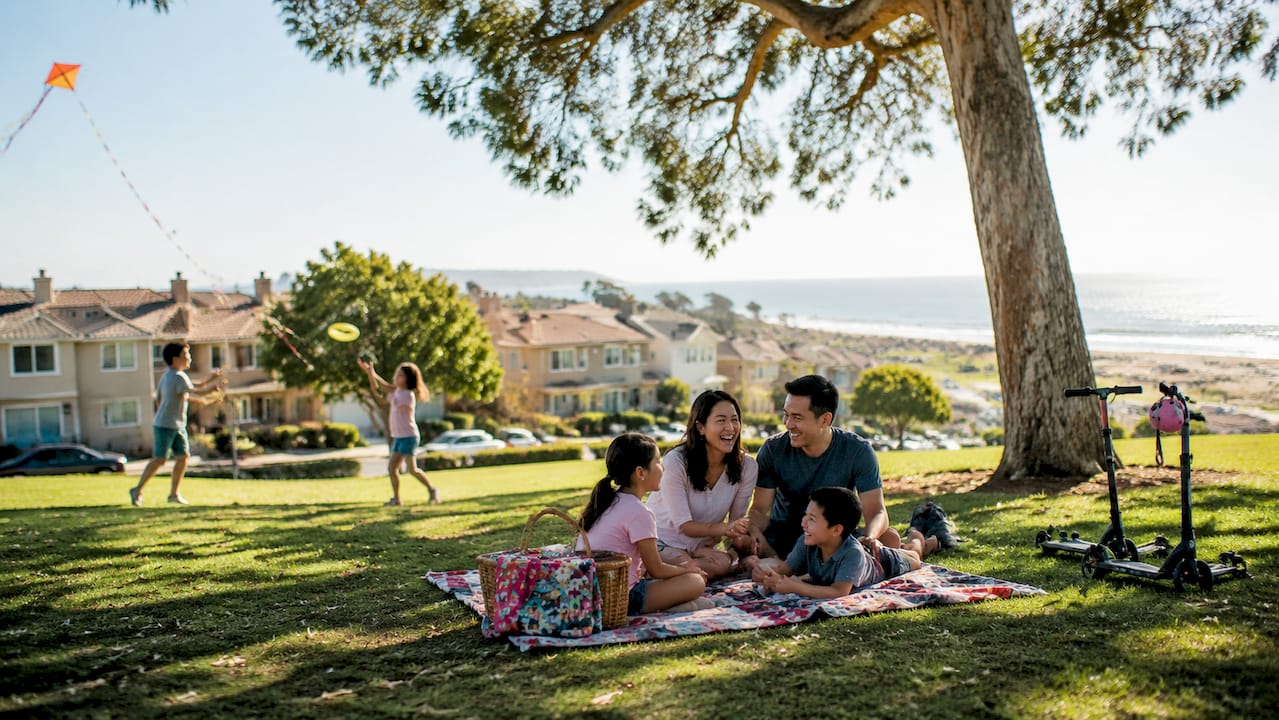
The Torrance CA lifestyle is shaped heavily by its demographic makeup. School reputation drives demographic diversity, with significant Korean and Chinese communities having grown over two decades, drawn largely by the quality of local public schools. That cultural richness shows up in the restaurant scene, community events, and the general character of neighborhoods like Old Torrance and the Southwood district.
Recreational options are a genuine strength here. Residents enjoy easy access to Torrance Beach, the Del Amo Fashion Center (one of the largest malls in the United States), Wilson Park, and the Madrona Marsh Preserve. The city maintains over 30 parks, giving families consistent outdoor options year-round.
Things to do in Torrance extend well beyond shopping and parks. The city hosts a weekly farmers market, a thriving local brewery scene, and community events tied to its multicultural calendar. The Torrance Art Museum offers free admission, and the nearby South Bay Botanic Garden adds a quieter cultural dimension.
Traffic is the one lifestyle factor that catches new residents off guard. Torrance serves as a central medical and shopping hub for the South Bay, which means peak-hour congestion adds 10–15 minutes to most commutes. Plan your schedule around that reality, especially if you work in downtown Los Angeles or El Segundo.
Pro Tip: If you work outside Torrance, test your commute route during a Tuesday or Wednesday morning before committing to a neighborhood. Traffic patterns vary significantly by district, and the difference between living near the 405 freeway and living near Hawthorne Boulevard can mean 20 minutes each way.
- Torrance Beach is walkable from several residential neighborhoods in the western part of the city
- Del Amo Fashion Center anchors the city's retail economy and draws regional shoppers daily
- Wilson Park hosts youth sports leagues, a skate park, and seasonal community events
- The Madrona Marsh Preserve is one of the last remaining freshwater marshes in Los Angeles County
- Old Torrance features a walkable downtown strip with independent restaurants and local shops
How does the Torrance real estate market impact living there?
Torrance CA real estate is competitive, expensive, and worth understanding before you commit to a move. The median home value sits at approximately $1,074,700 as of june 2026. That figure puts homeownership out of reach for many buyers without significant savings or dual incomes.
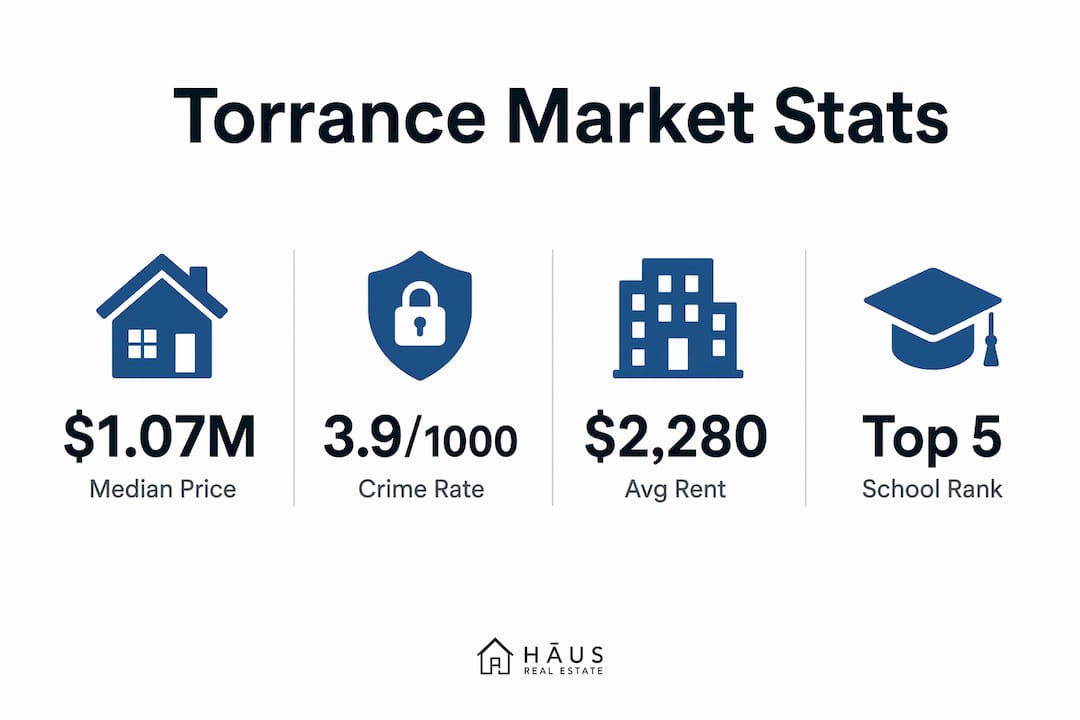
Renters face a similarly demanding market. Median monthly rents average $2,280, with one-bedroom units averaging $2,092 and three-bedroom units reaching approximately $3,249 per month. Those numbers reflect the city's desirability and its position within the broader Los Angeles housing market.
The gap between home values and income creates a real affordability challenge. High home values versus income require careful budget planning for anyone moving here. A household earning the median income of $116,217 would spend well over 40% of gross income on a standard mortgage for a median-priced home, which exceeds the conventional 28% housing cost guideline.
Understanding the SoCal real estate trends for 2026 helps put Torrance's market in context. The city's values have held firm relative to the broader Los Angeles region, partly because demand from school-district-motivated buyers keeps inventory tight.
| Home type | Typical price range | Notes |
|---|---|---|
| Single-family home | $900,000 and above | Most common in Southwood and West Torrance |
| Condominium | $550,000 to $800,000 | Popular near Del Amo and Torrance Beach |
| Townhome | $700,000 to $950,000 | Often newer construction with HOA fees |
| Rental (1-bedroom) | ~$2,092/month | Competitive; low vacancy rates citywide |
| Rental (3-bedroom) | ~$3,249/month | Family-sized units move quickly |
Neighborhood choice matters significantly in Torrance. West Torrance and Southwood tend to carry higher price tags due to proximity to top-rated schools and the beach. North Torrance and Central Torrance offer slightly more accessible entry points without sacrificing access to city amenities.
Pro Tip: Buyers competing in Torrance should get fully pre-approved, not just pre-qualified, before making offers. The market moves fast, and sellers routinely receive multiple bids. A guide for LA buyers and investors can help you prepare the right offer structure before you start touring homes.
What are the educational opportunities and school quality in Torrance?
The best schools in Torrance are the city's single strongest draw for families. The Torrance Unified School District has been recognized as the best public school district in the South Bay for five consecutive years as of march 2026. The district serves over 22,000 students across 32 schools, a scale that supports specialized programs, athletics, and extracurricular depth that smaller districts cannot match.
TUSD's reputation is not just local. The district draws families from across Los Angeles County who specifically relocate to access its schools. That migration pattern is one reason Torrance's demographic profile has shifted so noticeably over the past two decades, with Asian American families representing a growing share of the school-age population.
The district does have real variation across campuses. Some schools face infrastructure challenges such as inconsistent air conditioning and large campus layouts that affect student comfort. Newer or recently renovated campuses offer modern facilities, while older buildings show their age. The quality of your child's experience depends partly on which specific school they attend.
Key points families should know about TUSD:
- West High School and South High School consistently rank among the top public high schools in Los Angeles County
- The district offers magnet and specialized programs in STEM, arts, and dual-language instruction
- Elementary school boundaries determine which school your child attends, so check boundaries before choosing a neighborhood
- TUSD has a strong parent involvement culture, which contributes to school quality beyond just funding
- Private school options also exist in Torrance, including Chadwick School and several parochial campuses
Pro Tip: Before finalizing your home purchase, visit the California Department of Education's school locator tool and cross-reference it with TUSD's boundary maps. Two homes on the same street can fall in different school attendance zones.
What should residents consider about cost of living, transportation, and daily conveniences?
The cost of living in Torrance runs above the national average, driven primarily by housing. Outside of housing, everyday expenses like groceries, utilities, and healthcare align more closely with Los Angeles County norms, which are themselves above the national median.
Here is how the major cost categories break down for prospective residents:
- Housing is the dominant expense. Whether renting or buying, expect to allocate a significant portion of your monthly budget. Renters pay a median of $2,280 per month, while homeowners carry mortgage payments well above $4,000 monthly on a median-priced property.
- Transportation costs are high because Torrance is a car-dependent city. The walkability score is 39 out of 100, reflecting a suburban layout built around driving. Budget for gas, insurance, and parking, especially if you commute to Los Angeles.
- Utilities in Southern California run moderate compared to extreme-climate states, but summer cooling costs can spike, particularly in inland-facing neighborhoods.
- Healthcare access is strong. Torrance Memorial Medical Center is a major regional hospital, and the city hosts numerous specialty clinics and urgent care facilities.
- Groceries and dining offer wide range. Torrance has everything from budget-friendly Asian supermarkets like H Mart to premium grocery options, giving residents real flexibility in food spending.
Public transit exists but functions as a supplement, not a replacement, for car travel. The 24-hour bus service to Los Angeles provides a connection to the broader metro area, but frequency and coverage remain limited for daily commuters. Most residents drive to work, errands, and appointments.
Safety is a reasonable concern for anyone moving to a new city. Torrance carries a violent crime rate of 3.9 incidents per 1,000 residents per year, slightly above the national average but well below most large Los Angeles neighborhoods. The city maintains a strong local police presence and is generally considered safe for families.
Understanding the full picture of distressed homeowner situations can also help buyers identify below-market opportunities in Torrance's tight inventory environment. Motivated sellers occasionally offer entry points that standard listings do not.
Key Takeaways
Torrance offers families and individuals a rare combination of top-ranked schools, cultural diversity, and coastal access, but housing costs require serious financial preparation before moving.
| Point | Details |
|---|---|
| Strong school district | TUSD is the top-ranked South Bay district for five consecutive years, serving 22,000+ students. |
| Competitive housing market | Median home values reach $1,074,700; renters pay an average of $2,280 per month. |
| Car-dependent lifestyle | Walkability scores 39/100; a personal vehicle is necessary for most daily tasks. |
| Cultural diversity | Korean and Chinese communities have grown significantly, driven by school quality and neighborhood stability. |
| Balanced safety profile | Violent crime sits at 3.9 per 1,000 residents, slightly above national average but manageable for families. |
What I've learned from watching families choose Torrance
I have worked with enough buyers in the South Bay to say this clearly: Torrance is one of the most misread cities in Los Angeles County. People either overestimate it as a luxury destination or dismiss it as too expensive without doing the math on what they actually get.
The families who thrive here are the ones who come in with realistic expectations about housing costs and a clear plan for managing them. A dual-income household earning near or above the median can make Torrance work very well. A single-income buyer stretching to hit the median home price will feel the pressure within two years.
What surprises most of my clients is the community feel. Torrance does not have the transient energy of West Hollywood or the status-signaling of Palos Verdes. Neighbors know each other. Parents show up to school events. The city has a stability that is genuinely rare this close to Los Angeles.
The school district is the real anchor. I have seen families move specifically from Redondo Beach and Hawthorne to get their children into TUSD. That demand is not going away, which is also why home values in the best school zones hold firm even when the broader market softens.
My practical advice: do not buy in Torrance based on the school district alone. Visit the specific campus your child would attend. Check whether it has been recently renovated. Talk to parents in the neighborhood. The district is strong overall, but individual campus experiences vary more than the district's marketing suggests.
Torrance rewards buyers who do their homework. The city's investment fundamentals in Southern California remain solid, and properties in the right school zones have historically held value through market cycles. That is not a guarantee, but it is a pattern worth noting.
— Irvin Nierras
Torrance homes worth exploring with Increaltors
Torrance's real estate market moves fast, and having the right listings in front of you at the right time makes a real difference.
Increaltors, led by agent Irvin Nierras of HomeSmart Evergreen Realty, specializes in the South Bay and greater Los Angeles market. Whether you are looking for a single-family home in a top school zone, a condo near the beach, or want to browse all available Torrance listings, the platform gives you detailed property information with local market context. You can also get a free home valuation if you already own in the area and want to know what your property is worth in the current market. Reach out directly to Irvin for personalized guidance on neighborhoods, school zones, and offer strategy.
FAQ
What is the median home price in Torrance, CA?
The median home value in Torrance is approximately $1,074,700 as of june 2026. The market is highly competitive, with low inventory and consistent demand from school-district-motivated buyers.
Is Torrance, CA a good place to raise a family?
Torrance is one of the best cities in the South Bay for families, anchored by the Torrance Unified School District, which has held the top public school district ranking in the South Bay for five consecutive years. Parks, community programs, and a stable neighborhood culture add to its family appeal.
How safe is Torrance, CA?
Torrance has a violent crime rate of 3.9 incidents per 1,000 residents per year, slightly above the national average but significantly lower than most Los Angeles neighborhoods. The city is generally considered safe for families and individuals.
Do you need a car to live in Torrance?
A personal vehicle is necessary for most residents. Torrance has a walkability score of 39 out of 100, and while 24-hour bus service connects to Los Angeles, the city's suburban layout makes driving the practical choice for daily errands and commuting.
What neighborhoods in Torrance are best for families?
West Torrance and Southwood are the most sought-after neighborhoods for families, offering proximity to top-rated TUSD schools and easy access to the beach. North Torrance provides slightly more affordable entry points while still falling within the TUSD attendance boundary.