
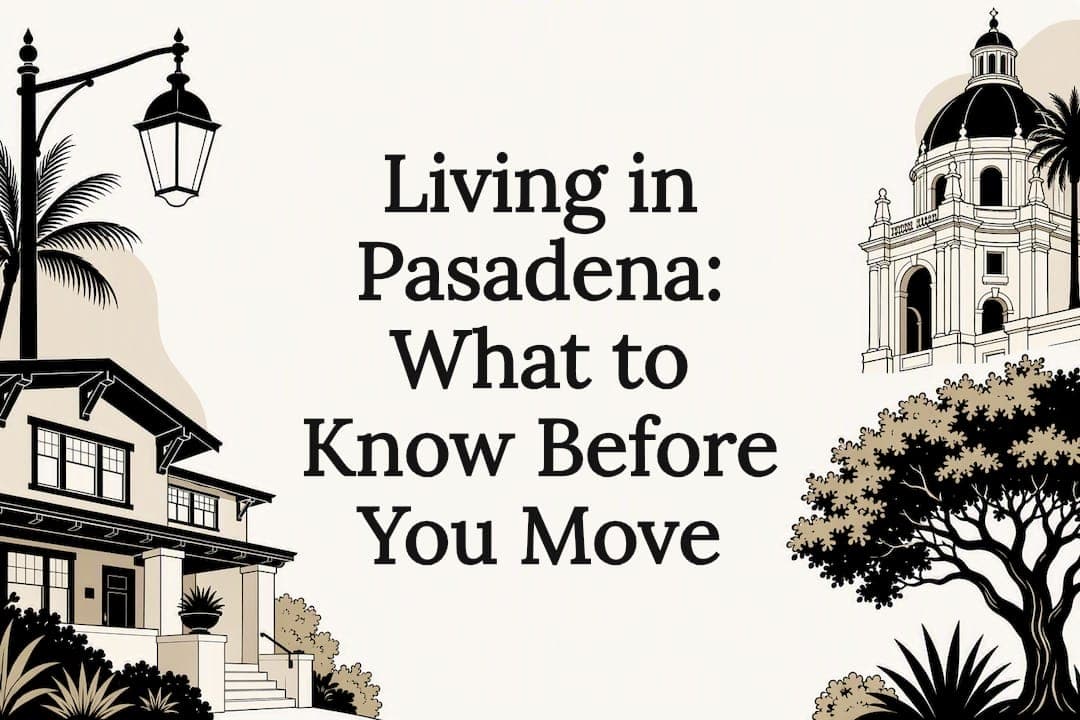
Pasadena suits families chasing strong school options and walkable culture, plus young professionals who want a food-forward, tree-lined city without a full downtown-Los Angeles price tag. Three facts drive the decision: median rent runs $2,265, PUSD offers real magnet and dual-language options, and the city packs in museums, the Rose Bowl, and year-round events. The sections below break down neighborhoods, costs, schools, and your next move.
TL;DR:
- Neighborhoods vary from walkable, research-oriented areas near Caltech to quieter, family-friendly districts with larger spaces and lower density.
- Public schools in Pasadena offer diverse programs like magnet and dual-language tracks, but enrollment depends on lottery deadlines and application timing.
- Commutes are easier for residents near Old Town, South Lake, and transit stations, while eastern neighborhoods are more car-dependent, with predictable rush-hour traffic.
- Buyers should thoroughly inspect older homes for hidden issues and separate housing decisions from school enrollment plans for better outcomes.
Table of Contents
- Which Pasadena Neighborhood Fits Your Lifestyle?
- What Does It Cost to Live in Pasadena?
- How Do Pasadena's Schools and PUSD Work?
- What's the Commute Like in Pasadena?
- What Do Parks, Culture, and Dining Look Like Day to Day?
- What Health Resources Are Available in Pasadena?
- How Should You Decide and Plan Your Move?
- What Buyers and Sellers Often Miss About Pasadena
- How Increaltors Helps You Move to Pasadena
- Sources
Which Pasadena Neighborhood Fits Your Lifestyle?
Pasadena isn't one city so much as a cluster of distinct pockets, and picking the right one matters more than picking the right square footage. The blocks around Caltech and Old Town buzz with restaurants, foot traffic, and a younger, research-driven crowd who walk to dinner instead of driving. South Lake and the Playhouse District split the difference: upscale shopping, a theater scene, and condo living for people who want city energy without giving up a car-free evening out. Bungalow Heaven, true to its name, is a historic district of Craftsman homes drawing buyers who want architectural character and a quieter, family-oriented block. Head toward the eastern edge near Altadena and you'll find more space, lower density, and a slower pace that appeals to growing families.
The City of Pasadena's own economic analysis identifies two dominant resident groups shaping this variety: affluent, established households with high discretionary spending, and a large segment, more than a fifth of residents, of younger, highly educated adults drawn to dining and active urban life. That split explains why you'll find a farm-to-table bistro next to a decades-old hardware store on the same block.
- Caltech/Old Town: walkable, dense, younger professionals and academics
- South Lake/Playhouse District: upscale, condo-heavy, arts and theater access
- Bungalow Heaven: historic homes, families, preservation-minded buyers
- Eastside/Altadena edge: more space, lower density, quieter streets
What Does It Cost to Live in Pasadena?
Pasadena isn't cheap, but it isn't the most expensive corner of Southern California either. The U.S. Census Bureau puts the median owner-occupied home value around $1,093,300, with median gross rent at $2,265 a month across a population of roughly 135,800.
By the Numbers: Median home value sits near $1.09 million, median rent runs around $2,265, and just 42.5% of Pasadena households own their home rather than rent, according to Census QuickFacts.
Much of the housing stock is older, full of Craftsman bungalows and prewar apartment buildings, which the city's own facts and figures report confirms alongside current owner/renter splits. Charming, yes, but budget for higher maintenance and insurance costs than you'd see with new construction.
For budgeting purposes:
- A buyer at the median home value, with 20% down and current rates, is often looking at a monthly payment well above $6,000 once taxes and insurance are factored in.
- Renters should plan for gross rent near $2,265, plus utilities, and expect faster-moving listings in walkable pockets.
- First-time buyers benefit from reviewing regional market trends before setting a target price range.
How Do Pasadena's Schools and PUSD Work?
Pasadena Unified School District enrolls more than 13,000 students and runs one of the more program-rich public systems in the region, with magnet schools, dual-language immersion tracks, and arts-integrated conservatory options. That variety is the point: a strong school district here isn't one school, it's a menu.
Three things to understand before you enroll a child:
- Open enrollment changes the math. Because PUSD runs an open enrollment system, families can apply to magnet programs outside their home boundary, which means some buyers prioritize being zoned for a specific school while others buy for affordability and apply to their preferred program separately, per PEN's open enrollment guide.
- Test scores aren't the whole picture. Pasadena Education Network recommends comparing schools on program extras, arts offerings, and dual-language tracks, not just standardized scores.
- Enrollment has a calendar. Lottery seats for magnet programs fill on a schedule, so families relocating mid-year need to check deadlines early.
Practical next steps:
- Use PUSD's school guide to find your home-boundary school
- Pull a PEN fact sheet for any magnet or dual-language program you're considering
- Download PUSD's Welcome Kit for the enrollment calendar and contact details
What's the Commute Like in Pasadena?
Your commute depends heavily on which neighborhood you land in. Old Town and South Lake residents often walk to work, dinner, or a coffee shop, while the eastern neighborhoods lean car-dependent. The 210 and 134 freeways connect Pasadena to downtown Los Angeles and the San Gabriel Valley, and Metro's L Line light rail runs straight through the city, making it genuinely useful for commuters heading toward downtown LA without a car.
- Walk/transit-friendly: Old Town, South Lake, Playhouse District, areas near L Line stations
- Car-dependent: eastside neighborhoods and the Altadena border
- Traffic reality: the 210/134 interchange backs up predictably during rush hour, so factor that into any daily-commute test drive
Homes clustered near Metro stations, like those profiled in nearby transit-adjacent listings, tend to hold value well precisely because that walk-to-rail convenience is rare in Southern California.
What Do Parks, Culture, and Dining Look Like Day to Day?
Pasadena's cultural calendar is a genuine reason people move here, not just a marketing line. The Rose Bowl anchors major annual events, the Norton Simon Museum draws visitors year-round, and Old Town's restaurant density rivals much larger cities. Local reviewers describe the city as an urban-suburban hybrid with strong dining and real walkability in its core neighborhoods, a description that tracks with daily life here.
- Weekly farmer's markets rotate through several neighborhoods
- Parks and recreation programs cater to kids and adults alike
- Coffee culture is dense enough that residents pick a regular spot within weeks of moving in
Pro Tip: Visit your target neighborhood on both a weekday morning and a Saturday night before you commit. Daytime quiet and weekend energy can look like two different cities.
What Health Resources Are Available in Pasadena?
Pasadena runs its own municipal health department, which is unusual for a city this size and useful for new residents. The Pasadena Public Health Department publishes Community Health Needs Assessments and maternal and infant health reporting, giving movers a real window into local health indicators before they arrive.
- Check the CHNA reports for a snapshot of community-level health trends
- Confirm which hospital and clinic networks accept your insurance before moving
- Use public health data to compare neighborhoods if chronic health access matters to your household
How Should You Decide and Plan Your Move?
Turning research into action means running a few quick fit tests, then working a checklist against a realistic timeline. Start with the tests:
- Drive your likely commute at the actual time you'd leave for work, not midday.
- Spend a weekend in your target neighborhood to see if the pace matches your household's rhythm.
- Match a specific school program to your child's interests using PEN fact sheets rather than assuming your zoned school is the only option.
Once the fit feels right, work through this sequence:
- Set a firm budget, including the higher monthly costs common with Pasadena's older housing stock
- Confirm school enrollment deadlines if you have kids, since magnet lotteries run on their own calendar
- Tour at least three neighborhoods in person before narrowing your search
- Get pre-approved before house hunting seriously; Pasadena's competitive listings move fast
- Bring in a local agent once you've narrowed neighborhoods. Someone who knows Pasadena block by block can save you from overpaying for the wrong lot
Readers ready to house hunt should also review a first-timer's home buying guide before making an offer.
What Buyers and Sellers Often Miss About Pasadena
Every Pasadena move I've watched up close comes down to the same tension: buyers want the walkable, food-forward blocks near Old Town or South Lake, but those same blocks command a real premium over the eastside and Altadena-adjacent streets. The mistake I see most often is paying that premium for convenience while skipping a thorough inspection on an older Craftsman, and Pasadena's housing stock skews old enough that foundation and electrical issues surface more than buyers expect.
The second mistake is timing. Families chasing a specific magnet seat sometimes rush a purchase to land in a boundary that open enrollment would have gotten them into anyway. Slow down, check the lottery rules, and let the housing decision and the school decision run on separate tracks. Buyers who separate those two choices almost always end up with a better house and the same school outcome.
— Irvin Nierras
How Increaltors Helps You Move to Pasadena
Increaltors gives you what a stack of city data reports can't: a local read on which Pasadena block actually fits your budget and your school priorities, backed by listings you can walk through this week. Whether you're comparing a Bungalow Heaven fixer-upper to a South Lake condo, or you just want a straight answer on what your current home would sell for before you make an offer here, that's the kind of ground-level guidance this article can't replace.
Start by requesting a free home valuation if you're selling elsewhere first, or browse current Pasadena-area listings to see what fits your budget today. If you'd rather see live market data before committing to a neighborhood, request an updated market snapshot and reach out to Irvin Nierras directly for a walk-through of your shortlist.
Sources
- U.S. Census Bureau QuickFacts: Pasadena city, California
- Pasadena Unified School District — School guide
- Pasadena psychographics — City of Pasadena economic development
- Pasadena Education Network — School fact sheets