
Selling your home in Los Angeles or Orange County in 2026 requires navigating a balanced market with steady demand but persistent affordability challenges. Homes that are priced right and properly prepared sell quickly, but missteps can cost you time and money. This guide walks you through every critical step, from understanding current market conditions to closing the deal, so you can maximize your sale price and avoid common pitfalls. Let's dive into what it takes to sell successfully in Southern California today.
Table of Contents
- Understanding the 2026 local market conditions
- Preparation: what you need to sell your house successfully
- Executing the sale: navigating the process step by step
- Verifying and closing the sale: inspection to final paperwork
- Ready to sell your home? Get expert help in Los Angeles and Orange County
- Frequently asked questions
Key takeaways
| Point | Details |
|---|---|
| Market conditions | The 2026 market remains balanced with steady buyer demand but limited inventory, giving sellers modest leverage. |
| Preparation matters | Proper home staging, repairs, and accurate pricing significantly improve your chances of a fast, profitable sale. |
| Timing is strategic | Spring offers seasonal price bumps in LA County, making it an ideal window to list your property. |
| Low inventory advantage | With only 2.6 months of supply, well-priced homes attract multiple offers and sell faster than in oversupplied markets. |
| Expert guidance helps | Professional agents simplify complex paperwork, negotiations, and marketing, reducing stress and maximizing outcomes. |
Understanding the 2026 local market conditions
The Southern California housing market in 2026 operates in a balanced state. Orange County remains neutral, neither strongly favoring buyers nor sellers. This equilibrium creates opportunities for prepared homeowners while demanding smart strategy.
Affordability remains the biggest challenge. Only 18% of Orange County households can afford a median priced home, with prices sitting 172% above the national average. This reality shrinks your potential buyer pool but also means serious buyers who can afford your home are highly motivated.
Despite affordability concerns, buyer demand stays steady. Inventory sits at just 2.6 months of supply, well below the six month threshold that would shift power to buyers. This scarcity keeps sellers in a favorable position for negotiations.
Price growth continues at a modest pace. You won't see the explosive appreciation of past years, but steady increases support strong sale prices. LA County experiences a notable spring seasonal bump, making March through May prime selling months.
Key market dynamics for sellers:
- Balanced conditions require realistic pricing and strong presentation
- Low inventory means less competition from other listings
- Affordability filters reduce buyer volume but increases deal quality
- Spring timing captures peak demand and better prices
Check the updated market snapshot regularly to track current trends. Understanding these dynamics helps you set realistic expectations and develop a winning strategy. The Orange County housing forecast provides deeper insights into price trajectories and buyer behavior patterns that influence your sale timeline.
"The combination of steady demand and constrained supply creates a seller friendly environment for homes that are priced correctly and show well."
Preparation: what you need to sell your house successfully
Preparation determines whether your home sells quickly at full price or languishes on the market with price cuts. Start by evaluating your property's condition honestly. Walk through each room and note repairs, cosmetic updates, and deep cleaning needs.
Essential preparation steps:
- Deep clean every surface, including carpets, windows, and fixtures
- Complete necessary repairs like leaky faucets, broken tiles, or damaged doors
- Apply fresh neutral paint to outdated or personalized wall colors
- Declutter and depersonalize to help buyers envision their own lives in the space
- Stage key rooms like living areas, master bedroom, and kitchen for maximum appeal
Timing your preparation matters. LA County home prices often see an annual spring bump, so aim to have everything ready by late February for a March listing. This positions you to capture peak buyer activity.
Get a professional home valuation report before setting your asking price. Overpricing scares away qualified buyers, while underpricing leaves money on the table. A data driven valuation considers recent comparable sales, your home's unique features, and current market velocity.
| Document Type | Purpose | When Needed |
|---|---|---|
| Property deed | Proves ownership | During escrow |
| Disclosure forms | Legal requirements | Before listing |
| HOA documents | Buyer due diligence | With offer acceptance |
| Repair receipts | Shows maintenance history | During negotiations |
| Property survey | Confirms boundaries | If disputed |
You'll need complete disclosure documentation before listing. California law requires sellers to reveal known defects, environmental hazards, and property issues. Gather these documents early to avoid delays.
Pricing strategy in a balanced market requires nuance. With low inventory supporting prices but affordability limiting buyers, aim for the sweet spot where your home attracts serious interest without sitting too long. Study recent sales of comparable homes within a half mile radius.
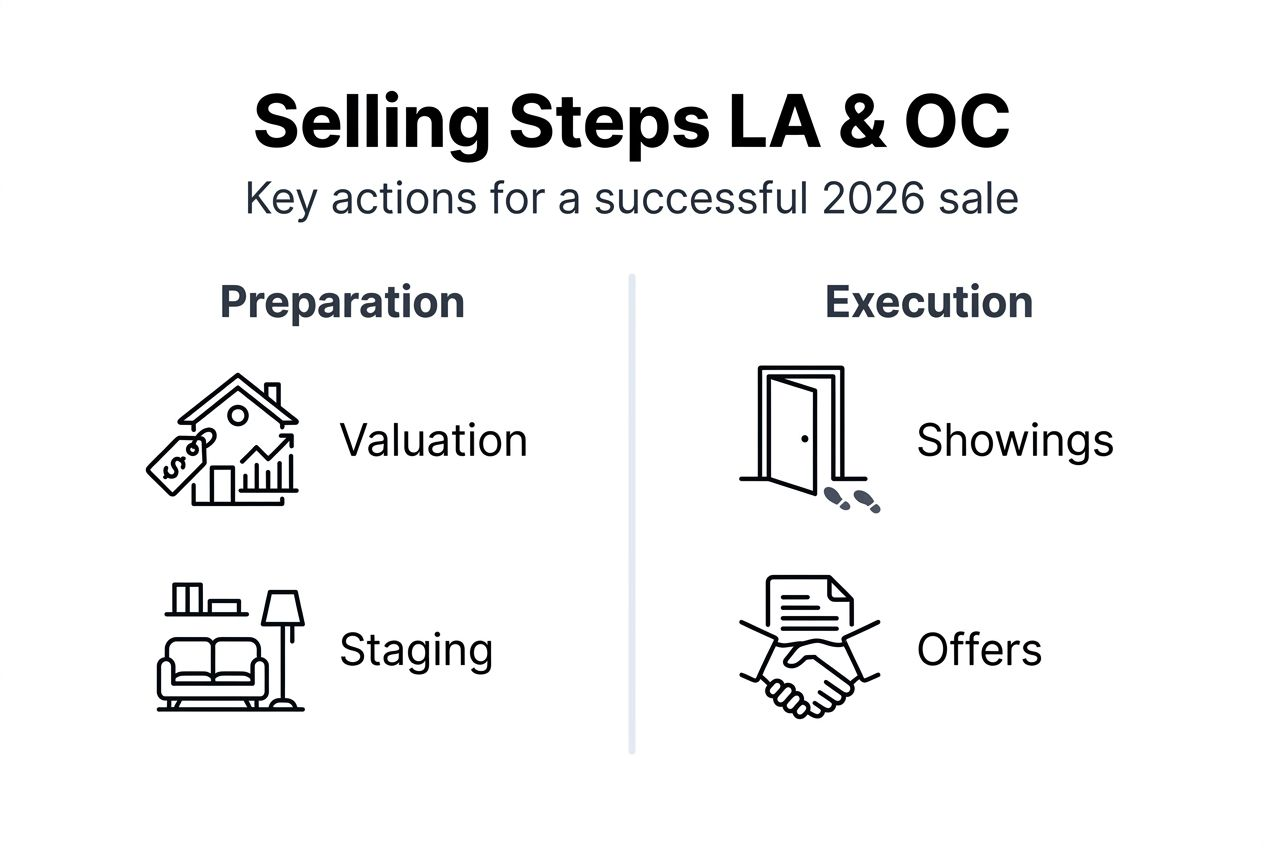
Deciding between For Sale By Owner (FSBO) and hiring an agent impacts your workload and results. FSBO saves commission costs but demands significant time for marketing, showings, negotiations, and paperwork. Professional agents bring market expertise, negotiation skills, and established buyer networks that often result in higher net proceeds despite commission costs.
Pro Tip: Schedule professional photography after staging is complete. High quality images dramatically increase online engagement and showing requests, directly impacting how quickly your home sells.
Consider seasonal factors when planning your listing date. Beyond spring's advantages, avoid major holidays when buyers focus elsewhere. The window between spring and summer offers optimal conditions before families prioritize school schedules. Visit selling your home for additional guidance on preparation strategies specific to LA and Orange County markets.
Executing the sale: navigating the process step by step
Once your home is prepared, execution determines whether you achieve your financial goals. Marketing in 2026 demands a multi channel approach combining online listings, social media promotion, virtual tours, and traditional open houses.
Effective marketing components:
- List on major platforms like Zillow, Redfin, and the MLS with compelling descriptions
- Create virtual 3D tours allowing remote buyers to explore thoroughly
- Leverage Instagram and Facebook with targeted ads reaching local buyers
- Host weekend open houses to generate competitive interest
- Send direct mail to neighbors whose connections might include potential buyers
Showings require careful preparation. Keep your home spotless and ready for last minute appointments. Remove pets and personal items during tours. Open curtains to maximize natural light. Consider leaving during showings so buyers feel comfortable exploring freely.

Open houses serve multiple purposes beyond finding buyers. They generate market feedback, create urgency among serious prospects, and sometimes spark bidding wars when multiple interested parties attend. Schedule them for Sunday afternoons when traffic peaks.
Reviewing offers involves more than comparing price tags. Evaluate each offer's complete package including contingencies, closing timeline, down payment size, and buyer financing strength. Approximately 27% of Orange County homes sold above list price recently, proving that strong presentation and strategic pricing attract premium offers.
Key offer evaluation factors:
- Purchase price relative to comparable sales
- Contingencies for inspection, appraisal, and financing
- Proposed closing date matching your timeline needs
- Buyer's down payment percentage indicating financial stability
- Pre approval letter quality and lender reputation
Negotiation tactics vary by market conditions. In the current balanced environment with low inventory, sellers maintain leverage but must remain reasonable. Counter low offers strategically rather than rejecting them outright. Consider non price terms like closing date flexibility or including appliances as negotiation tools.
| Selling Method | Timeline | Control Level | Potential Price |
|---|---|---|---|
| Traditional listing | 30-60 days | High | Market value to above |
| Auction | 30-45 days | Medium | Variable |
| Off market | 15-30 days | High | Potentially lower |
| iBuyer | 7-14 days | Low | Below market |
Choosing your selling method impacts outcomes significantly. Traditional listings through the MLS reach the broadest buyer pool and typically achieve the highest prices. Auctions create urgency but require specific property appeal. Off market sales offer privacy and speed but limit competition. iBuyers provide convenience at a substantial price discount.
Pro Tip: When multiple offers arrive simultaneously, request highest and best offers by a specific deadline. This strategy often pushes buyers to submit their strongest terms, maximizing your sale price without prolonged negotiations.
Maintain communication momentum throughout the offer process. Respond to inquiries quickly and keep interested buyers engaged. In a market where homes priced correctly move faster due to limited inventory, decisive action prevents losing motivated buyers to competing properties. Balance speed with careful evaluation to make informed decisions that serve your financial interests.
Verifying and closing the sale: inspection to final paperwork
Accepting an offer launches a critical verification phase where deals can unravel without proper management. Home inspections represent the first major hurdle. Buyers typically hire professional inspectors who examine structural, mechanical, and safety elements thoroughly.
Prepare for inspection findings by understanding what's reasonable. Minor issues like worn weather stripping or cosmetic flaws shouldn't derail deals. Major problems like roof damage, foundation cracks, or electrical hazards require negotiation.
Responding to inspection requests:
- Review the inspection report carefully with your agent
- Separate legitimate concerns from nitpicky items
- Obtain repair estimates for significant issues
- Decide whether to make repairs, offer credits, or adjust price
- Respond within the contracted timeframe to maintain momentum
Escrow and title work protect both parties during closing. Escrow companies hold funds and documents, ensuring conditions are met before finalizing the sale. Title companies verify ownership history and issue insurance protecting against future claims. These processes typically take 30 to 45 days.
Required documentation checklist:
- Signed purchase agreement and all amendments
- Preliminary title report showing clear ownership
- Natural hazard disclosure statement
- Transfer disclosure statement revealing known issues
- HOA documents including CC&Rs and financials
- Final walk through confirmation signed by buyer
Common closing delays include appraisal issues, financing problems, and title complications. Stay proactive by responding quickly to requests and maintaining open communication with all parties. The lock-in effect reduces inventory as homeowners delay listing, but once you commit to selling, efficient execution prevents competitor listings from stealing your buyers.
The final walk through occurs days before closing. Buyers verify the property's condition matches their expectations and agreed upon repairs are complete. Ensure your home is clean, empty of personal belongings, and all systems function properly.
Pro Tip: Create a closing timeline working backward from your target date. Identify key milestones like inspection completion, appraisal scheduling, and loan approval deadlines. Share this timeline with your agent, escrow officer, and buyer to keep everyone aligned and accountable.
Coordinate move out logistics carefully to avoid conflicts. If you need to stay beyond closing, negotiate a rent back agreement in advance. Never assume flexibility without written terms. Last minute occupancy disputes create legal complications and financial penalties.
Title insurance protects against undiscovered liens, ownership disputes, or recording errors. While buyers typically purchase their own policy, sellers often pay for the buyer's coverage as customary in many California transactions. Budget for these costs when calculating net proceeds.
Closing day involves signing numerous documents transferring ownership and settling financial obligations. Review your estimated closing statement days in advance to verify all numbers match your expectations. Bring valid identification and any required certified funds. Once documents are recorded with the county, the sale is officially complete and you receive your proceeds.
Staying organized throughout this phase reduces stress dramatically. Keep digital and physical folders containing all transaction documents, correspondence, and receipts. This documentation proves valuable for tax purposes and resolving any post closing questions. Working with experienced professionals through selling with Irvin Nierras ensures nothing falls through the cracks during this complex process. Understanding the lock-in effect analysis helps you appreciate why efficient closing matters in today's inventory constrained market.
Ready to sell your home? Get expert help in Los Angeles and Orange County
Navigating LA and Orange County's unique 2026 market dynamics demands local expertise and proven strategies. You've learned the steps, but executing them flawlessly while managing your daily life creates overwhelming stress.

Partnering with a trusted real estate professional transforms this challenge into a smooth, profitable experience. You gain access to proprietary market data, strategic pricing models, and established buyer networks that independent sellers can't replicate. Professional marketing reaches thousands of qualified prospects through channels unavailable to FSBO sellers.
Key benefits of expert representation:
- Accurate pricing based on hyperlocal comparable analysis
- Professional staging consultation and photography coordination
- Comprehensive marketing across MLS, social media, and exclusive networks
- Skilled negotiation maximizing your net proceeds
- Transaction management handling complex paperwork and deadlines
Sell your home with Irvin Nierras to leverage deep knowledge of Los Angeles and Orange County neighborhoods, pricing trends, and buyer preferences. Access current market snapshot data informing optimal listing strategies. Browse homes for sale listing to understand your competition and positioning.
Don't leave money on the table or waste months with ineffective marketing. Connect with local expertise that turns market knowledge into your competitive advantage.
Frequently asked questions
How long does it typically take to sell a house in Los Angeles and Orange County?
The average timeline ranges from 30 to 60 days depending on pricing accuracy, property condition, and seasonal factors. Homes listed in spring often sell faster due to increased buyer activity and the seasonal price bump common in LA County. Properties priced correctly from the start and showing well typically receive offers within the first two weeks, while overpriced or poorly presented homes can sit for months requiring price reductions.
What are the typical costs of selling a house in Southern California?
Expect to pay 5% to 6% in real estate commissions, 1% to 3% in closing costs including title insurance and escrow fees, plus any repair expenses identified during inspections. Transfer taxes vary by city but typically add another 0.5% to 1% of the sale price. Budget an additional $2,000 to $5,000 for staging, professional photography, and marketing materials if not covered by your agent. Total costs usually range from 8% to 10% of the final sale price.
Is spring really the best time to sell in Los Angeles and Orange County?
Yes, spring consistently delivers optimal results for sellers in LA and Orange County markets. Buyer activity peaks between March and May as families want to move before the school year ends and tax refunds provide down payment funds. LA County specifically experiences a documented seasonal price increase during spring months. However, low inventory in 2026 means well prepared homes can sell successfully in any season if priced appropriately.
How does low inventory affect my selling strategy?
Limited inventory gives you negotiating leverage but also raises buyer expectations for home condition and accurate pricing. With only 2.6 months of supply, buyers face fewer options but conduct thorough comparisons among available properties. Price your home competitively based on recent sales rather than inflating expectations. Invest in presentation since buyers scrutinize every detail when choices are limited. Quick decision making becomes crucial as qualified buyers move fast in low inventory environments.
Should I sell my house myself or hire a real estate agent?
Hiring a professional agent typically results in higher net proceeds despite commission costs due to superior marketing reach, negotiation expertise, and transaction management. Agents access MLS databases reaching thousands of buyers and other agents, while FSBO sellers rely on limited personal networks and public websites. The complex paperwork, legal disclosures, and negotiation tactics required in California real estate transactions create significant risk for inexperienced sellers. Consider FSBO only if you have substantial real estate knowledge, time availability, and marketing capabilities.