

TL;DR:
- Verifying a license is the first step to find a qualified realtor in Long Beach, California.
- Interview multiple agents and ask detailed questions about fees, local expertise, and their transaction history.
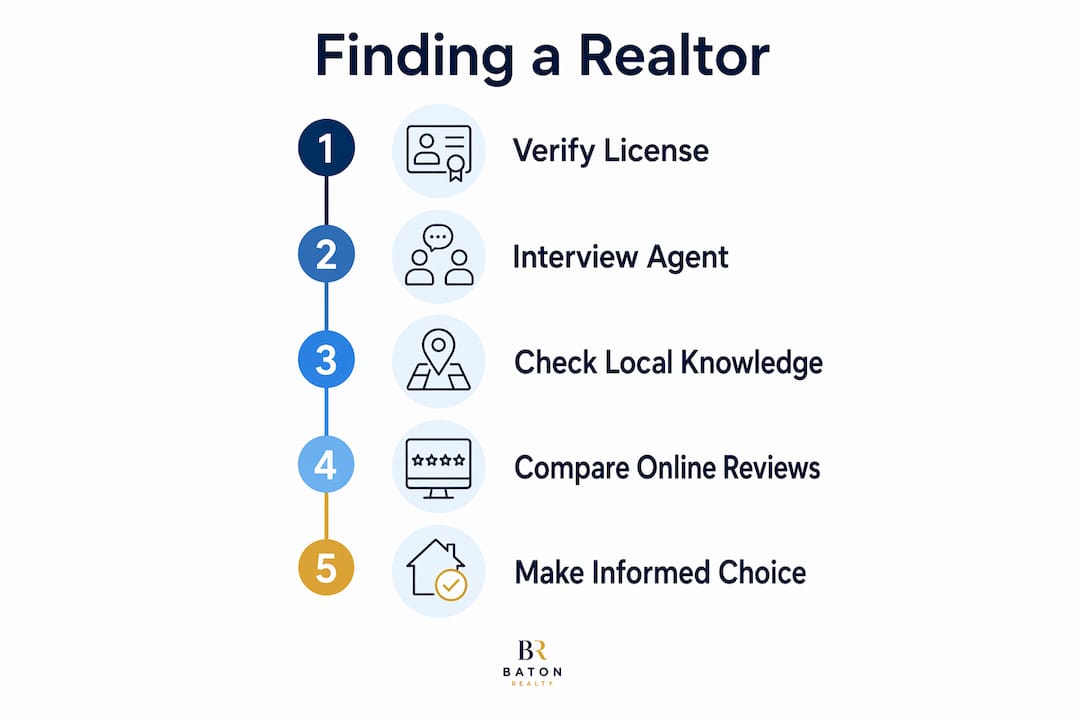
A reliable realtor near me in Long Beach, California, is a California Department of Real Estate licensed professional with verifiable credentials, neighborhood-level market knowledge, and transparent fee terms. The search phrase "realtor near me" is informal shorthand. The industry term is licensed real estate agent or REALTOR, the latter being a registered trademark of the National Association of Realtors. Both terms apply here, and knowing the difference helps you ask sharper questions. Platforms like Realtor.com, Zillow, and Redfin list Long Beach agents, but listing presence alone does not confirm competence or legal standing. This guide gives you a practical framework for verifying, interviewing, and selecting the right agent for your transaction.
How to verify a realtor's license in Long Beach, California
License verification is the first step, not an optional one. California requires every real estate salesperson and broker to hold an active license issued by the California Department of Real Estate. You can verify any agent's license free of charge at dre.ca.gov using the public license lookup tool.
The lookup system returns the license type, current status, issue date, expiration date, and the employing broker's name. Each piece of data matters. An expired license means the agent cannot legally represent you. A broker mismatch means the agent may be operating outside their authorized firm.
License status codes tell you more than a simple active or inactive label. "Active" is the only status that permits full legal practice. "Restricted" means the agent is on probation and operating under conditions set by the DRE. "Revoked" means the agent has permanently lost their license. "Suspended" means the license is temporarily inactive. Never work with an agent whose status is anything other than active.
California also requires agents to display their DRE number prominently in all marketing materials, social media profiles, and business cards. An agent who cannot or will not provide their DRE number on request is a red flag. That number is public record, and any hesitation to share it signals a compliance problem.
Red flags to watch for when checking licenses:
- No DRE number on business cards, websites, or social profiles
- License status listed as restricted, suspended, or revoked
- Expiration date that has already passed
- Employing broker name that does not match the agent's stated firm
- License type listed as broker when the agent claims to be a salesperson working under another broker
Pro Tip: Ask every agent for their DRE license number before your first formal meeting. Run the lookup yourself at dre.ca.gov. The entire process takes under two minutes and eliminates unqualified candidates immediately.
What questions should you ask when interviewing Long Beach real estate agents?
The initial interview with an agent is the best opportunity to clarify terms, fees, and expectations upfront, preventing misunderstandings later. Most buyers and sellers skip this step or treat it as a formality. That is a costly mistake. Treat the interview as a risk-reduction exercise, not a social call.

Start with compensation. Ask directly what the fee or compensation structure is and exactly what services are included. Commission rates are negotiable in California. Knowing the number upfront prevents surprises at closing. Ask whether the fee changes based on the sale price, and confirm what happens if the deal falls through.
Representation terms require equal attention. Transparent handling of buyer-agent compensation and representation terms before tours is now required under current California practice standards. This creates a clear moment at the start of the relationship where both parties confirm what they have agreed to. Do not tour homes with an agent before signing a representation agreement.
Local knowledge questions reveal whether an agent actually works your target neighborhoods or just claims to. Ask how many transactions they closed in Long Beach in the past 12 months. Ask which specific neighborhoods they know best. Ask how they evaluate comparable sales and what their process is for pricing an offer or a listing. Vague answers to these questions are disqualifying.
Numbered list of key interview questions:
- What is your DRE license number, and can I verify it now?
- What is your fee structure, and what services does it include?
- How many transactions did you close in Long Beach last year?
- Which Long Beach neighborhoods do you specialize in?
- How do you analyze comparable sales to price a home or an offer?
- How do you handle contingencies, and what is your approach to negotiation?
- What does your buyer or seller representation agreement say, and when do I sign it?
- How often will you communicate with me, and through what channels?
- Can you provide references from recent Long Beach clients?
The questions to ask real estate agents go beyond surface-level credentials. You want to understand how an agent thinks and how they handle pressure. An agent who asks about your lifestyle, priorities, and timeline is already doing their job better than one who leads with their sales volume.
Pro Tip: Record the answers to these questions in writing immediately after the interview. Comparing three agents side by side on the same criteria is far more revealing than relying on memory or first impressions.
Why does local expertise matter for Long Beach real estate?
Long Beach is not a uniform market. The city spans distinct neighborhoods with different price points, buyer profiles, and property types. Belmont Shore attracts buyers who want walkable beach access and a dense urban feel. Los Cerritos and Bixby Knolls draw families prioritizing school zones and larger lots. The waterfront areas near the Port of Long Beach carry unique considerations around noise, air quality, and zoning. A generalist agent who covers all of Los Angeles County cannot give you the same analysis as one who closes deals specifically in these zip codes.
Local market knowledge directly affects pricing accuracy, negotiation outcomes, and property selection. An agent who knows that a specific block in Belmont Heights sells at a premium because of its walkability score and school district will price your offer or your listing more accurately than one working from broad city-level data. That precision can mean the difference between winning a competitive offer and losing it.
Local expertise also extends beyond price. A Long Beach specialist knows which inspectors are thorough, which title companies close on time, and which lenders understand the local condo market. These vendor relationships reduce transaction risk in ways that no amount of general experience can replicate.
| Factor | Generalist agent | Neighborhood specialist |
|---|---|---|
| Pricing accuracy | Uses broad city or county comps | Uses block-level comps and micro-market data |
| Negotiation leverage | General tactics | Knows seller motivations and local norms |
| Vendor network | Generic referrals | Established relationships with local inspectors, lenders, title companies |
| School zone knowledge | General awareness | Specific boundary data by address |
| Shoreline and zoning issues | Limited familiarity | Direct experience with coastal and port-adjacent properties |
| Community dynamics | Surface-level | Knows HOA reputations, neighborhood trends, and upcoming developments |
The best realtor matches your specific transaction type, property type, and neighborhood preferences rather than relying on marketing claims. A buyer purchasing a condo near the waterfront needs a different specialist than a seller listing a single-family home in Bixby Knolls. Ask every candidate to name the last five transactions they closed and where those properties were located.
How to use online listings and reviews to find top agents near you
Online platforms are a starting point, not a final answer. Realtor.com, Zillow, Yelp, and Redfin all list Long Beach real estate agents with profile pages that include transaction history, client reviews, and stated specialties. Using these platforms helps you build a shortlist of candidates with documented local activity.
Transaction volume on these profiles tells you whether an agent is active in Long Beach or just licensed there. An agent with 30 closed transactions in Long Beach over the past two years is a meaningfully different candidate than one with 3. Reviews reveal communication style, responsiveness, and how agents handle problems. Look for patterns across multiple reviews rather than reacting to a single five-star or one-star outlier.
Cross-referencing online profiles with DRE license data is non-negotiable. An agent may list impressive credentials on Zillow that do not match their actual license status. Always confirm the DRE number shown on the profile against the dre.ca.gov lookup result.
Best practices for vetting online reviews and profiles:
- Look for reviews that mention specific neighborhoods, property types, or transaction challenges
- Prioritize agents with reviews from the past 12 months over older testimonials
- Check whether the agent responds to negative reviews professionally and constructively
- Confirm the transaction count shown on Zillow or Realtor.com against what the agent tells you directly
- Search the agent's name plus "Long Beach" on Yelp and Google to find reviews outside the real estate platforms
- Verify that the DRE number on every profile matches the dre.ca.gov record exactly
A strong online profile combined with a clean DRE record and strong interview performance is the three-part filter that separates qualified Long Beach agents from the rest. No single data point is sufficient on its own.
Key Takeaways
The most reliable way to find a qualified realtor in Long Beach, California, is to verify their California DRE license first, then evaluate local expertise and fee transparency through a structured interview.
| Point | Details |
|---|---|
| Verify the DRE license first | Use dre.ca.gov to confirm active status, expiration date, and employing broker before any meeting. |
| Ask about fees and representation terms upfront | Confirm compensation structure and sign a representation agreement before touring any property. |
| Prioritize neighborhood-level expertise | An agent who closes deals in your target Long Beach zip code outperforms a generalist every time. |
| Use online platforms as a starting point | Cross-reference Zillow, Realtor.com, and Yelp profiles against DRE records for accuracy. |
| Interview at least three agents | Comparing candidates on the same questions reveals differences that a single conversation cannot. |
What I have learned about choosing a realtor in Long Beach
Working in Southern California real estate has shown me one pattern that repeats without exception. Buyers and sellers who skip license verification and jump straight to personality fit almost always regret it. The DRE lookup takes two minutes. The consequences of skipping it can take months to unwind.
The fee conversation is where most clients feel uncomfortable, and that discomfort costs them money. I have seen buyers sign representation agreements without reading the compensation terms, then discover at closing that the structure was not what they assumed. Ask the fee question first, not last. If an agent deflects or gives a vague answer, that tells you everything you need to know about how they will handle the harder conversations during a transaction.
Local expertise is the factor that separates a good outcome from a great one in Long Beach. The city's neighborhoods are genuinely different from each other. An agent who knows the HOA reputation at a specific Belmont Shore condo building, or who understands how the coastal commission affects renovation permits near the water, brings value that no amount of general experience can substitute. When I evaluate an agent's local knowledge, I ask them to walk me through a specific comparable sale they used in the past 90 days. The quality of that answer tells me more than their years in the business.
The agents I trust most are the ones who ask me questions before they start talking about themselves. They want to know your timeline, your budget flexibility, your non-negotiables, and what a successful outcome looks like for you. That curiosity is not a sales technique. It is the foundation of good representation. If an agent spends the first meeting pitching their marketing plan without asking about your needs, keep looking.
— Irvin Nierras
Long Beach property listings and verified agents at Increaltors
Increaltors connects Long Beach buyers, sellers, and investors with verified, locally experienced agents backed by HomeSmart Evergreen Realty. Every agent profile on the platform includes licensing information and local transaction history so you can confirm credentials before making contact.
Browse homes for sale in Long Beach across property types including single-family homes and condominiums. Each listing includes detailed property information, neighborhood context, and direct agent contact. You can also request a free home valuation to understand your property's current market position before listing. Increaltors focuses specifically on Southern California markets, which means the agents you reach through the platform know Long Beach neighborhoods at the level of detail that produces better outcomes.
FAQ
How do I verify a realtor's license in California?
Use the free license lookup tool at dre.ca.gov. Enter the agent's name or DRE license number to confirm their license type, status, expiration date, and employing broker.
What does a restricted DRE license status mean?
A restricted license means the agent is on probation and operating under conditions set by the California Department of Real Estate. You should ask the agent directly about the nature of the restriction before proceeding.
Do I need to sign an agreement before touring homes with an agent?
Yes. Current California practice standards require agents to present and discuss representation terms and compensation before conducting home tours. Signing a buyer representation agreement upfront protects both parties.
What is the difference between a real estate agent and a REALTOR in Long Beach?
A real estate agent holds a California DRE license. A REALTOR is a licensed agent who is also a member of the National Association of Realtors and is bound by its code of ethics. Both must hold an active DRE license to practice legally in California.
How many agents should I interview before choosing one?
Interview at least three agents using the same set of questions. Comparing candidates on identical criteria, including fee structure, local transaction history, and how they analyze comparable sales, gives you a clear basis for choosing the best fit for your transaction.