
TL;DR:
- Strategic home staging helps homes sell faster and often at higher prices.
- Staging neutralizes the space, helping buyers imagine their own lives there.
- Proper preparation, decluttering, depersonalizing, and highlighting key areas maximize staging effectiveness.
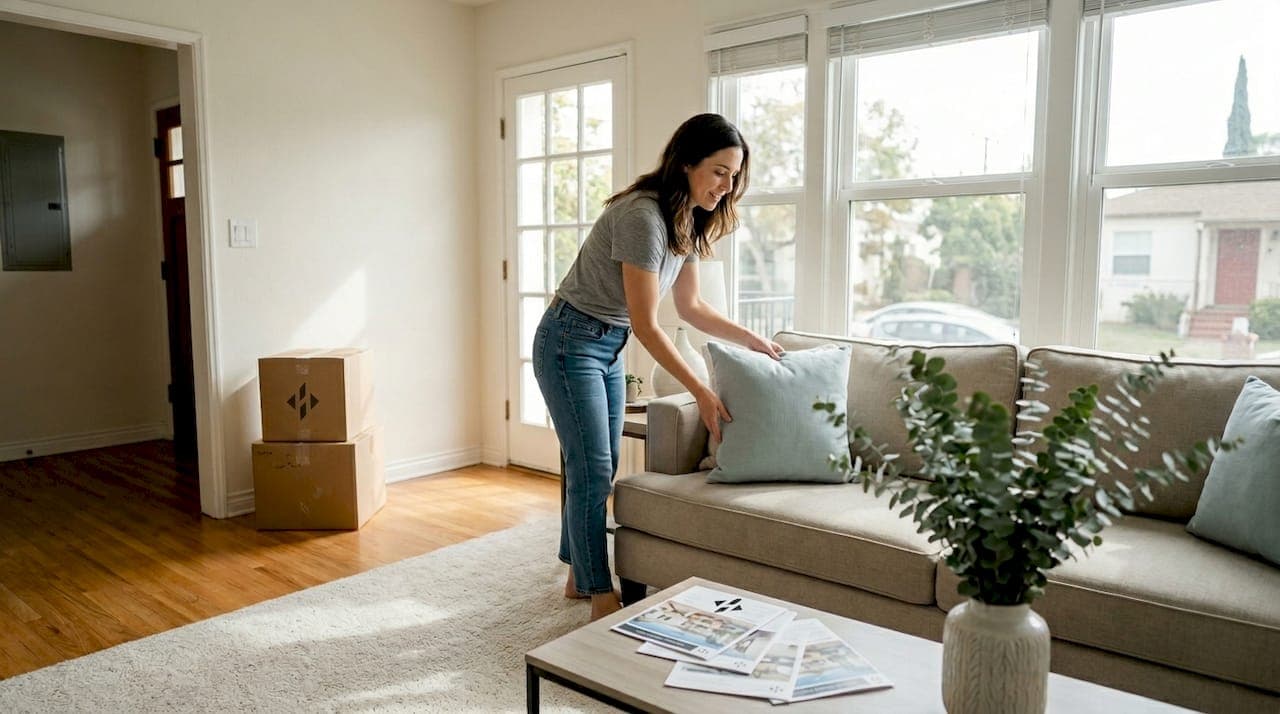
A home sitting on the market for 60 days tells buyers one thing: something must be wrong. Meanwhile, a well-staged property two streets over gets multiple offers in a weekend. That gap rarely comes down to luck. Strategic home staging, which means preparing and presenting your property so buyers can picture themselves living there, is one of the most cost-effective moves a seller can make. 29% of real estate agents reported a 1%–10% increase in dollar value offered on staged homes, and 49% saw shorter time on market. In competitive Los Angeles and Orange County, where buyers have endless options and high expectations, that edge matters enormously. This guide covers everything: the case for staging, what you need to get started, a room-by-room action plan, and the mistakes that quietly kill deals.
Table of Contents
- What is home staging and why does it matter?
- Gather your home staging essentials: What you need before starting
- Step-by-step home staging: Transform each space for buyer appeal
- Avoid common staging mistakes and maximize your results
- The truth about staging that most sellers overlook
- Get expert help and unlock your home's value
- Frequently asked questions
Key Takeaways
| Point | Details |
|---|---|
| Staging boosts offers | Strategic home staging increases the likelihood of higher offers and a faster sale. |
| Focus on buyer hot spots | Concentrate staging efforts on living rooms, kitchens, and primary bedrooms for greatest impact. |
| Avoid staging mistakes | Overcrowding, excess décor, and forgetting to deep clean can undermine your home’s appeal. |
| DIY or hire pros | Both DIY steps and professional stagers can help your home stand out, depending on your budget and needs. |
What is home staging and why does it matter?
Home staging is not the same as decorating your home to suit your own taste. It is also not simply tidying up before a showing. The National Association of REALTORS defines staging as the process of decluttering and styling a property specifically to help buyers envision it as their future home. That distinction matters more than most sellers realize.
When you decorate your home, you personalize it. When you stage it, you neutralize it. You remove the clues that say "a family of four from Pasadena lives here" and replace them with a feeling that says "this could be yours." That psychological shift is exactly what motivates buyers to make stronger offers.
The buyer psychology behind staging works on a simple principle: people buy on emotion and justify with logic. A buyer who feels at home during a showing will pay more to secure that feeling. One who walks through a cluttered, personalized space stays mentally at arm's length, which translates to lower offers or no offer at all.
83% of buyers' agents said staging makes it easier for buyers to visualize the property as their future home. That is not a small number. It means that in nearly every transaction, staging changes how buyers experience the space.
For more on getting your property ready for the market, explore these home sale preparation tips built specifically for Southern California sellers.
Here is a quick comparison of what staging is versus what it is not:
| Factor | Home staging | Interior decorating | Basic cleaning |
|---|---|---|---|
| Goal | Buyer appeal | Personal expression | Hygiene and order |
| Audience | Potential buyers | Current resident | Everyone |
| Duration | Temporary | Long-term | Ongoing |
| Key action | Neutralize and highlight | Personalize | Clean and tidy |
| ROI focus | Sale price and speed | Lifestyle satisfaction | Minimum standard |
Staging targets the things buyers respond to most: light, space, cleanliness, and flow. It prioritizes how a room photographs for online listings, because over 95% of buyers start their search online. If your listing photos look flat, buyers scroll past before they ever set foot inside.
"Staging shifts the buyer's experience from 'visiting someone else's home' to 'imagining their own life here.' That mental shift is the difference between an offer and a polite pass."
In Los Angeles and Orange County, staging also needs to match the local style expectations. Buyers here often expect light-filled, open spaces with a clean California aesthetic. That means bright neutrals, natural textures, and minimal clutter rather than heavy drapes and dark furniture. Knowing your likely buyer and their visual expectations is the first step toward staging that actually converts.
Gather your home staging essentials: What you need before starting
Before you move a single piece of furniture, you need to take stock of what you have and what you need. Jumping into staging without preparation leads to half-finished rooms and wasted effort. A clear plan saves both time and money.
Staging does not have to be expensive. Many effective changes cost little or nothing. That said, a few targeted purchases can make a significant difference. The NAR's staging guidance includes both professional stager formats and practical DIY tactics like decluttering, depersonalizing, and repainting with neutral tones. You have real options here.
What to gather before you start:
- Storage boxes or bins for removing personal items and excess furniture
- Neutral paint in soft whites, warm grays, or greige tones (Benjamin Moore White Dove and Sherwin-Williams Accessible Beige are popular choices in SoCal)
- Basic cleaning supplies including microfiber cloths, grout cleaner, and window spray
- Fresh white or light-gray bedding and towels for bedrooms and bathrooms
- Simple, inexpensive décor items: white candles, fresh greenery, neutral throw pillows
- A full-length mirror to open up smaller bedrooms
- Bright LED bulbs (daylight temperature, around 5000K) to maximize light in every room
| Item | Estimated cost | Impact level |
|---|---|---|
| Neutral paint (one room) | $50–$150 | High |
| Fresh bedding set | $60–$120 | High |
| LED daylight bulbs (10-pack) | $25–$40 | Medium-high |
| Neutral throw pillows (pair) | $30–$60 | Medium |
| Fresh plants or greenery | $15–$40 | Medium |
| Deep cleaning supplies | $20–$50 | High |
Pro Tip: Before spending anything, walk through your home with fresh eyes or ask a friend to give you honest feedback. Often, your biggest staging wins involve removing things rather than buying new ones.
The decision between DIY and hiring a professional stager depends on your price point and the condition of your home. For homes in the $1M and above range, which covers much of LA and Orange County, professional staging often pays for itself. For more modest price points, a thoughtful DIY approach with your agent's input can be just as effective.
One often-missed step: get your household on board. Staging a lived-in home requires consistent effort. If other family members or housemates are not committed to keeping the home tidy for showings, your staging will deteriorate quickly. Set clear expectations early. A realistic home sale timeline helps everyone understand what is coming and why each step matters.
Step-by-step home staging: Transform each space for buyer appeal
With your supplies ready and your household aligned, it is time to move through the home room by room. Follow a logical sequence so you do not redo work or create chaos in one area while trying to fix another.
1. Declutter every room first. Before painting, rearranging furniture, or adding anything new, remove everything that does not need to be there. Pack off-season clothes, excess furniture, personal collections, and anything stored on countertops. Buyers need to see the space, not your stuff.
2. Depersonalize completely. Pack family photos, children's artwork, religious items, political materials, and personalized decor. The NAR's staging process specifically highlights packing personal items, painting with neutral colors, removing bulky furniture, and improving the entryway as core staging steps. These are not optional extras.
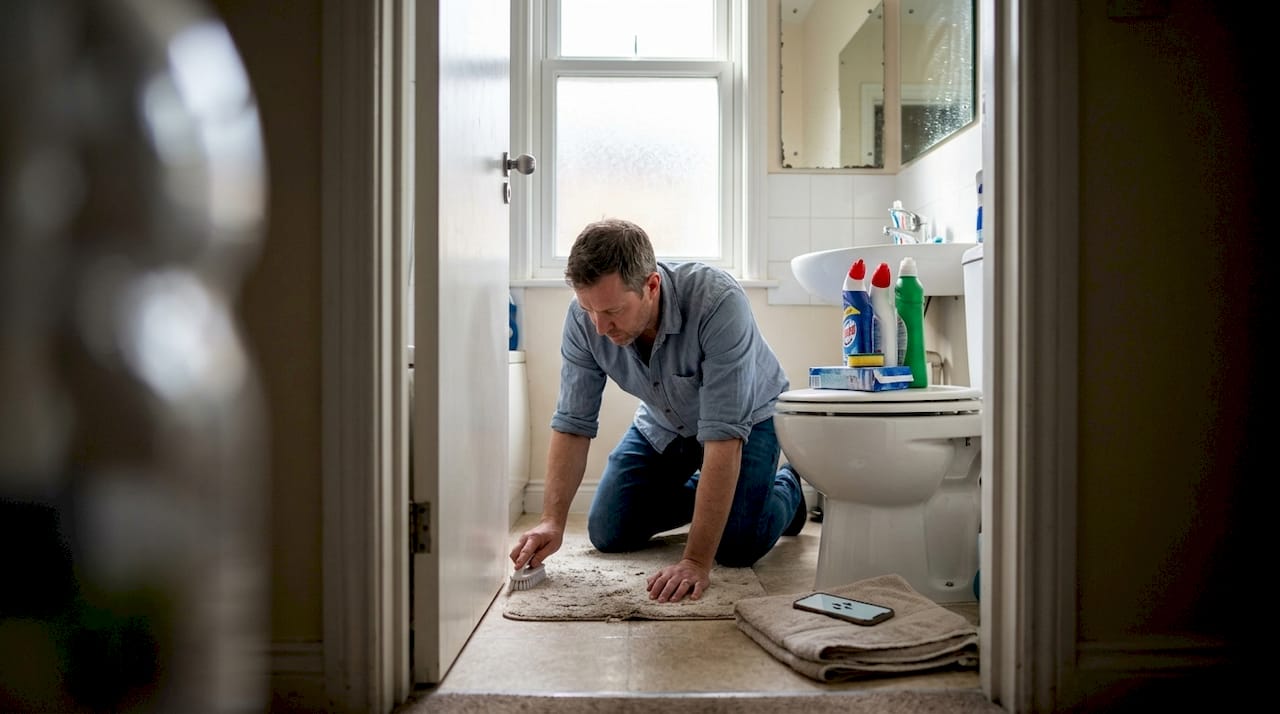
3. Deep clean the entire property. Scrub grout lines, clean inside appliances, wipe baseboards, and wash windows inside and out. In Southern California's bright sunshine, streaky windows are immediately visible. Buyers notice what you miss.
4. Tackle curb appeal first. LA and OC buyers often drive by before scheduling a showing. Trim hedges, freshen mulch, clean the driveway, and place a simple potted plant near the front door. If your front door looks worn, a fresh coat of paint in a bold but tasteful color (navy, black, or deep olive work well here) can transform the entry instantly.
5. Focus on the living room. Remove bulky or dated furniture. Arrange seating around a focal point, typically the fireplace or a view window. Add a simple area rug to define the space. Keep surfaces clear except for one or two intentional accents.
6. Refresh the kitchen. Clear all countertops except for one or two styled items (a bowl of fresh lemons, a clean cookbook). Clean appliances until they shine. If cabinet hardware is dated, replacing it costs under $100 and makes a noticeable difference.
7. Stage bedrooms for calm and spaciousness. Fresh neutral bedding, clear nightstands, and no visible clutter in closets. Buyers will open closets. Organize them so they look half-empty. This signals ample storage.
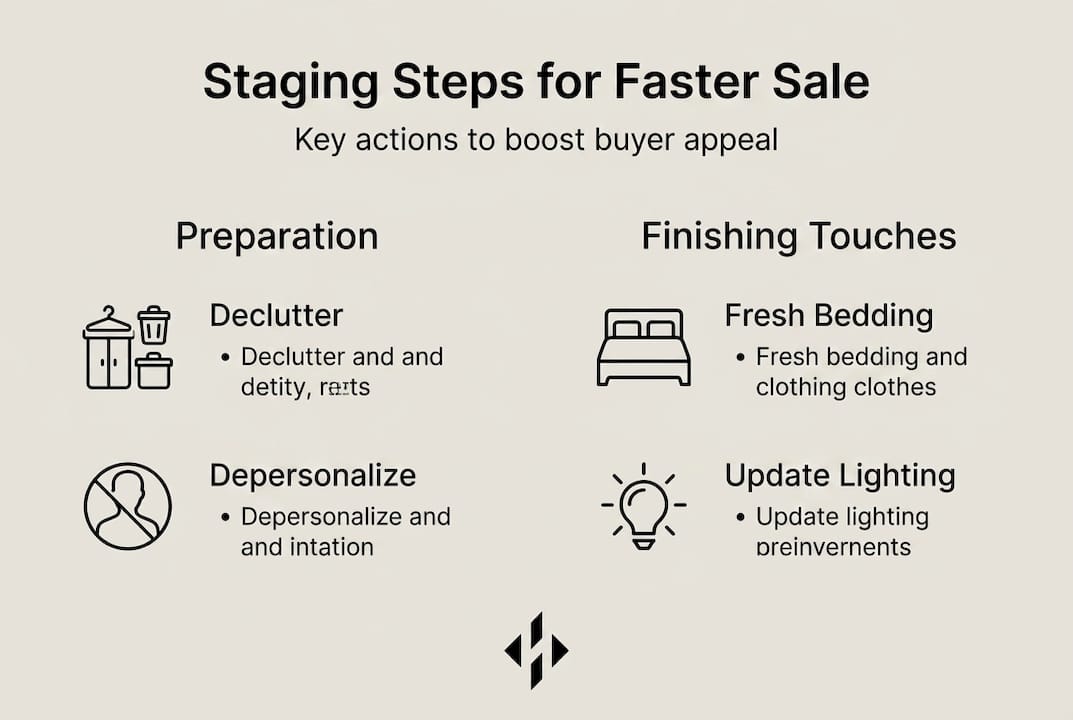
8. Elevate bathrooms. Replace worn towels with fresh white ones, add a small plant or simple candle, and make sure every fixture is spotless. Caulk any discolored grout lines.
Pro Tip: After staging, photograph each room from the doorway at eye level with natural light behind you. If the photo does not look like a listing you would click on, adjust before calling in the professional photographer.
For a complete walkthrough of listing your property, the LA and OC listing guide covers everything from pricing to photography. And if you are planning an open house, open house staging strategies can help you make the most of those high-traffic showing days.
Avoid common staging mistakes and maximize your results
Staging can fail even when sellers put real effort in. The most damaging mistakes are often invisible to the homeowner because you have grown used to the space. An outside perspective, from your agent or a trusted friend, is invaluable here.
The most common staging mistakes include:
- Leaving too much furniture in rooms, which makes spaces feel cramped
- Failing to address odors (pets, cooking, must) that buyers notice immediately
- Keeping personal, religious, or political items visible during showings
- Staging only the rooms you expect buyers to focus on and neglecting hallways, laundry rooms, and garages
- Choosing bold or trendy paint colors instead of buyer-friendly neutrals
- Skipping the exterior and concentrating only on interior rooms
- Staging once and letting the home fall back into lived-in condition between showings
Neglecting high-traffic areas like entryways, hallways, and kitchens is one of the most cited staging errors. These are the spaces buyers move through most during a tour, and they form the emotional throughline of the showing experience.
"Buyers forgive a small bedroom. They rarely forgive a cluttered entryway or a dirty kitchen. The spaces they pass through most are the ones that set the emotional tone of the entire visit."
It is also worth remembering that staging effectiveness varies by market segment and price point. A strategy that works brilliantly for a $900,000 Torrance bungalow may not translate to a $3M Newport Beach estate, and vice versa. Chasing trends from TV staging shows can lead you astray if those trends do not match your actual buyer pool.
Know when to call in a professional. If your home has unusual layouts, dated finishes that cannot be easily updated, or if you are in a highly competitive micro-market, a certified stager's expertise can be worth every dollar. They bring objectivity and market-specific knowledge that DIY simply cannot replicate.
Before any showing, run through this final checklist: all surfaces cleared and dust-free, fresh flowers or greenery in key rooms, all lights on and blinds open, pets and their belongings removed, and a neutral scent (fresh air or a subtle diffuser, not heavy candles).
If your home has been sitting without offers, understanding why homes stay on market in Southern California can help you identify whether staging, pricing, or another factor needs attention.
The truth about staging that most sellers overlook
Here is something most staging guides will not tell you: generic staging advice can actually hurt your sale if applied without thinking about your specific buyer.
Every home attracts a certain type of buyer. A Spanish-style bungalow in Silver Lake draws a very different person than a mid-century modern in Irvine. Staging the Silver Lake bungalow with sterile white walls and chrome accents might actually alienate the creative, style-conscious buyers who would have paid a premium for its character. Sometimes, leaning into a home's genuine strengths, its original tile work, its garden patio, its quirky built-ins, connects more powerfully with the right buyer than sanding everything down to a generic neutral.
The TV-staging approach, where everything is model-home perfect and identical, works for certain price points and neighborhoods. But in Los Angeles and Orange County, buyers in the upper price ranges often value authenticity and architectural soul. Over-staging can strip that away.
We have also seen sellers overspend on staging for homes where an as-is sale strategy would have been smarter given the property's condition, location, or buyer pool. Spending $8,000 on staging a teardown in a land-value neighborhood is money thrown at the wrong problem.
The real skill in staging is matching the presentation to the likely buyer, not to a Pinterest board. Your agent should help you make that call. When staging is done with that kind of strategic clarity, it is one of the most powerful tools in your selling arsenal.
Get expert help and unlock your home's value
Staging is the foundation. But it works best when it is part of a complete selling strategy built around your specific property, neighborhood, and goals. That is exactly what we do at INC Real Estate.

From your first walk-through to closing day, our team helps Los Angeles and Orange County homeowners make smart, market-informed decisions at every step. Whether you are ready to sell your home now or still mapping out your timeline, we can show you where your property stands and what it takes to maximize your return. Start with a free home evaluation to understand your home's current market value. And if you want to see what strong listings look like in today's market, browse our current listings for a firsthand look at how well-presented SoCal homes perform.
Frequently asked questions
What rooms should I stage first for the biggest impact?
The living room, primary bedroom, and kitchen create the strongest impression for most buyers, so concentrate your time and budget there before moving to secondary spaces.
Is it worth hiring a professional stager in Los Angeles or Orange County?
Professional stagers can maximize results at higher price points, but many effective staging steps, like depersonalizing and using neutral accents, can be accomplished with a thoughtful DIY approach and your agent's guidance.
How much can staging increase my home's sale price?
NAR reports that 29% of real estate agents saw a 1% to 10% increase in offers on staged homes compared to unstaged properties.
Should I remove family photos and personal items before selling?
Yes. Depersonalizing is a key staging step that helps buyers mentally move in rather than feeling like guests in someone else's home.
How clean does my house need to be for showings?
Spotless. Buyers notice every missed corner, and NAR emphasizes thorough cleaning of all surfaces, including high-traffic areas, as a non-negotiable staging fundamental.