
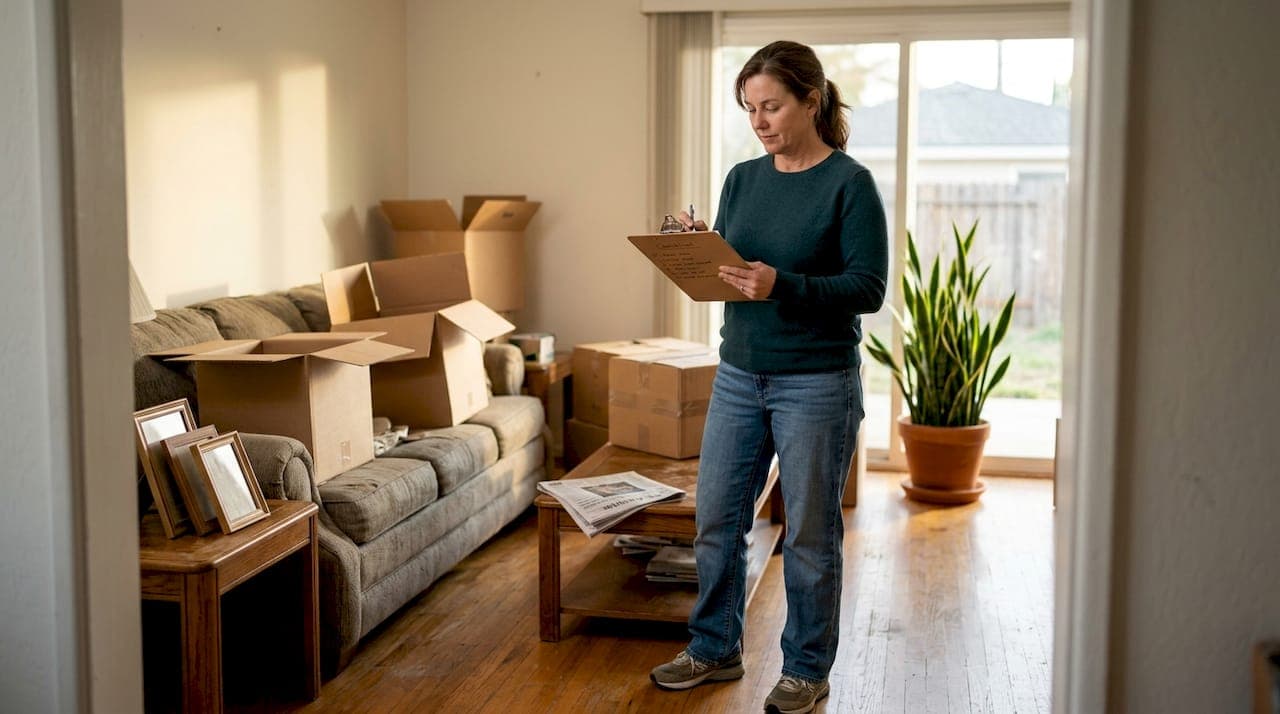
Two nearly identical homes in the same Los Angeles neighborhood can have very different outcomes: one sells in 18 days, the other sits for 90. That gap is not random. It comes down to preparation, pricing, and strategy. As of January 2026, the median days on market in Los Angeles is 69 days, Riverside is 70 days, and San Diego is just 46 days. If you are planning to sell your Southern California home, understanding what drives those numbers puts you in control of your own timeline.
Table of Contents
- What is a home sale timeline?
- Timeline table: How long does each step take?
- Why do sale timelines vary? Factors that speed up or slow down your home sale
- Your strategic checklist: Steps to keep your home sale on track
- Get expert help for your home sale
- Frequently asked questions
Key Takeaways
| Point | Details |
|---|---|
| SoCal home sale timing | Homes typically sell in 46-70 days depending on local market and pricing. |
| Pricing impact | Properly priced homes can sell twice as quickly compared to overpriced listings. |
| Clear home sale phases | Expect steps from prep through closing, each with its own timeline. |
| Speed up tips | Accurate pricing and early prep are key to reducing time on market. |
What is a home sale timeline?
A home sale timeline is the full sequence of events from the moment you decide to sell until the day you hand over the keys. It is not just the days your home sits on the market. It includes every phase before and after that listing goes live.
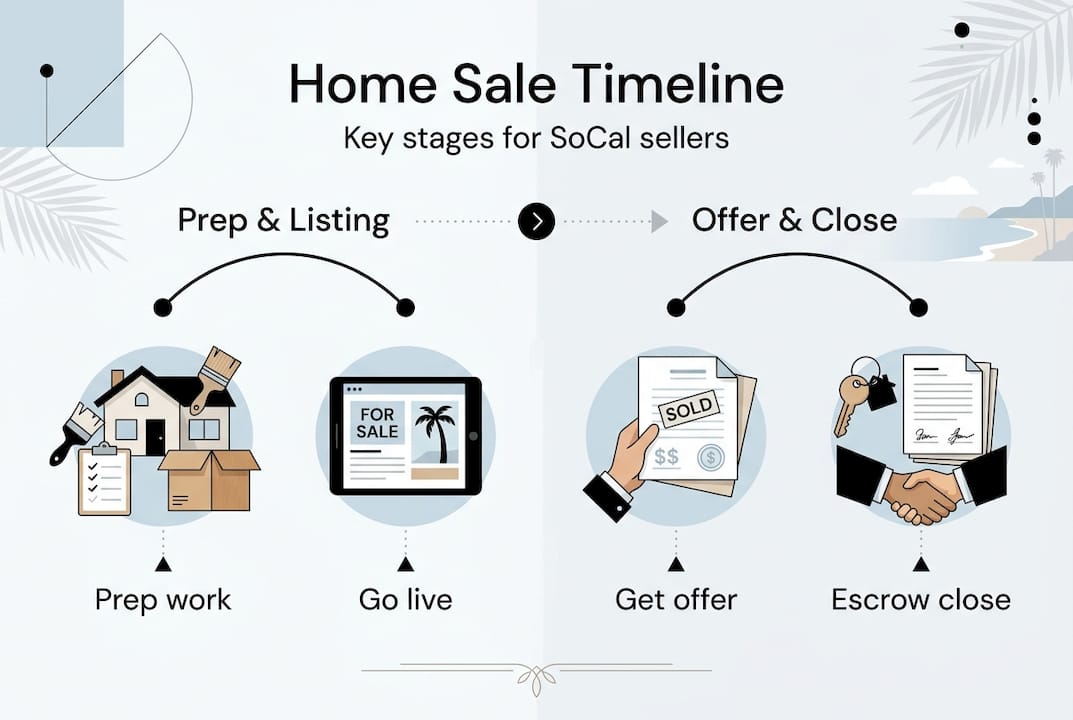
Here is how the major phases break down:
- Pre-listing preparation: Repairs, staging, photography, and pricing research. This phase typically takes 2 to 6 weeks depending on your home's condition.
- Active listing period: Your home is live on the MLS (Multiple Listing Service, the database agents use to share listings). Well-priced homes in LA sell in 14 to 30 days, while the median across the region runs longer.
- Under contract: Once a buyer makes an accepted offer, you enter escrow. This phase typically runs 21 to 45 days for inspections, appraisals, and loan approvals.
- Closing: The final paperwork, fund transfers, and title recording. Usually 1 to 3 business days once all conditions are met.
Southern California moves differently than the national average. High demand, limited inventory, and a large pool of competitive buyers in markets like Orange County and San Diego can compress timelines significantly. But in slower pockets or with overpriced listings, the process stretches out. Knowing which phase you are in at any given moment helps you plan your finances, your move-out date, and your next purchase.
Pro Tip: Start your pre-listing prep at least 4 weeks before you plan to go live. Sellers who begin early consistently reduce their total time on market because they are not scrambling to fix issues after a buyer's inspection flags them. You can review the full sell your home guide to map out exactly what needs to happen before your listing goes live.
Timeline table: How long does each step take?
Let's put real numbers to each stage. The table below reflects typical Southern California timelines based on current 2026 market data.
| Stage | Typical duration | Notes |
|---|---|---|
| Pre-listing prep | 2 to 6 weeks | Repairs, staging, pricing, photography |
| Active listing (well-priced) | 14 to 30 days | Competitive pricing drives faster offers |
| Active listing (overpriced) | 60 to 90+ days | Price reductions often needed |
| Under contract / escrow | 21 to 45 days | Inspections, appraisals, loan approval |
| Closing | 1 to 3 business days | Title recording, fund transfer |
| Total (best case) | 7 to 10 weeks | Well-prepped, accurately priced home |
| Total (typical) | 3 to 5 months | Includes prep and median DOM |
City-specific medians matter here. Sale-to-list price ratios across SoCal show that Riverside sellers are getting close to asking price, which signals a competitive but measured market. San Diego's 46-day median reflects stronger demand and faster absorption. Los Angeles and Riverside, both at roughly 69 to 70 days, reflect larger inventory and more buyer negotiation.

Pricing accuracy is the single biggest lever you can pull. A home listed at the right number from day one avoids the stigma of price reductions, which buyers interpret as a red flag. You can find your home value using a professional tool before you commit to a list price.
Pro Tip: Spring listings (March through May) consistently outperform winter listings in Southern California. Buyer activity peaks in spring, which means more competition among buyers and faster offers. If your timeline is flexible, aim to list before Memorial Day.
Why do sale timelines vary? Factors that speed up or slow down your home sale
Knowing the averages is helpful, but it is just as important to understand why your personal sale might move faster or slower. Here are the four biggest factors.
- Pricing accuracy. This is the most powerful variable. Well-priced homes sell in 14 to 30 days, while overpriced homes linger for 60 days or more. Every week a home sits unsold, buyers assume something is wrong with it.
- Property condition. Homes that are move-in ready attract more offers and fewer contingencies. Deferred maintenance, outdated kitchens, or visible damage all slow the process because buyers either walk away or negotiate hard on price.
- Marketing reach. Professional photography, MLS exposure, social media promotion, and agent network outreach all affect how many qualified buyers see your home in the first critical week. The first 7 days on market generate the most traffic.
- Seasonal timing. Southern California has milder seasonality than the rest of the country, but it still exists. Summer and fall listings face more competition from other sellers and slightly less urgency from buyers.
Here is a quick comparison of how these factors play out in real scenarios:
| Scenario | Estimated days on market |
|---|---|
| Well-priced, move-in ready, spring listing | 10 to 25 days |
| Accurate price, minor repairs needed | 30 to 50 days |
| Slightly overpriced, average condition | 60 to 90 days |
| Overpriced, deferred maintenance | 90 to 120+ days |
Homes priced correctly from the start sell significantly faster and closer to asking price than those that require reductions. In Southern California's competitive market, that first impression is everything.
Southern California's market cycles also play a role. When interest rates shift, buyer purchasing power changes quickly, and that affects how many active buyers are competing for your home. Staying current on local market trends helps you time your listing with confidence. Working with an agent who understands pricing strategies specific to your neighborhood gives you a real edge.
Your strategic checklist: Steps to keep your home sale on track
Armed with the reasons timelines vary, you can take specific steps to keep your sale moving smoothly. Think of this as your pre-sale action plan.
Before you list:
- Get a professional home valuation to set an accurate list price
- Complete any deferred repairs, especially items that will show up in an inspection
- Deep clean, declutter, and consider light staging
- Hire a photographer who specializes in real estate
- Review comparable sales (comps) in your neighborhood from the last 90 days
- Confirm your move-out timeline so you can negotiate closing dates confidently
During the listing period:
- Monitor showing feedback weekly and adjust if needed
- If you receive no offers in the first 14 days, revisit your price
- Keep the home show-ready at all times, including weekends
- Respond to offers quickly, ideally within 24 hours
Under contract and before closing:
- Schedule your home inspection early to avoid delays
- Respond to buyer repair requests promptly
- Stay in close contact with your escrow officer and agent
- Confirm your moving arrangements at least 2 weeks before the close date
Homes priced correctly sell in roughly half the time compared to overpriced listings. That single fact should motivate every seller to invest time in accurate pricing before anything else. If your home is sitting without offers, the checklist above gives you a clear path to diagnose and fix the problem. For a more detailed walkthrough, the step-by-step selling help on our site covers each phase in depth.
The good news is that the timeline is entirely manageable when you plan ahead. Most delays are preventable. Sellers who treat the pre-listing phase seriously almost always spend less total time on market.
Get expert help for your home sale
Selling a home in Southern California involves more moving parts than most people expect, and the difference between a 3-week sale and a 3-month ordeal often comes down to local expertise.

Irvin Nierras at increaltors.com works specifically with Los Angeles and Orange County homeowners to build a personalized selling plan based on your neighborhood, your timeline, and your goals. From a free valuation that anchors your pricing strategy to a market snapshot that shows you exactly what buyers are doing right now, every tool is designed to reduce your days on market and maximize your net proceeds. When you are ready to move forward, full-service selling support is available to guide you from prep through closing.
Frequently asked questions
What is the average time to sell a home in Southern California in 2026?
As of January 2026, the median days on market is 69 days in Los Angeles, 70 days in Riverside, and 46 days in San Diego. Your actual timeline will depend on pricing, condition, and local demand.
How does pricing affect how fast my home sells?
Accurately priced homes typically sell within 14 to 30 days, while overpriced homes can sit for 60 days or longer before receiving a serious offer.
What can delay the home sale timeline?
Overpricing is the leading cause of delays, followed by poor property condition and mistimed listings. Correctly priced homes consistently sell faster across all SoCal markets.
Can I speed up my home sale in a slow market?
Yes. Accurate pricing, a move-in ready condition, and strong marketing through a local agent can reduce your time on market even when overall demand is softer. Preparation is the most reliable shortcut available to any seller.
Recommended
- Sell Your Home with Irvin Nierras - HomeSmart Evergreen
- Updated Market Snapshot - Irvin Nierras - HomeSmart Evergreen
- HomeSmart Evergreen Realty - INC Real Estate - Sell my home Los Ang...
- How Much is My Home Worth? - Get Free Report - Irvin Nierras - Home...
- Haus verkaufen 2024 - So klappt der Hausverkauf!