
TL;DR:
- Searching multiple platforms like Craigslist, Facebook Marketplace, Zillow, and FRBO.com while verifying ownership helps find affordable homes for rent by owner. Preparing your documents and thoroughly checking listings prevent scams and streamline approval, saving you time and money. Private-owner rentals are usually cheaper because they avoid management fees and amenities, but renters must carefully assess hidden costs and maintain proper documentation.
The fastest way to find cheap homes for rent by owner is to search Craigslist, Facebook Marketplace, Zillow, and ForRentByOwner (FRBO.com) simultaneously, then verify every listing through your county assessor's website before sending a single dollar. Private-owner rentals, formally called "for rent by owner" or FRBO properties, consistently come in below market rate because individual landlords skip corporate overhead and amenity fees. Your single best first step: run the property address through your county's public deed records to confirm the person contacting you actually owns the home.
Start your search right now with these three actions:
- Search "house for rent by owner" plus your target ZIP code on Craigslist and Facebook Marketplace, then set up saved-search alerts so new listings hit your inbox the same day they post.
- Pull the property address on your county assessor's website and confirm the owner's name matches who you're talking to — the FTC warns that scammers routinely hijack legitimate listings and repost them as rentals.
- Prepare your renter resume (ID, two recent pay stubs, one bank statement, two references) before you contact anyone, so you can apply the same day a good listing appears.
The Fair Housing Act protects you from discrimination by any landlord, including private owners. Increaltors can help you verify ownership and compare proposed rents against local market data when you need a trusted second opinion.
Table of Contents
- What are FRBO homes, and are they worth it for budget renters?
- Why are cheap FRBO rentals actually cheaper?
- What should you prepare before hunting for budget rentals?
- Where do you find the best cheap FRBO listings?
- How do you verify listings and avoid rental scams?
- How do you apply and negotiate directly with private owners?
- What renter rights and legal basics do you need to know?
- What should you check during a property viewing?
- What does the move-in timeline and cost breakdown look like?
- Key Takeaways
- A local agent's honest take on renting from private owners
- How Increaltors supports renters navigating the FRBO market
- Authoritative sources and public records for verifying listings
What are FRBO homes, and are they worth it for budget renters?
"For rent by owner" simply means a private individual, not a property management company, is listing and managing the rental directly. No leasing agent, no corporate portal, no amenity package built into the price.
Quick pros for budget renters:
- Lower monthly rent because there's no management fee passed to you
- More flexibility on lease length, move-in dates, and minor repairs
- Fewer application fees and sometimes more lenient credit requirements
- Direct communication with the decision-maker, which speeds up approvals
Cons to weigh honestly:
- Maintenance response times vary widely; some private owners are slow to fix things
- Payment systems are informal, raising the risk of lost funds without receipts
- Lease terms can be vague or missing key protections if the owner writes them without legal guidance
- Scam exposure is higher because FRBO listings attract fraudsters who know renters are price-sensitive
The tradeoffs are manageable when you go in prepared. The sections below show you exactly how.
Why are cheap FRBO rentals actually cheaper?
Private landlords avoid corporate overhead and the amenity-based fees that apartment complexes fold into rent, which is the primary structural reason FRBO homes cost less. A management company charges the owner 8–12% of monthly rent; that cost almost always flows to the tenant. A private owner keeps that margin or passes it to you as a lower asking price.
That said, "cheaper" on the listing doesn't always mean cheaper overall. Watch for these hidden costs before you commit:
- Utilities not included: Many FRBO homes list rent without water, gas, trash, or internet. Ask for the last 12 months of utility bills.
- Deferred maintenance: A private owner who hasn't invested in upkeep may leave you dealing with aging appliances, plumbing quirks, or HVAC issues.
- Nonrefundable holding fees: Some owners charge a fee to take the home off the market while you're approved. Confirm in writing whether it applies to your deposit.
- No amenity credit: You're not paying for a gym or pool, but you're also not getting them. Factor that into your lifestyle math.
Pro Tip: Before you tour any FRBO home, calculate your true monthly cost: base rent + average utilities + renter's insurance + estimated maintenance contributions. If that total exceeds 30% of your gross monthly income, the listing isn't as cheap as it looks.
What should you prepare before hunting for budget rentals?
Speed wins with private owners. They often rent to the first qualified applicant who shows up ready. Getting your documents together before you start searching is the single biggest competitive advantage a budget renter has.

Your budget worksheet
Map out every dollar before you fall in love with a listing:
| Cost Item | Typical Range | Notes |
|---|---|---|
| First month's rent | Varies by market | Due at signing |
| Security deposit | 1–2 months' rent | State law caps vary |
| Application fee | — | Not always charged by private owners |
| Utility deposits | — | Electric, gas, water |
| Moving costs | — | DIY vs. hired movers |
| Renter's insurance | — | Strongly recommended |
Your document checklist
Private owners may accept alternate proofs of income when you present a polished, complete package. Gather these before your first inquiry:
- Government-issued photo ID (driver's license or passport)
- Two to three recent pay stubs or, if self-employed, two months of bank statements
- Proof of any additional income (benefits letters, freelance contracts, child support documentation)
- Two personal or professional references with current phone numbers
- Rental history: contact info for your last one or two landlords
- Credit report: pull your own free copy at AnnualCreditReport.com so you know what the owner will see
A one-page "renter resume" that summarizes your income, employment, and rental history makes you stand out. Private owners lack formal screening infrastructure, so a professional presentation materially improves your approval odds.
Where do you find the best cheap FRBO listings?
The highest-yield sources for affordable rentals by owner are not all the same, and knowing how each platform works saves you hours.
Craigslist
Still one of the most active channels for low-cost homes for rent. Search under "Housing > Apts/Housing for Rent" and filter by "by owner" in the listing type. New posts appear throughout the day; check early morning (before 9 AM) and again around 7 PM when owners post after work. Set up email alerts for your target ZIP codes.
Facebook Marketplace
Search "house for rent" in your city and filter by "For Rent." Local neighborhood groups often have even more listings than Marketplace itself. Join two or three neighborhood Facebook groups in your target area and post a brief "looking for" message. Word-of-mouth referrals from neighbors frequently surface private rental homes for less than anything publicly advertised.
Zillow
Zillow's rental search lets you filter by "No Fee" and sort by price. Many private owners list here because it's free and reaches a large audience. Use the map view to draw a custom search area around your preferred neighborhood, then save the search for daily alerts.
ForRentByOwner (FRBO.com)
FRBO.com is built specifically for owner-listed rentals, which means every listing you see is from a private individual, not a management company. Search by city or ZIP code and use the price filter aggressively. Listings here tend to be less picked-over than Craigslist because fewer renters know the site.
Local tactics that often outperform online searches:
- Drive or walk target neighborhoods on weekends and photograph "For Rent" yard signs, then call directly.
- Check community bulletin boards at laundromats, grocery stores, and libraries.
- Ask friends, coworkers, and family. A surprising share of FRBO rentals never get posted online at all.
Pro Tip: For free listing-channel alternatives beyond the major platforms, this comparison of listing services covers options that work well in California markets.
How do you verify listings and avoid rental scams?
People have reported a significant number of rental scams to the FTC with substantial financial losses, though most scams go unreported, so the real figures are higher. Most scams are never reported, so the real number is higher. Cheap listings attract the most fraud. Follow these steps before you pay anything.
Step-by-step verification
- Reverse-image search every photo. Right-click any listing photo and run it through Google Images. If the same photos appear on a different address or a for-sale listing, stop immediately.
- Look up the property on your county assessor's website. Search the address and confirm the owner's name on the deed matches the person contacting you. This single step catches the most common scam: a fraudster copying a legitimate listing and pretending to own the property.
- Check whether the property is listed for sale. Search the address on Zillow and Realtor.com. A home actively for sale is sometimes also fraudulently listed as a rental.
- Request a live video tour. Ask the "owner" to walk through the home on a live video call, pan to specific rooms you request, and show the exterior address numbers. Refusal to do a live, owner-present video walkthrough is one of the clearest scam indicators.
- Never wire money or pay via gift cards. Any owner who insists on wire transfer, Zelle, or gift cards before you've signed a lease and toured in person is almost certainly a scammer.
For a detailed SoCal-specific vetting process, these essential listing-verification steps walk you through county records and red-flag checks.
Red flags checklist
- Rent is dramatically below comparable listings in the same neighborhood
- Owner claims to be out of the country and can't show the property
- Pressure to pay a deposit immediately to "hold" the unit
- Listing photos match a different address or a for-sale posting
- Owner name on deed doesn't match the person you're communicating with
- Requests for personal financial information before any lease is signed
Where to report: File a complaint at the FTC's ReportFraud.ftc.gov and notify your local police department.
How do you apply and negotiate directly with private owners?
Private owners respond better to renters who communicate clearly and move fast. Here's a short application checklist and a sample message you can adapt.
Application checklist
- Confirm the application fee amount and whether it's refundable
- Ask what screening service (if any) the owner uses and consent in writing
- Clarify acceptable payment methods for rent (check, ACH, Venmo, etc.)
- Submit your renter resume and all documents in one organized email or folder
Negotiation tactics
Private owners can be more flexible on lease length, move-in dates, or small repairs than a management company ever would be. Use those levers first rather than asking for a steep rent cut.
- Offer a slightly longer lease (13–15 months instead of 12) in exchange for a locked-in rate.
- Propose paying the first two months upfront if you have the cash; it signals stability and reduces the owner's risk.
- Ask for a specific repair or appliance upgrade instead of a rent reduction — owners often say yes to a one-time fix more readily than a permanent price drop.
- Demonstrate income stability with documentation rather than just asking for a lower number.
Sample message to request a viewing
Keep it short, professional, and specific. Private owners appreciate renters who don't waste their time.
What renter rights and legal basics do you need to know?
The Fair Housing Act (42 U.S.C. § 3604)) applies to private owners, not just property management companies. It prohibits any landlord from refusing to rent, setting different terms, or advertising discriminatory preferences based on race, color, religion, sex, familial status, disability, or national origin.
Beyond federal law, security deposit rules vary by state. California, for example, caps deposits at one month's rent for unfurnished units under recent legislation. Always:
- Get the lease in writing. A handshake deal is nearly impossible to enforce.
- Request a receipt for every payment, including the deposit, application fee, and first month's rent.
- Document the home's condition at move-in with photos and a signed checklist — the California DRE's 2025 Landlord-Tenant Guide recommends joint move-in checklists and signed condition forms to prevent deposit disputes.
- Keep copies of all written communications with the owner.
If a dispute arises, start with a written notice to the owner, then contact your local tenant rights organization or housing court. Many counties offer free mediation services before any formal legal action is needed.
This article is general information, not legal advice. Confirm current rules with your state's tenant rights authority or a qualified attorney.
What should you check during a property viewing?
Walk through every room with a purpose. A cheap rental that needs $300/month in repairs isn't cheap.
Room-by-room inspection points
- Kitchen and bathrooms: Run all faucets and check water pressure. Look under sinks for water stains or mold. Test the garbage disposal and check that the stove burners all ignite.
- Electrical: Test every outlet with your phone charger. Look for exposed wiring, flickering lights, or a panel that looks outdated.
- Windows and doors: Open and close every window and exterior door. Gaps in weatherstripping mean higher utility bills.
- Floors and walls: Look for soft spots in floors (possible water damage), cracks in walls, or fresh paint that might be hiding stains.
- Pests and odors: A musty smell often signals mold. Check corners and under sinks for droppings.
- Locks and security: Confirm all exterior doors have deadbolts and that windows on the ground floor lock securely.
Questions to ask the owner
- What utilities are included, and what were the average monthly bills last year?
- When were the roof, HVAC, and water heater last replaced or serviced?
- Who handles maintenance requests, and what's the typical response time?
- Has the property had any pest, mold, or water-damage issues in the past two years?
Document everything. Take timestamped photos of every room before you move a single item in. Ask the owner to sign a move-in condition form — this is your primary protection if there's a deposit dispute at move-out.
What does the move-in timeline and cost breakdown look like?
Most FRBO rentals move from application to keys in 5–14 days. Here's a realistic breakdown:
| Stage | Typical Timeline | What You Pay |
|---|---|---|
| Application submitted | Day 1 | Application fee (varies by owner) |
| Background/credit check | Days 1–3 | Included in app fee or separate ($25–$50) |
| Approval and lease signing | Days 3–7 | Security deposit due at signing |
| Move-in day | Days 7–14 | First month's rent + any prorated days |
| Utility setup | Days 1–7 before move-in | Utility deposits (varies by utility) |
Always pay the security deposit by check or traceable bank transfer, never cash. Private owners may not use escrow systems, so a paper trail is your only protection if a dispute arises. Get a signed receipt the same day you hand over any money.
If the owner offers a lower deposit in exchange for a personal guaranty or other arrangement, make sure every modified term is written into the lease and initialed by both parties in a single document.
Key Takeaways
Finding genuinely affordable rentals by owner requires searching the right platforms, verifying ownership before paying anything, and arriving with documents ready to apply on the spot.
| Point | Details |
|---|---|
| Search the right platforms | Use Craigslist, Facebook Marketplace, Zillow, and FRBO.com simultaneously and set daily alerts. |
| Verify ownership first | Run every address through your county assessor's deed records before paying any fee or deposit. |
| Prepare documents in advance | Have your ID, pay stubs, bank statement, and references ready before your first inquiry. |
| Negotiate smart | Offer lease flexibility or upfront months rather than asking for a rent cut; private owners respond better. |
| Get everything in writing | A signed lease, move-in condition form, and receipts for every payment are your legal safety net. |
| Work with Increaltors | Increaltors provides local market snapshots and ownership verification support for renters in Southern California. |
A local agent's honest take on renting from private owners
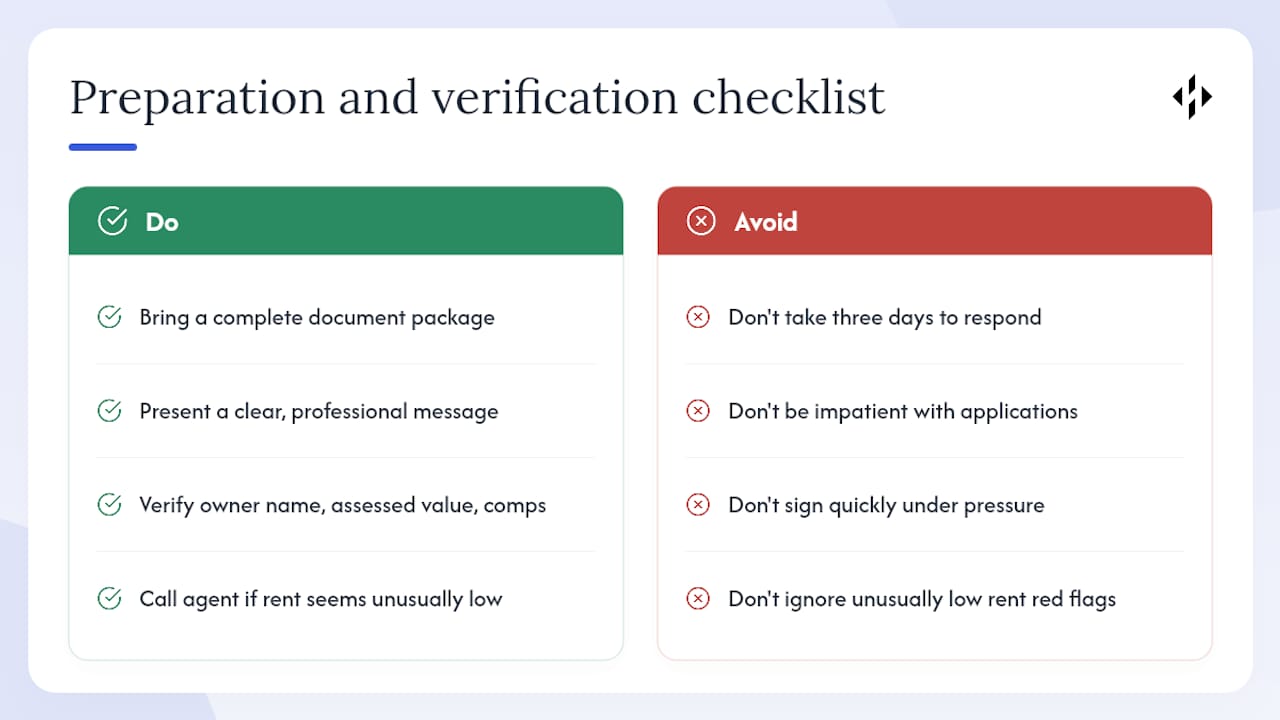
The FRBO market rewards preparation and penalizes impatience. Budget renters who show up with a complete document package and a clear, professional message consistently beat out applicants with better credit who take three days to respond. That's the real competitive edge in this market.
What most renters underestimate is how much the verification step matters, not just for scam protection, but for negotiation. When you walk into a conversation already knowing the owner's name from the deed, the property's assessed value, and what comparable rentals in the neighborhood are going for, you're negotiating from a position of knowledge. Private owners respect that. It signals that you're a serious, low-risk tenant, and that often translates directly into a better lease term or a waived fee.
The one scenario where I'd always recommend calling a local agent before signing: when the rent seems unusually low relative to the neighborhood and the owner is pushing for a fast decision. That combination is either a scam or a property with undisclosed problems. An agent with local market knowledge can run comps in minutes and tell you whether that price makes sense. That five-minute call has saved more than a few renters from a very expensive mistake.
How Increaltors supports renters navigating the FRBO market
Finding a genuinely cheap rental by owner in Southern California is harder than it looks from a listing page. Increaltors gives budget renters in the Los Angeles and Orange County area a concrete advantage: local market data, ownership verification guidance, and neighborhood-level pricing context that most renters simply don't have access to on their own.
Here's where Increaltors adds real value for FRBO renters:
- Market snapshots: Compare any proposed rent against current local market data so you know whether a listing is genuinely cheap or just looks that way.
- Listing verification support: Agent Irvin Nierras can help you cross-check ownership records and flag red flags before you commit.
- Professional listing context: Reviewing how professionally verified listings present ownership and property details helps you spot gaps in FRBO posts.
Ready to get a clearer picture of what a fair rental price looks like in your target neighborhood? Check the current market snapshot or reach out to Increaltors directly for personalized guidance on your search.
Authoritative sources and public records for verifying listings
Use these official resources to confirm ownership, understand your rights, and report problems:
- HUD Fair Housing Act overview: Explains your federal nondiscrimination protections and how to file a complaint against any landlord, including private owners.
- 42 U.S.C. § 3604 (Cornell LII): The full statutory text of the Fair Housing Act's rental provisions — useful if you need to cite the law in a dispute.
- FTC Rental Listing Scams: Step-by-step guidance on spotting and reporting rental fraud, including how to use property records to verify ownership.
- FTC Rental Scams Spotlight Report: The FTC's detailed analysis of rental scam patterns and financial losses reported since 2020.
- Increaltors SoCal vetting steps: A practical walkthrough of county and state record tools for renters verifying listings in Southern California.