

TL;DR:
- Timing your California home sale is crucial for maximizing value, with spring—particularly April—being the optimal window due to low inventory and high demand. Regional differences significantly impact the best listing period, as areas like the Bay Area move faster, while inland regions experience slower markets in summer months. Sellers should plan at least 90 days ahead, focusing on preparation and market conditions to seize peak opportunities effectively.
Selling your California home isn't just about finding the right buyer. It's about finding the right moment. Choose poorly, and you could leave tens of thousands of dollars on the table. Choose well, and you'll attract more competing offers, sell faster, and close at or above asking price. The problem is that most homeowners rely on gut instinct or neighbor advice when deciding when to list. California's real estate market is too nuanced for that. Seasonality, regional differences, school calendars, and mortgage rate swings all combine to create very specific windows where seller leverage is at its peak.
Table of Contents
- Why timing matters in California's real estate market
- Seasonal patterns: When are California homebuyers most active?
- Regional nuances: Bay Area, Inland Empire, and Central Valley compared
- Planning ahead: How to align your home sale for maximum results
- Our take: The "perfect" timing myth and why adaptability matters
- Ready to sell? Get expert help and a custom plan
- Frequently asked questions
Key Takeaways
| Point | Details |
|---|---|
| Spring is prime | Mid-April is typically the best time to list for maximum buyer activity in California. |
| Know your market | Regional trends can dramatically affect sale speed and price across the state. |
| Plan 2–3 months ahead | Start preparing early to hit your target window, factoring in sale and escrow time. |
| Flexibility is key | Adapt your strategy based on personal circumstances and evolving local conditions. |
Why timing matters in California's real estate market
Understanding how timing creates leverage in California's market starts with a close look at local market cycles. California isn't one real estate market. It's dozens of overlapping markets stacked inside a single state, each moving at its own pace. What works for a seller in San Francisco won't necessarily work for one in Riverside or Fresno. That's why blanket advice like "spring is best" oversimplifies a much more layered picture.
The core engine of any housing market is supply and demand. When inventory is low and buyers are actively searching, sellers hold the power. Homes receive multiple offers, contingencies get waived, and sale prices climb above listing. When inventory is high and buyer activity slows, the opposite happens. Homes sit longer, price reductions follow, and sellers lose negotiating strength. Timing your sale to align with low supply and high demand is the most powerful lever you can pull.
Southern California real estate trends show that statewide conditions can shift significantly within just a few months, making it worth tracking monthly data rather than relying on annual averages.
Here's a snapshot of what recent data tells us about California's supply landscape:
- Statewide median days on market: 23 days statewide as of March 2026
- Bay Area: Only 14 days on market, reflecting fierce demand and limited supply
- Inland Empire: 39 days on market, nearly three times longer than the Bay Area
- Statewide inventory: 3.3 months of supply, which signals a market that leans slightly toward buyers in some pockets
"Days on market" (DOM) refers to how many days a home is listed before an accepted offer. A lower DOM tells you buyers are competing fast. A higher DOM signals that buyers have choices and time is on their side.
These regional gaps are enormous when you think about them from a seller's perspective. A 25-day difference in DOM between the Bay Area and the Inland Empire means sellers in those two markets need completely different strategies. One demands you price competitively to spark a bidding war. The other requires careful preparation, strategic pricing, and patience to find the right buyer.
Seasonal patterns: When are California homebuyers most active?
With market timing established, it's crucial to drill down into the seasonal swings that drive California homebuyer behavior. The year doesn't move in a straight line for real estate. There are distinct peaks and valleys in buyer activity that repeat year after year, and understanding this pattern lets you position your home when competition from buyers is highest.
Spring consistently leads all seasons for home sales activity across California. The reasons are deeply practical. Families want to move before the school year ends. Tax refund checks give first-time buyers extra cash for down payments. Longer days and better weather make homes show beautifully. Buyers feel urgency. All of these forces concentrate demand into a very short window from late February through early June.
The best week of 2026 nationally has been identified as April 12 through April 18, balancing low inventory, peak demand, and favorable buyer urgency. For California's West Coast markets specifically, where inventory tends to be more available than in other states, hitting that timing window is even more critical because buyers have alternatives.
Here's how buyer activity typically looks across the calendar year in California:
| Season | Buyer activity | Competition for sellers | Notes |
|---|---|---|---|
| Late February to April | Very high | Strong seller advantage | Peak spring window opens |
| May to June | High | Seller's market | School year urgency drives decisions |
| July to August | Moderate to low | More balanced | Summer heat slows inland markets |
| September to October | Moderate | Slightly seller-friendly | Second mini-wave, less competitive |
| November to January | Low | Buyer's market | Motivated buyers, low volume |
The table above makes something important clear: the window of maximum seller advantage is relatively narrow. You're looking at roughly four months in the spring cycle where conditions line up most favorably. If you miss that window, you're waiting for a secondary opportunity in early fall or accepting lower demand during the winter months.
Steps to make the most of peak spring buyer activity:
- Start home prep in January or February so you're ready to list when buyers flood the market in March or April.
- Schedule a pre-listing inspection early to avoid surprises that delay your listing date.
- Invest in staging and photography before your launch date to maximize the first-week impression.
- Set your listing price using recent comps from the last 60 days, not older sales that may not reflect current conditions.
- Plan for a mid-week listing day, typically Tuesday or Wednesday, to maximize weekend open house traffic from fresh listing searches.
The role of open houses in Southern California home sales is more significant than in many other parts of the country. Weekend open houses during peak spring traffic can generate multiple competing offers within days of listing.
Pro Tip: If your circumstances make it difficult to list in person during the spring rush, it's still possible to capture peak pricing through a well-executed strategy. Read more about remote selling in California to understand how technology and professional representation can replicate the results of an in-person listing push.
Regional nuances: Bay Area, Inland Empire, and Central Valley compared
Timing advantages become even clearer when looking at the different regions within California. Each region operates on a slightly different rhythm, and applying the wrong strategy in the wrong market is a common and costly mistake.
Bay Area
The Bay Area is in a category by itself. With only 14 days on market as of March 2026, homes here move faster than almost anywhere in the country. The tech-driven economy, constrained housing supply, and high buyer incomes all fuel constant competition. Sellers in the Bay Area benefit from a more forgiving market. Even listings that launch at suboptimal times tend to attract buyers because demand rarely fully disappears. That said, spring still produces the highest concentration of bidding wars and the largest premiums above list price.
Inland Empire
At 39 days on market, the Inland Empire operates at a completely different pace. This region is heavily influenced by family buyers who are tightly tied to school enrollment schedules. That creates a predictable surge in buyer urgency from March through June and again briefly in August, as buyers rush to close before the school year begins. However, Inland Empire summers are brutal, with temperatures regularly exceeding 100 degrees Fahrenheit. Hot weather genuinely suppresses buyer showings and enthusiasm. Sellers who list in July or August in the Inland Empire often struggle, even if the home is priced well.
Central Valley
The Central Valley shares many characteristics with the Inland Empire in terms of heat-related summer slowdowns. Hot inland areas slow dramatically in summer, and sellers who wait too long into the season often face extended DOM and eventual price cuts. The practical advice for Central Valley sellers is to list before the school year ends in late May if you want family buyers at peak motivation. Winter can produce motivated buyers who are serious about purchasing, but total buyer volume is the lowest of any season, which limits how many competing offers you can realistically generate.
| Region | Median days on market | Best listing window | Key risk period |
|---|---|---|---|
| Bay Area | 14 days | February through May | Least sensitive to timing |
| Inland Empire | 39 days | March through May | July through August (heat) |
| Central Valley | Varies, often 30+ days | March through May | June through August (heat) |
| Los Angeles/Orange County | Roughly 20 to 30 days | March through May | December through January |
Key factors that shape regional timing decisions:
- School district boundaries: Family buyers in the Inland Empire and Central Valley often buy specifically to access certain schools, making the pre-school-year deadline a hard constraint.
- Weather: Extreme summer heat in inland regions reduces foot traffic for open houses and showings in a very measurable way.
- Commute patterns: Inland Empire buyers often commute to Los Angeles or San Bernardino employment centers, making proximity to transit routes a seasonal consideration when companies change work-from-home policies.
For sellers in Los Angeles and Orange County specifically, detailed market-specific guidance on selling in LA and Orange County can help you fine-tune your approach to the unique coastal dynamics that don't apply to inland regions.
Pro Tip: Don't look only at what season it is. Look at what's happening with local inventory in your specific zip code. If homes in your neighborhood are sitting for 60 days, that's a local problem no seasonal trend will solve for you. Price, condition, and presentation matter as much as timing.
Planning ahead: How to align your home sale for maximum results
Now that you know the optimal selling windows, let's get practical about the steps you should take to hit your ideal market moment. The biggest mistake sellers make is underestimating how much lead time is needed. They decide in April they want to sell and rush a listing to market in two weeks. The results are almost always disappointing: poor photos, unaddressed repairs, and a listing that launches below its potential.
Here is the math you need to understand before setting your target closing date. The typical California home takes around 21 days to go from listing to accepted offer. After that, escrow typically runs 30 to 40 days. That means from your listing date to your closing date, you should budget roughly 60 days at minimum. Add in two to four weeks of prep work before listing, and you're looking at a 90 to 100 day runway from when you start working with an agent to when you have cash in hand.
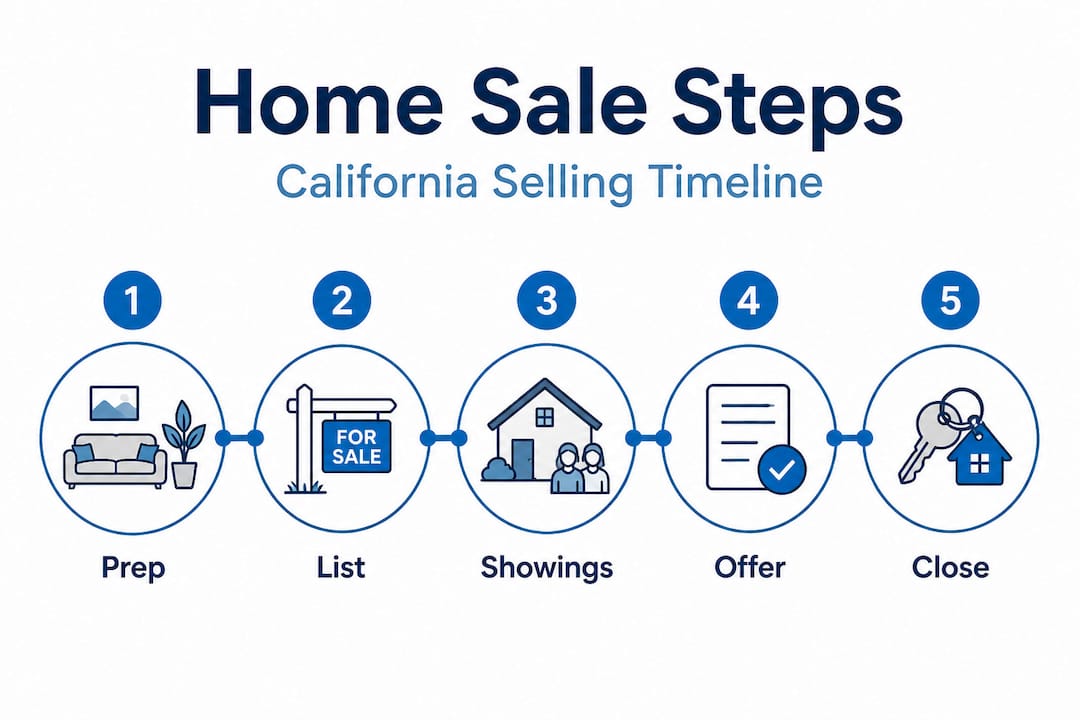
That means if you want to close by late June to capture peak spring demand, you need to start preparing your home no later than late March. If you want to list during the critical April 12 through April 18 window identified as peak nationally, your prep work should begin in January or early February.
Here's a practical planning timeline for California sellers:
- 90 to 100 days before target close: Contact your agent, set a pricing strategy, and schedule a pre-listing inspection to identify repair needs.
- 75 to 80 days before target close: Complete any repairs or improvements that will meaningfully impact value or buyer perception.
- 60 to 70 days before target close: Stage the home, complete professional photography and video, and finalize listing details with your agent.
- 50 to 60 days before target close: Go live on the MLS (Multiple Listing Service, the database agents use to search homes), host open houses, and begin collecting offers.
- 30 to 40 days before target close: Accept an offer and open escrow. Buyer inspections and loan appraisal happen here.
- 0 to 10 days: Final walkthrough, closing documents signed, keys transferred.
Families with school-age children represent one of the most motivated buyer segments in California. They have a hard deadline: being settled before school starts in August or September. Sellers who can put a move-in-ready home in front of these buyers in April through June are tapping into maximum buyer urgency.
For sellers who want to move quickly once they list, fast home selling tips offer proven tactics that apply across Southern California markets. And if you want to walk through the full home sale timeline step by step, that guide maps out exactly what happens from listing day to closing day so you're never caught off guard.
The quality of your preparation before listing is just as important as timing. Homes that show well consistently close higher and faster than comparable homes that don't. If you're unsure where to start, a detailed guide on home sale preparation covers what Southern California buyers actually notice and how to address it efficiently without overspending.
Pro Tip: Don't skip the pre-listing inspection. Sellers who discover problems after a buyer's inspector finds them are in a far weaker negotiating position. Finding issues yourself first lets you decide whether to fix them, price accordingly, or disclose them proactively, all of which protect your final number.
Our take: The "perfect" timing myth and why adaptability matters
Here's something the data-driven articles rarely say plainly: obsessing over the single best week to list your home can actually hurt you.
We've worked with sellers who delayed listing for months waiting for conditions to align perfectly, only to miss a strong market window while sitting on the sidelines. Meanwhile, a neighbor listed in February before the "official" spring surge and sold at a premium because supply was even lower at that point.
The uncomfortable truth is that no data set can predict your specific micromarket conditions three months from now. Mortgage rates can shift in response to geopolitical events. Local inventory can spike if a new development comes online. A major employer relocating into or out of your area can reshape buyer demand in weeks.
What actually protects sellers isn't perfect timing. It's adaptability and preparedness. A seller who is ready to list on short notice, with a staged home, completed repairs, and a clear pricing strategy, can respond to an unexpected market opportunity instantly. A seller who is still debating when to start decluttering can't.
Your personal circumstances also matter enormously and are often underweighted in timing decisions. Job relocations, family size changes, financial goals, and lifestyle priorities don't always align with the April 12 through April 18 national sweet spot. And that's fine. A motivated, well-prepared listing in November with a skilled agent who knows how to target serious winter buyers can still produce excellent results.
One strategy worth considering for sellers who want to maximize exposure and execution is working with agents who use co-listing agent strategies, where two agents collaborate to market your property with broader reach and more hands-on attention.
Our advice: use the data as a framework, not a rulebook. Set your target window based on your life situation first. Then work backward to prepare well and position your home for the best outcome within that window.
Ready to sell? Get expert help and a custom plan
Timing your sale is only half the battle. Executing it well requires local market expertise, the right pricing strategy, and professional marketing that connects your home to active buyers at the peak moment.

At IN Realtors, we specialize in helping California homeowners sell with precision and confidence in the Los Angeles, Orange County, and surrounding Southern California markets. Whether you're targeting the spring peak or working within a tighter personal timeline, we build a custom plan around your goals. See homes for sale to understand what active buyers in your area are looking at right now. Get your free home valuation to know exactly where your property stands in today's market. When you're ready to move forward, sell your home with an expert who can get you from planning to closing with maximum results.
Frequently asked questions
What is the fastest month to sell a home in California?
April is statistically the fastest month for home sales in California, with April 12 to 18 identified as the single best week of 2026 nationally due to the combination of low inventory and peak buyer demand.
How long does it take to sell a house in California in 2026?
The statewide median is 23 days on market as of March 2026, but this ranges from just 14 days in the Bay Area to 39 days in the Inland Empire depending on your location.
Are homes harder to sell in California during summer?
Inland regions like the Central Valley and Inland Empire slow significantly in summer due to extreme heat suppressing buyer showings, while coastal markets like Los Angeles and Orange County are less affected.
How should I plan my listing date if I want to move by summer?
You should list 2 to 3 months before your target close date to account for the typical 21 days on market plus 30 to 40 days of escrow, meaning a June close requires a March or early April listing.